
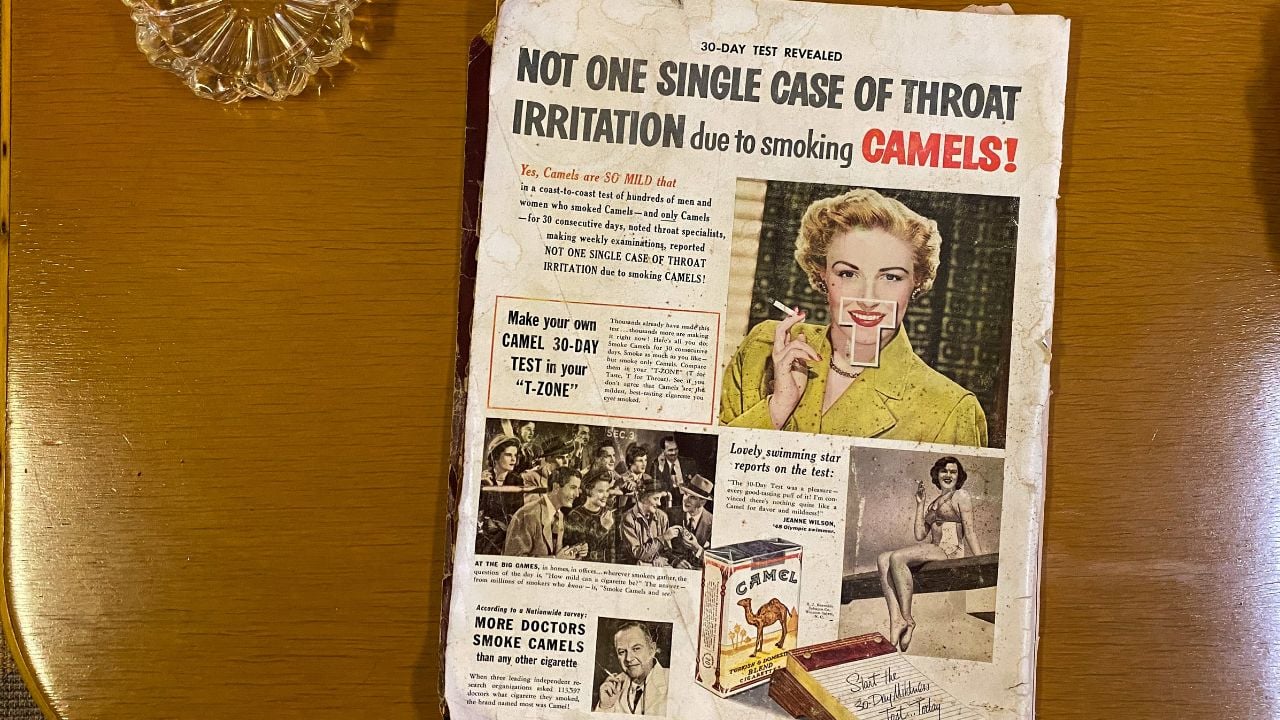
4 Normal Things From the 1950s That Are Banned in South Carolina Today

Drop-side cribs caught on in the 1940s because the lowering rail made lifting a baby easier.
South Carolina families treated a lot of things like that as normal, even though they’re now banned.
Here are the normal things from the 1950s that are banned in South Carolina today.
Note: This is general information, not legal advice. Laws are subject to change.
1. Lead House Paint
Lead house paint was ordinary enough that a significant amount of the white house paint sold before 1955 was 50 percent lead.
Today the Consumer Product Safety Commission (CPSC) bans paint for consumer use with 0.009 percent or more lead by weight.
The can of paint you pick out for your walls today has to stay under it.
The ban began with paint manufactured after February 27, 1978, and the limit dropped to 0.009 percent on August 14, 2009.
The ban reaches toys and furniture that bear lead paint, including beds, chairs, tables, desks and sofas.
Exceptions exist.
Artists’ paints and certain industrial coatings are exempt, and paints for cars and boats fall outside the ban.
2. Leaded Gasoline
Leaded gasoline powered American cars for decades, and the industry average in the 1950s and 1960s hovered around 2.4 grams of lead per gallon.
Refiners used lead as an octane-boosting additive starting in 1923, with a brief interruption in 1925.
The Environmental Protection Agency (EPA) issued its first standards to cut lead in gasoline in 1973.
Starting in 1975, new passenger cars and light trucks came with catalytic converters that needed lead-free fuel.
After December 31, 1995, federal law makes it unlawful to sell gasoline that contains lead for use as fuel in any motor vehicle.
In 1996, the EPA said leaded fuel could still be sold for off-road uses.
That meant it could still go into race cars, farm equipment, boats and planes, but never the car you drive on the road.
3. DDT Pesticide
The insecticide DDT went onto crops, forest lands, homes and gardens, and its use in the United States peaked in 1959 at nearly 80 million pounds.
The EPA ordered an end to continued domestic use of the pesticide on June 14, 1972.
EPA head William Ruckelshaus said continued massive use of DDT posed unacceptable risks to the environment and potential harm to human health.
A few uses survived.
The 1972 order left out public health, quarantine and a few minor crop uses, along with exports.
Today there’s no U.S. registration for DDT, so no store can legally sell it to you.
4. Cigarette TV Commercials
Cigarette commercials were part of watching television in the 1950s, when tobacco companies were major sponsors of popular programs.
Philip Morris sponsored I Love Lucy, the most popular show on TV by far.
In 1955, 54 percent of men and 24 percent of women were cigarette smokers.
Today, federal law makes it unlawful to advertise cigarettes and little cigars on any electronic medium under the Federal Communications Commission’s jurisdiction.
That’s why you won’t catch a cigarette commercial on a broadcast station today.
How the Cigarette Ad Ban Grew
Cigarette ads were banned from electronic media under a 1970 amendment to federal law.
That amendment set the ban’s January 1, 1971, start date.
A 1973 amendment extended the ban to little cigars.
Drop-Side Cribs
Drop-side cribs arrived in the 1940s and caught on with parents because the lowering rail made lifting a baby easier.
They stayed around for decades, until the CPSC voted unanimously in December 2010 to ban the manufacture, sale and resale of the cribs.
The ban took effect on June 28, 2011, along with tougher federal crib standards.
At least 32 babies died in drop-side cribs in the decade before.
A drop-side crib from the garage can’t go in your yard sale, either.
The standard covers new and used full-size cribs, and child care facilities had until December 28, 2012, to comply.
Lead Paint in Older Homes
Lead house paint is still on many walls.
Lead-based paint is still in at least some part of 34.6 million American homes, or 29.4 percent of all housing units.
Those numbers come from the American Healthy Homes Survey II, which ran from May 2018 to May 2019.
More than 93 percent of the homes with lead-based paint were built before 1978.
Age matters here.
The older your house is, the likelier it is to have lead-based paint.
Leaded Aviation Fuel
Most planes that still burn leaded fuel are piston-engine aircraft, typically small planes that carry 2 to 10 passengers.
Board one of those small planes, and your ride may still run on leaded fuel.
Psst! How much do you know about the products Americans used to take for granted? Take our quiz and see if you can ace it.
Quiz
Safety Trivia
Answer these questions on products Americans once took for granted. We bet you can’t get them all right. Prove us wrong?
Before the federal government banned lawn darts, regulators tied about how many hospital emergency room injuries a year to them?
A Pinball Ban That's Gone
South Carolina's pinball ban for anyone under 18 dated to 1959, when lawmakers passed it as a compromise after a 1958 bill to ban the machines outright failed.
Pinball caught on during a national crackdown on gambling.
States and cities across the country banned the game in the 1940s and 1950s for similar reasons.
The law targeted players under 18, not the machines.
After it passed, three juveniles were charged with playing pinball at an oil service station in Chester, and so was the station operator.
In January 2023, the rule was still on the books, but it wasn't being enforced.
If you played pinball in South Carolina before you turned 18, you were technically breaking it.
A repeal bill, House Bill 3020, passed the House 105-0 in February 2025.
Gov. Henry McMaster signed the repeal on May 19, 2026, and it took effect that day.
6 Restaurant Chains That Disappeared From South Carolina and Are Still Mourned
Some restaurants leave a hole in a town when they close.
Here are the restaurant chains that left South Carolina behind.
6 Restaurant Chains That Disappeared From South Carolina and Are Still Mourned
4 South Carolina Country Stores That Have Been Open for More Than a Century
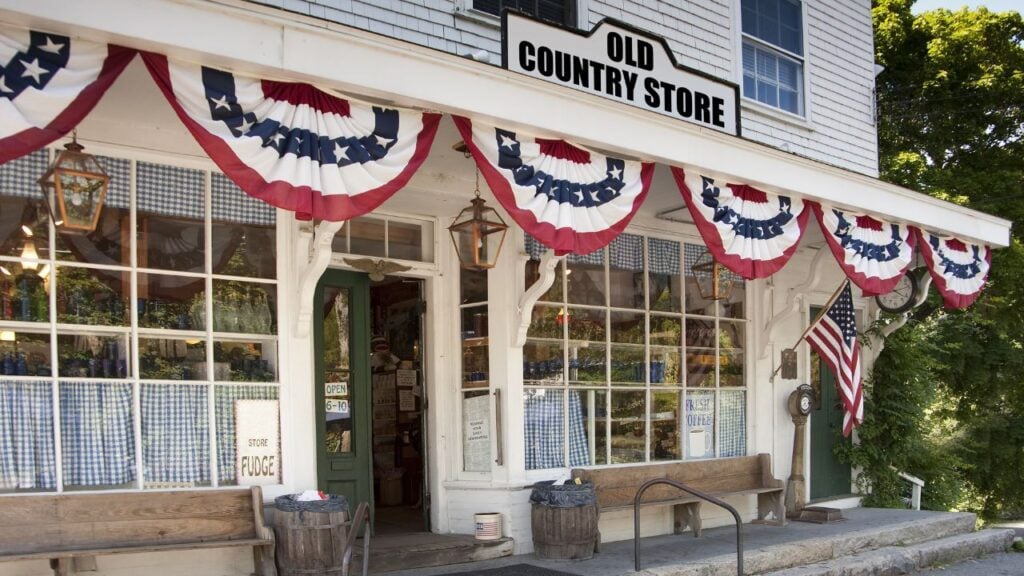
Few places feel as old-school as a country store in South Carolina.
Here's where you can step into that kind of history.
4 South Carolina Country Stores That Have Been Open for More Than a Century
