
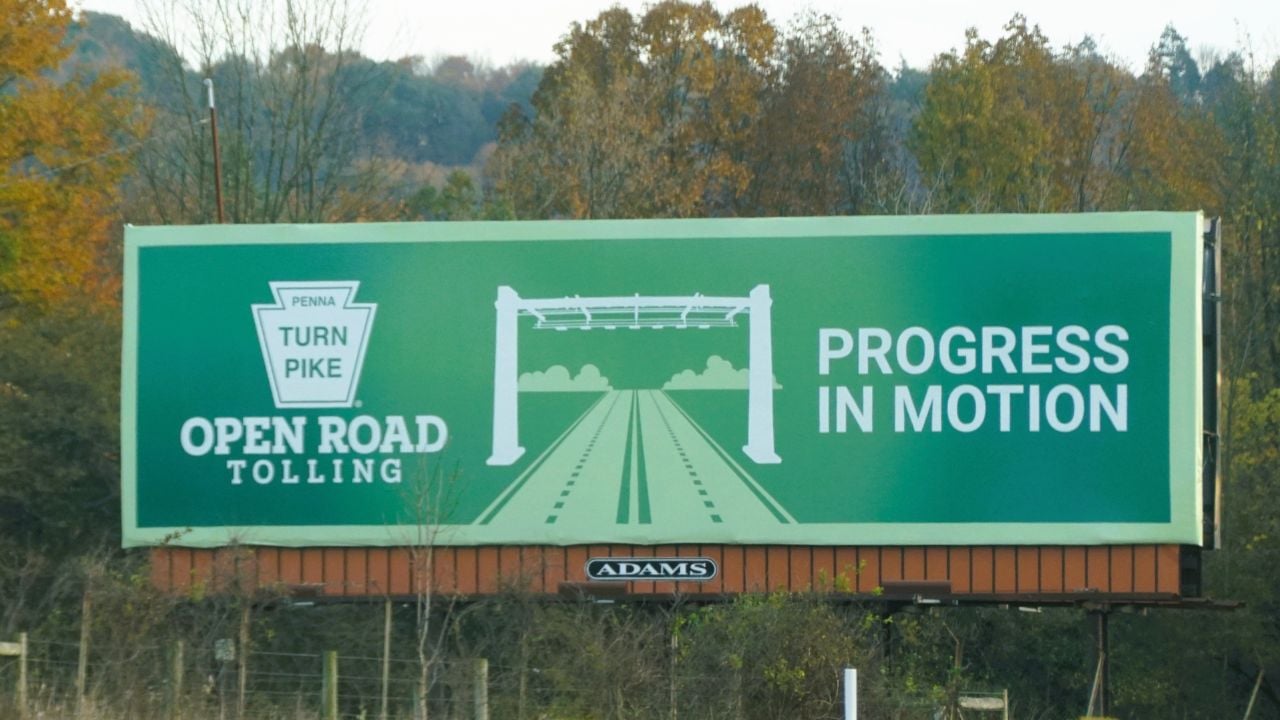
4 Pennsylvania Turnpike Charges That Punish Drivers Who Pay by Plate

A driver in a rental car rolls under a Pennsylvania Turnpike gantry at 65 miles an hour, no transponder mounted, no idea a camera just photographed their plate.
Weeks later, an invoice arrives at a stranger’s address, since the car is still registered to the rental company.
These are the Pennsylvania Turnpike charges that punish drivers who pay by plate.
Note: This is general information, not legal advice. Toll rates, fees, and enforcement rules are subject to change, so confirm current details with the Pennsylvania Turnpike Commission.
1. Per-Mile Rate on the Mainline
The Pennsylvania Turnpike runs two separate price lists on the exact same road, and the per-mile rate is the first one that splits.
On the mainline and the Northeast Extension, where tolls scale with distance traveled, E-ZPass drivers pay $0.073 for every mile under the 2026 toll schedule.
Toll By Plate drivers pay $0.146 for that same mile.
Double, not a little more.
Drive 50 miles with E-ZPass, and you pay $3.65 in mileage charges alone.
Drive the same 50 miles on Toll By Plate, and that mileage charge alone comes to $7.30.
2. Segment Fee at Every Toll Point
The Pennsylvania Turnpike doesn’t stop at charging plate payers more per mile. It also charges them more just for passing a toll point at all.
That flat charge is called the segment fee, and it applies every time a driver crosses one of the Turnpike’s electronic toll gantries, regardless of how far they’ve driven.
E-ZPass drivers pay $1.13 per segment.
Toll By Plate drivers pay $2.26.
A different line, same math.
A trip that crosses three toll points racks up three of these fees.
Pay by plate, and you owe the doubled version of every one.
The Math Behind the Turnpike’s 50% Savings Claim
The Pennsylvania Turnpike advertises that E-ZPass saves drivers about 50% compared with Toll By Plate, and the mileage and segment rates above show exactly where that number comes from.
Run 100 miles crossing one segment on E-ZPass, and the total comes to $8.43: $7.30 in mileage plus the $1.13 segment fee.
Run the same 100 miles on Toll By Plate, and the total is $16.86.
That’s not a coupon or a loyalty perk.
It’s two separate rates, both doubled, stacked on top of each other.
3. Late Fee on a Missed Invoice
The Pennsylvania Turnpike mails a Toll By Plate invoice to a vehicle’s registered owner about 40 days after a trip, and that timeline creates a charge E-ZPass drivers never face.
Miss the 30-day window to pay or contest your invoice, and a past-due notice goes out with a late fee attached.
That late fee runs $5 or 1.5% of the balance, whichever is higher.
No invoice. No late fee.
An E-ZPass account can’t rack this up. Its tolls draft automatically from a stored payment method, so no bill ever reaches a mailbox for a driver to overlook.
4. Registration Restoration Fee
The Pennsylvania Turnpike can trigger a vehicle registration suspension for drivers who let Toll By Plate debt pile up, and getting that registration back costs its own separate fee.
Rack up four unpaid invoices, or $250 in combined tolls and fees, and the Turnpike can notify PennDOT.
PennDOT then suspends the registration if the debt goes unresolved.
Automatic billing avoids it entirely.
Getting a suspended registration back means paying every toll and fee owed, plus a $119 registration restoration fee to PennDOT before the plate is valid again.
That restoration fee adjusts every two years for inflation, and it’s charged on top of every dollar already overdue.
What Happens When a Toll By Plate Balance Goes to Collections
The Pennsylvania Turnpike refers a Toll By Plate balance to a collections agency 60 days after the original invoice goes unpaid, and that agency adds its own fee on top of the toll and the late fee already owed.
Three charges pile onto one missed payment.
The debt then remains in collections for 90 days, and further Turnpike enforcement steps can start if it’s still unpaid after that.
The Turnpike hasn’t published the exact size of that collection fee, but the pattern holds: Every stage of falling behind on a Toll By Plate balance adds its own separate charge.
One mistake, three bills.
How Plate Payers Can Close Some of the Gap
The Pennsylvania Turnpike offers Toll By Plate customers one way to close part of the gap with E-ZPass, and many plate payers never take it.
Open a Toll By Plate account, set up automatic payment through the PA Toll Pay app, and the invoice drops by 15%, per the Turnpike’s own numbers.
Skip that step, pay by mail or by check each month, and that discount never applies to you.
There’s no automatic enrollment.
E-ZPass drivers never face that choice at all. Their much lower rate is just how the account works from the first mile.
Why Plate Payers Cost the Turnpike More
The Pennsylvania Turnpike says the price gap isn’t arbitrary. Toll By Plate costs the agency more to run, and the Turnpike passes that cost straight to the driver.
A camera has to photograph the license plate, a system has to look up the vehicle’s registered owner, and a print shop has to produce and mail an invoice, all steps an E-ZPass transponder skips.
None of that is free.
More than 85% of Pennsylvania Turnpike customers already use E-ZPass, leaving a shrinking share of drivers paying the higher, manual rate.
That imbalance keeps growing, since new drivers increasingly choose the transponder over the mailed bill.
What Rental Car Drivers Face
The Pennsylvania Turnpike sends every Toll By Plate invoice to a vehicle’s registered owner, and for a rental car, that owner is the rental company, not the driver.
Many rental companies run their own tolling programs, the kind Hertz, Avis, and Enterprise all offer, and add a convenience fee on top of whatever the Turnpike charged.
Not the Turnpike’s charge.
The Pennsylvania Turnpike Commission says plainly that it isn’t responsible for whatever a rental company adds on top of that.
A renter who wants to dodge that markup can skip the counter agent’s tolling program and add the rental to their own E-ZPass account instead.
The Pennsylvania Turnpike allows up to four vehicles as temporary additions on one E-ZPass account, rental cars included, and removing the car takes the same one extra step once it’s back at the lot.
Psst! How much do you know about the Pennsylvania Turnpike’s history? Take our quiz and see how many you can get right.
Quiz
Turnpike History IQ
Answer these questions on the Pennsylvania Turnpike’s story, from 1940 to today. We bet you can’t get them all right. Prove us wrong?
The Pennsylvania Turnpike opened in 1940 with a nickname that stuck. What was it?
9 Reasons Retirees Are Rethinking Pennsylvania in 2026
Pennsylvania's lottery has poured billions into programs for older residents, so it's easy to assume Pennsylvania retirees are well cared for financially.
That's not always the case, and a few of the state's costs are making longtime residents take a second look at staying put.
9 Reasons Retirees Are Rethinking Pennsylvania in 2026
10 Pennsylvania Yard Sale Rules Sellers Break Without Realizing
Fines for the same yard sale mistake range from $50 to $1,000 in Pennsylvania, depending only on which side of a township line the sale sits.
Pennsylvania has no single, statewide yard sale law, so every township writes its own, and sellers rarely check before setting out the folding tables.
10 Pennsylvania Yard Sale Rules Sellers Break Without Realizing
