
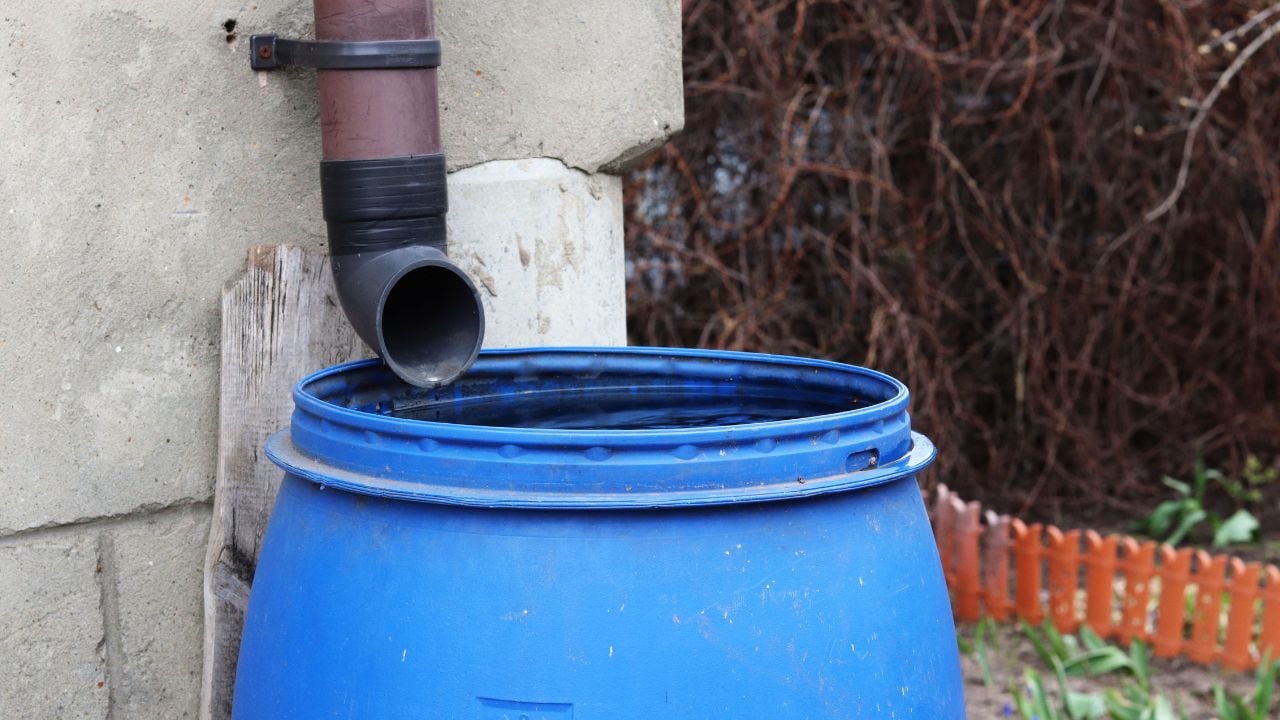
4 Rainwater Collection Mistakes That Get North Carolinians Fined

Since 2011, North Carolina has barred cities and counties from banning a rain barrel or cistern used to water a person’s yard.
The protection stops at the barrel.
These are the rainwater collection mistakes that get North Carolinians fined.
Note: This is general information, not legal advice. Permit, plumbing, and nuisance rules vary by city and county and are subject to change.
1. Skipping the Cistern Permit
North Carolina’s plumbing code treats a rainwater system like any other water system once it leaves the barrel stage.
The state added Appendix C-1 to its plumbing code to cover a cistern plumbed to flush a toilet or urinal.
That setup needs a permit before the first pipe goes into the ground.
A cistern feeding an irrigation line or running through a pump and filter falls under the plumbing code’s general permit requirement instead.
That’s the same Section 106 that Appendix C-1 points back to for permits.
A plain barrel with a spigot under the downspout doesn’t carry that same requirement.
Skip the permit on a piped system, and the inspector who eventually finds the work can cite it as a violation of the North Carolina State Building Code.
That’s a Class 3 misdemeanor.
The fine tops out at $50 per offense.
Every 30 days the violation goes uncorrected counts as a fresh one.
A stop-work order usually shows up first, freezing the project until the paperwork catches up.
What North Carolina’s Rain Barrel Law Covers
North Carolina’s cistern and rain barrel law doesn’t erase the permit rule above.
The rule sits in General Statute 160A-202 for cities, plus a matching statute for counties.
Local governments can still regulate installation for public health, safety, and nuisance reasons, which is exactly where every rule on this list lives.
2. Cross-Connecting the Cistern
A cistern tied straight into a home’s plumbing creates what water engineers call a cross-connection, and North Carolina takes that seriously.
State rules require every public water system to run a program that keeps an outside water source, cistern included, from siphoning backward into the drinking-water lines.
A backflow-prevention device, or a true air gap, is what stands between a cistern and that risk.
Wire a cistern into the house without one, and the water utility can treat it as a cross-connection violation.
Durham’s Cross Connection Control Program sends a notice giving the homeowner 60 days to fix it.
If you miss that window, daily civil penalties start accruing until the device goes in and passes inspection.
Every extra day costs more.
3. Letting a Barrel Breed Mosquitoes
A rain barrel or cistern left open turns into exactly the kind of still water mosquitoes need to lay eggs.
Local nuisance ordinances treat that outcome as a violation, not an accident.
Henderson County’s code names breeding grounds that support mosquito larvae as a public nuisance outright.
Section 52-7 of that code gives a homeowner 30 days from the notice to fix it.
The civil penalty runs $50 a day, and every day counts as a separate violation.
A week of neglect adds up to $350.
Other North Carolina counties and cities run similar mosquito-nuisance rules under their codes.
A screen finer than 1/16 inch mesh over every opening, the standard North Carolina State University’s extension service recommends, keeps a mosquito out before any of this becomes a problem.
4. Crowding the Property Line
A cistern big enough to matter counts as an accessory structure under many North Carolina zoning codes, the same category as a shed or a detached garage.
Raleigh’s Unified Development Ordinance requires a minimum setback of 5 feet from the side and rear property lines for a cistern under 150 square feet.
That’s the same threshold covering a small shed.
Set the tank closer than that without going through zoning review, and the city can open a violation case.
The starting civil penalty is $100, but it doesn’t stop there.
Let the violation sit uncorrected, and it rises to $500 a day, with each day treated as a separate offense.
Every North Carolina city and county draws that setback line differently.
The safe number to build against always comes from the local ordinance, not a rule of thumb borrowed from a neighboring town.
Psst! How much do you know about North Carolina’s rainwater rules? Flip these cards and find out.
More Than One Backflow Test
North Carolina water utilities require a rainwater system’s backflow preventer to pass more than the test it took at installation.
The device wears down over time, even after it first passed inspection.
Durham’s Cross Connection Control Program shows how that plays out.
Skip the retest, and the same 60-day notice and daily civil penalty that cover an unpermitted connection also cover a lapsed connection.
A test that passed once doesn’t carry forward forever.
Testing every year or two is common practice for backflow assemblies tied to outdoor water use, though the exact interval depends on the utility.
Skipping it counts the same as never installing the device at all.
Raleigh’s Rainwater Payments
Raleigh takes the opposite approach to rainwater collection from every rule above.
Money moves the other way.
The city’s Rainwater Rewards program reimburses homeowners for a share of what a cistern, rain garden, or similar project costs to install.
Typical participants get back 75% to 90% of approved costs.
Homeowners in the program’s targeted communities, along with nonprofits and houses of worship, can qualify for a full 100% cost-share.
The goal is fewer gallons of stormwater rushing off a roof and into a storm drain during a downpour.
The city approves each project before it reimburses a dollar of the cost.
8 Reasons North Carolina Homeowners Get Dropped by Their Insurance Company
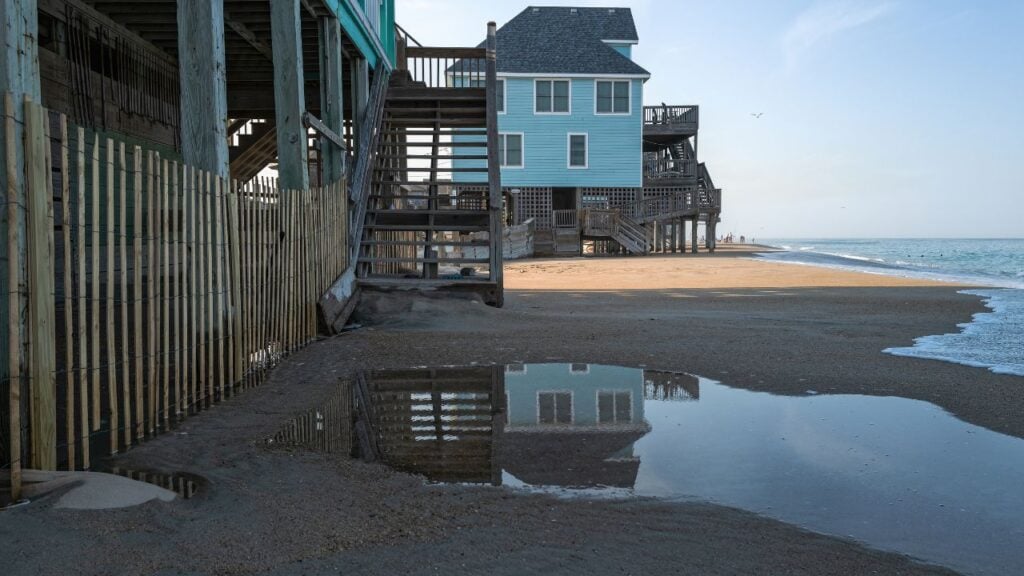
Six months after Hurricane Helene tore through the mountains, wildfires broke out on the same slopes, and insurers took notice of both.
A home doesn’t have to flood or burn before a company’s risk model flags it, and North Carolina homeowners are finding that out the hard way.
8 Reasons North Carolina Homeowners Get Dropped by Their Insurance Company
9 North Carolina Waterfalls Worth the Hike, Ranked by the Hikers Who’ve Made the Climb

North Carolina packs more than 250 named waterfalls into Transylvania County alone, and the falls locals send visitors to rarely match the postcard everybody already knows.
The state’s oldest hiking club has already done the legwork, ranking the falls worth the trail from the people who’ve made the climb.
9 North Carolina Waterfalls Worth the Hike, Ranked by the Hikers Who’ve Made the Climb
