
8 Reasons North Carolina Homeowners Get Dropped by Their Insurance Company

Six months after Hurricane Helene tore through the mountains, wildfires broke out on the same slopes.
Insurers took notice of both.
A home doesn’t have to flood or burn before a company’s risk model flags it. It just has to sit somewhere that model now points to, or carry a detail underwriters didn’t like the look of at renewal time.
These are the reasons North Carolina insurers drop a homeowner.
Note: This is general information, not insurance advice. Coverage, underwriting rules, and dollar figures are subject to change. Check the specifics with your insurer or agent.
1. Aging Roofs
The clock on a North Carolina roof starts running the moment the shingles go up, at least as far as an insurer is concerned.
Many standard carriers stop writing or renewing a policy once an asphalt shingle roof passes somewhere around 15 to 20 years old.
Some near-coastal companies draw the line even earlier.
Twenty years sounds generous.
It isn’t, once you look at what’s happening underneath.
The Insurance Institute for Business & Home Safety says its own published wind ratings don’t account for weathering or age at all, only for how a shingle’s sealant strip performs the day it goes on the roof.
That’s exactly why carriers lean on a hard age cutoff instead of waiting to find out whether an old sealant strip still holds.
An inspector doesn’t need storm damage to flag it.
A roof past a carrier’s age cutoff is often reason enough on its own.
The non-renewal notice usually arrives before a single shingle blows off.
2. Too Many Recent Claims
Few North Carolina homeowners realize their claims history follows the house, not just them.
Insurers pull a Comprehensive Loss Underwriting Exchange (CLUE) report, a shared database of claims filed on a property and its owner going back years, before every renewal decision.
Filing one claim rarely ends a policy.
About 1 in 18 insured homes files a claim in a given year.
A single water leak or wind claim doesn’t stand out against that backdrop.
Two or three in a short stretch reads differently.
That pattern tells a story.
Maybe it’s a recurring plumbing problem, a leaky roof valley, or an owner who files for damage a neighbor would just fix.
Any of those readings can end in a non-renewal letter at the next anniversary date.
3. Dog Breeds on the Blacklist
North Carolina insurers can end a homeowner’s policy over a single detail buried on the application: Which dog breed lives in the house.
Few owners read that far into the paperwork.
North Carolina insurers use a standard homeowners (HO) endorsement, filed as HO 32 29, to strip liability coverage for nearly 30 named dog breeds.
The list runs from pit bulls and Rottweilers to Chow Chows, Great Danes, and German Shepherds.
Once an insurer learns a listed breed lives on the property, many attach the exclusion or raise the premium sharply.
Some simply decline to renew the whole policy rather than carry the liability risk.
A bite claim from a neighbor or a mail carrier makes that non-renewal the easier call.
4. Living in the Wind Pool
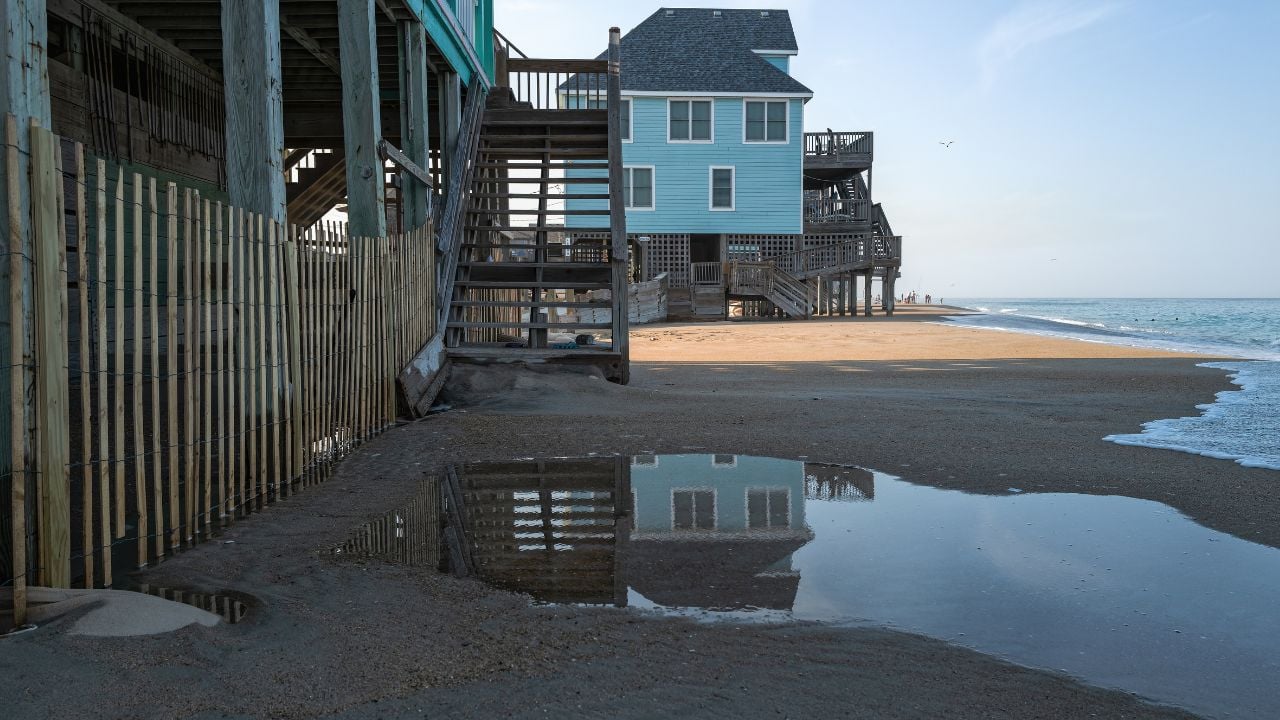
North Carolina’s coastline runs its own separate insurance math.
In 2023, Nationwide non-renewed 10,525 North Carolina homeowners policies at once.
State regulators confirmed 5,781 of those came straight from a company hurricane hazard assessment tool.
Over 1,000 sat on the Outer Banks alone.
That’s a lot of mail.
North Carolina channels much of that wind exposure into the North Carolina Insurance Underwriting Association, known statewide as the Beach Plan, which covers wind and hail in eligible counties like Dare, Carteret, and Brunswick after standard carriers step back.
A home doesn’t have to take a direct hit.
Sitting inside a company’s redrawn wind zone is often enough on its own.
5. Low Credit-Based Scores
North Carolina law stops an insurer from dropping a homeowner over a credit-based score alone, but the score still gets a seat at the table.
Homeowners in North Carolina often assume their credit report only touches a car loan or a credit card.
Insurers run something different called a credit-based insurance score.
Under G.S. 58-36-90, a company can’t use that score as the sole basis for ending an existing policy.
The same statute lets an insurer fold the score into the decision alongside another factor, like a recent claim.
That combination is what moves a file from renew to drop.
The gap behind that score explains why insurers lean on it so hard.
A Consumer Federation of America report found North Carolina homeowners with low credit-based scores pay about $3,047 more a year than homeowners with high scores on an identical house and policy.
That’s steep.
That’s more than many North Carolinians pay for coverage altogether.
An insurer weighing whether to renew a borderline account already has that gap in front of it.
A low score paired with even one claim is often enough to end coverage.
6. Homes Sitting Vacant
A North Carolina homeowner moving for a job, a hospital stay, or a slow-selling estate often keeps paying the same policy without telling the insurer the house sits empty.
Nobody’s home.
A standard policy doesn’t stay standard once that happens.
A homeowners policy suspends coverage for vandalism, theft, and water damage once a home crosses its vacancy threshold, commonly somewhere between 30 and 60 days with nobody living there.
An insurer that finds out doesn’t always wait for renewal.
Some cancel outright once vacancy turns up during a claim or a routine inspection.
The rest simply decline to renew a policy built for a house nobody’s living in.
7. Outdated Electrical Panels
Breaker boxes across North Carolina’s older housing stock still hide one particular brand-name problem.
Federal Pacific and Zinsco panels, both common in homes built through the 1970s, are known for breakers that fail to trip during an overload instead of shutting the circuit down.
Many carriers won’t touch a house that still has one of these panels.
Replace it or lose coverage.
An underwriting inspection that turns one of these panels up often ends with a non-renewal notice giving the homeowner a window to swap it before the next term.
Unpermitted additions or rewiring found the same way draw the identical response.
The panel itself rarely causes a fire before someone notices.
The insurer just isn’t willing to bet on it.
8. Wildfire Risk in the Mountains
Decades passed with North Carolina’s mountain counties considered safe from the kind of risk that gets a coastal policy dropped.
That changed fast.
The Black Cove and Deep Woods fires burned a combined 6,283 acres in Polk County, fed partly by downed timber Hurricane Helene left behind months earlier.
Ten fires burned across the state at once that week.
Insurers increasingly run mountain properties through wildfire-risk models the same way they run coastal homes through hurricane models.
A company can non-renew a home sitting inside a newly flagged zone near Polk, Henderson, or Buncombe County even if the fire burned miles away.
Psst! How much do you know about North Carolina’s insurance history? Take our quiz and see if you can ace it.
Quiz
North Carolina Insurance IQ
Answer these questions on North Carolina’s insurance history and rules. We bet you can’t get them all right. Prove us wrong?
A 1954 hurricane that made landfall near Calabash helped push North Carolina toward creating a state wind pool for coastal homes. Which storm was it?
What North Carolina Law Requires Before You're Dropped
North Carolina doesn't leave a homeowner guessing about the paperwork, even if state law can't stop the decision.
State law splits the process into two very different tracks.
Many homeowners use the words interchangeably without realizing they aren't.
Non-renewal happens at your policy's expiration or anniversary date.
An insurer has to mail written notice at least 45 days ahead of that date.
Cancellation ends a policy mid-term.
North Carolina only allows it for a short list of reasons, most requiring just 15 days of notice instead.
That 45-day window matters for another reason.
Use it.
It gives a homeowner time to shop a new policy, fix the roof or the panel, or find a carrier that hasn't pulled back from their county, before the old coverage lapses.
Non-Renewal and Cancellation Aren't the Same Letter
A North Carolina insurer can only cancel an existing policy mid-term for a short list of reasons on the books, like unpaid premium, a material misrepresentation on the application, or a hazard that materially changed since the policy started.
A brand-new policy is the one exception.
Any North Carolina policy in force less than 60 days can be cancelled for almost any reason, with only 15 days of notice required.
Either notice, non-renewal or cancellation, has to spell out the precise reason in writing under North Carolina law.
A homeowner never has to guess why the policy was dropped.
Fortified Roofs Can Undo a Non-Renewal
Flagging the roof or the wind exposure doesn't leave North Carolina homeowners entirely stuck.
The Insurance Institute for Business & Home Safety runs a voluntary program called FORTIFIED.
The North Carolina Department of Insurance confirms it can unlock mitigation credits on wind and hail coverage in the state's beach and coastal territories.
The standard goes further than ordinary code.
An inspector has to verify a re-roof built to FORTIFIED specs before the discount kicks in.
That documentation is exactly the kind of thing that can turn a looming non-renewal into a renewal with a lower bill attached.
Not every carrier offers the credit.
Ask before the letter arrives.
Bringing it up before the roof becomes the reason for a non-renewal notice beats finding out about FORTIFIED after the fact.
The credit applies to the wind and hail portion of a bill, the same slice of the policy that sends so many coastal North Carolina homeowners toward the Beach Plan in the first place.
A homeowner already facing that referral has the most to gain from asking an agent what FORTIFIED verification would change on their own bill.
8 North Carolina Roadside Finds That Aren't Automatically Finders Keepers
Finding something valuable along a North Carolina shoulder feels like a stroke of luck.
The law doesn't always agree.
Picking the wrong item up can cost more than it's worth.
8 North Carolina Roadside Finds That Aren't Automatically Finders Keepers
8 Money Mistakes North Carolina Renters Make Before Signing a Lease

Many North Carolina renters sign a lease at the kitchen table without ever reading past the rent and the move-in date.
Page three is where the numbers live.
It's the page almost nobody reads.
8 Money Mistakes North Carolina Renters Make Before Signing a Lease
