
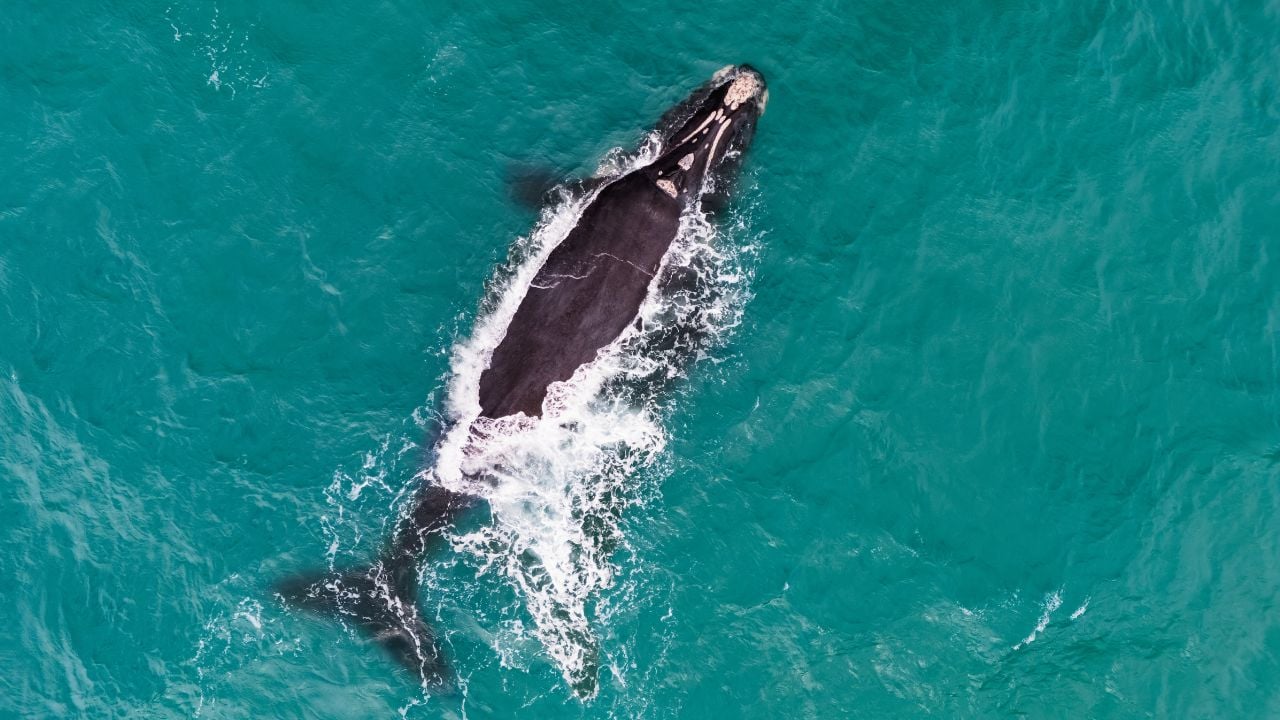
4 Things Right Whales Do Off South Carolina Every Winter That Many People Never See

A fall and winter beach in South Carolina can look empty, but there may be a lot going on just offshore.
South Carolinians walking the shore this time of year might never guess that a rare whale may be passing by.
Here’s what right whales do off the coast each winter.
Note: This is general information, not legal advice. Federal vessel rules are subject to change, so confirm the current requirements with NOAA Fisheries.
1. Arriving After a 1,000-Mile Swim
Many right whales feed and mate in waters off New England and Canada through spring, summer and into fall, according to NOAA.
Each fall, some of them swim more than 1,000 miles to the shallow coastal waters off North Carolina, South Carolina, Georgia and Florida.
That’s a long trip.
Right whales can be seen off those four states from mid-November to mid-April, so they spend part of the winter there.
Some arrive earlier than you might expect.
Georgia’s Department of Natural Resources reported two right whales off Hilton Head on Nov. 5, 2025.
Georgia’s first right whales usually show up in late November or early December, so the early visit was uncommon but not unheard of.
2. Traveling With Calves
Right whale mothers and calves travel through these waters during calving season, which runs from mid-November through mid-April.
NOAA’s Southeast office monitors the calving season each year with partners at sea and in the sky.
Its species page lists South Carolina’s coast among the calving grounds.
Florida’s wildlife agency draws the map tighter, placing the only known calving ground off Georgia and Florida.
Either way, mothers with calves have been spotted off South Carolina.
In late fall, you could cross paths with one on the water.
In late November 2024, the season’s first mother-calf pair turned up about five miles off Cape Romain.
A year later, the Clearwater Marine Aquarium Research Institute confirmed the season’s first calf off Litchfield by the Sea on Nov. 28.
Same coast, same month.
3. Swimming Miles Offshore
Right whales swim in shallow coastal waters off South Carolina.
NOAA’s 2025-26 list of mother-calf pairs includes five off the state.
The earliest entry, on Dec. 4, 2025, put a pair about 28 miles east of Pawleys Island.
A week later, another was listed about 10 miles east of Sullivan’s Island Lighthouse.
On Dec. 23, a third pair was about 15 miles east of Hilton Head.
Three days later, a fourth was about 18 miles east of Kiawah Island.
You can’t see that far from the sand.
Psst! How much do you know about the wildlife along the Atlantic coast? Take our quiz and see if you can ace it.
Quiz
Coastal Wildlife IQ
Answer these nine questions on dolphins, turtles, shorebirds and other Atlantic coast wildlife. We bet you can’t get them all right. Prove us wrong?
What are Charleston-area dolphins doing when they “strand feed”?
4. Lingering Into Late Winter
Right whales can turn up off the coast well into winter.
NOAA placed the fifth pair, a mother and calf, about 17 miles east of Charleston on Jan. 20, 2026.
A few days before that, a fisherman near Hilton Head spotted two mothers with calves.
One of them was Uca, the mother logged off Hilton Head on Dec. 23.
In March 2020, a North Myrtle Beach officer's drone filmed a mother and calf about 100 yards offshore.
That's close enough that you might spot one from the beach.
A similar pair had been seen in the same area in February.
Why You Could Miss One
Right whales tend to swim and rest just at or below the surface, with little of their body showing, according to NOAA.
Easy to miss.
An adult can reach 52 feet and weigh up to 140,000 pounds.
In the southeastern United States, where right whales regularly give birth, new mothers put the bulk of their energy into nursing and supporting their calves.
Those mothers tend to rest and breathe shallowly to save energy.
You could scan the water and look right past a resting whale.
A Population Under 400
The right whale population is up about 20 since 2020, according to NOAA.
Its scientists estimated 384 whales at the start of 2024, within a range of 375 to 394.
There were 23 calves in 2025-26, the highest number in 17 years.
Only about 70 of the whales are reproductively active females.
If you haven't spotted a right whale, those numbers help explain it. You're searching an ocean for fewer than 400 animals.
Speed Zones for Ships
Right whale speed zones along South Carolina's coast start Sunday, Nov. 1, and run through April 30.
If you captain a vessel 65 feet or longer, you have to slow to 10 knots or less inside them.
The rule dates to 2008, and it remains in effect.
In August 2022, NOAA proposed changes to the rule, then withdrew that proposal on Jan. 16, 2025.
A comment period on possible changes opened in March 2026 and closed June 2.
The zones still apply.
Who Gets a Pass on the Speed Rule
Right whale speed rules don't cover boats under 65 feet, but NOAA urges them to stay at or under 10 knots inside active zones.
Federal government vessels are exempt, along with state law enforcement vessels on enforcement or rescue work.
Any other captain can go faster only when ocean or weather conditions severely restrict how the vessel can maneuver.
The captain has to log the deviation, the speed, the location and how long it lasted.
Reporting a Sighting
If you spot a right whale anywhere from North Carolina to Florida, NOAA asks you to call 877-942-5343.
You can also reach the U.S. Coast Guard on marine channel 16 or file a report in the Whale Alert app.
Give them room.
Federal law bars approaching a right whale within 500 yards, which is 1,500 feet.
That's about five football fields.
The rule covers vessels, aircraft or any other means of approach.
If you're underway, you have to steer away and leave the area at a slow, safe speed.
8 Things That Still Mark a South Carolina Mill Town Long After the Mill Closed
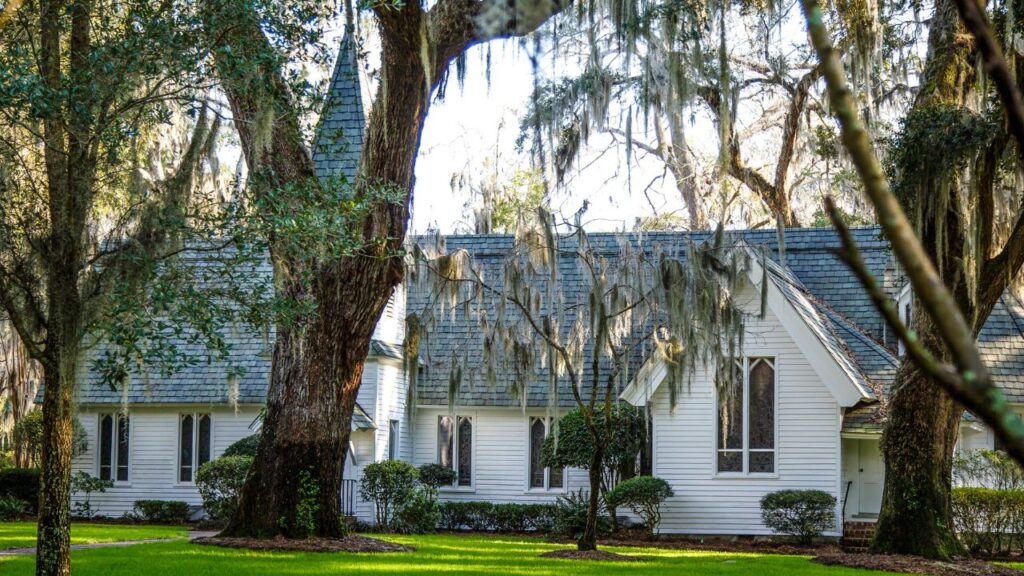
Nearly every textile mill South Carolina built came with a company-built village wrapped around it.
Many of those mills went dark decades ago, but the villages didn't always disappear with them.
8 Things That Still Mark a South Carolina Mill Town Long After the Mill Closed
9 South Carolina Habits That Place Someone Below the Fall Line
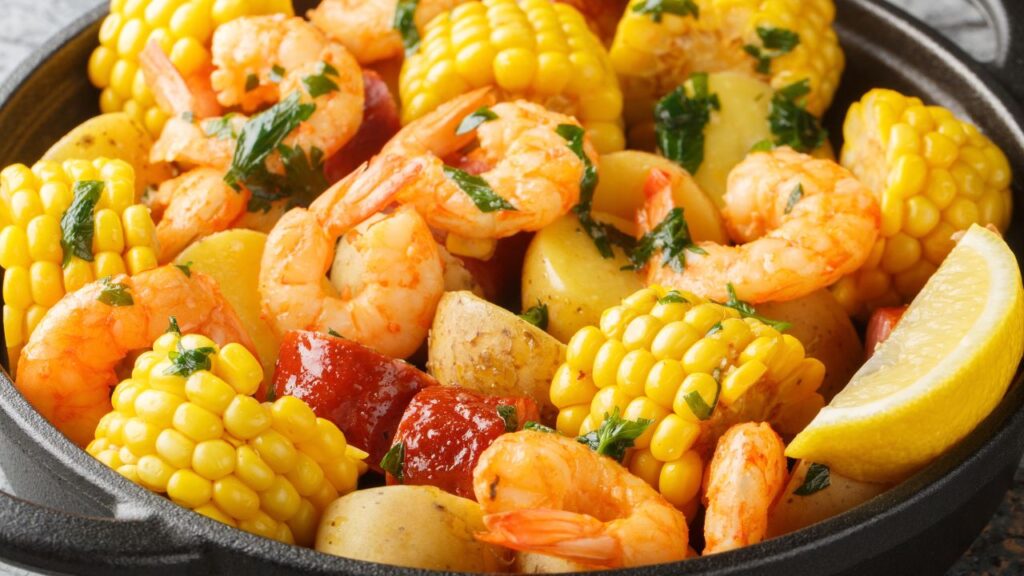
Where you live in South Carolina shapes how you talk, eat and spend a Saturday.
A few everyday habits can tell a lot about which side of the Fall Line you call home.
9 South Carolina Habits That Place Someone Below the Fall Line
