
4 Things That Make a Smith Island Cake Genuine, According to Marylanders

Somebody brings a chocolate layer cake to Thanksgiving dinner and calls it a Smith Island cake.
Marylanders can tell it isn’t one before the first bite.
Here are the things that make a Smith Island cake genuine, according to Marylanders.
1. Eight to Ten Thin Layers
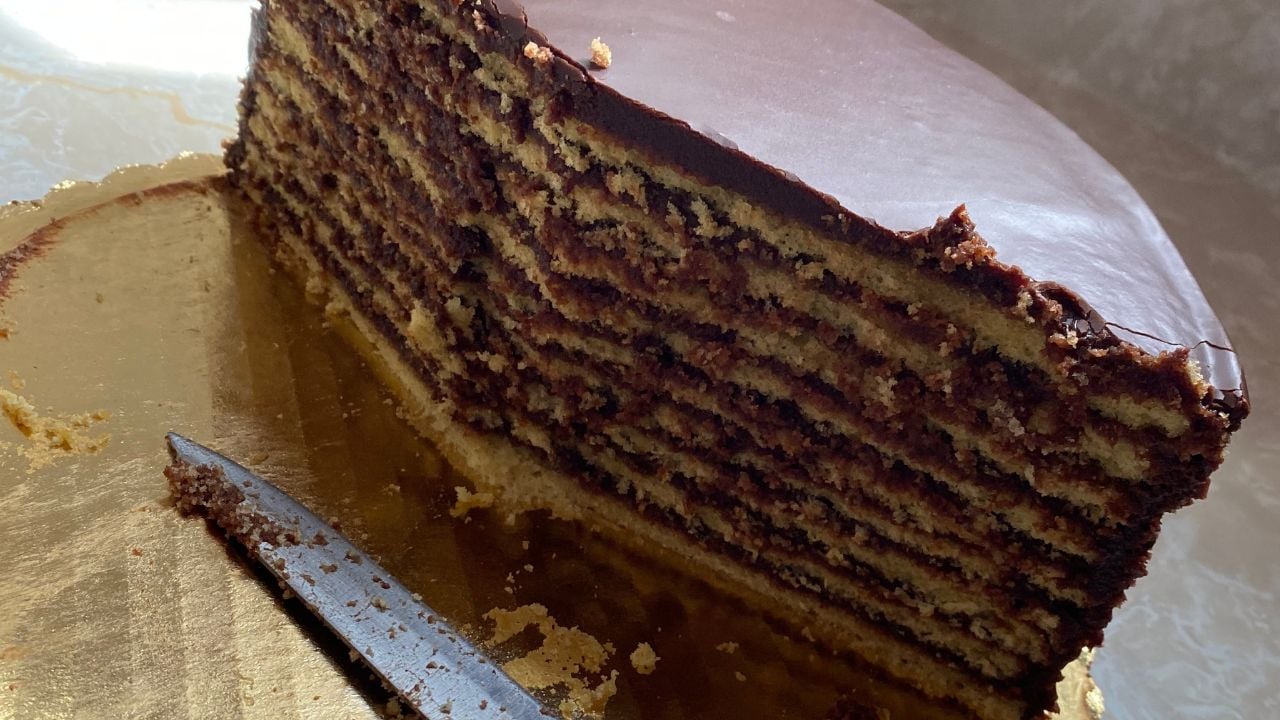
The Smith Island cake stacks eight to ten layers of yellow cake.
Those layers run thin, with icing between every one of them.
A slice is equal parts cake and fudgy icing.
Frances Kitching’s recipe builds ten of them, baking three at a time for eight minutes at 350 degrees.
Her recipe says a layer is done when you hold it near your ear and don’t hear it sizzle.
Bakers don’t all count the same, though.
In 2008, the Associated Press described the cake as always having seven or more layers.
2. Evaporated Milk
Because fresh milk was hard to store on the island, cooks there used the canned kind.
A Smith Island cake takes evaporated milk twice, once in the batter and once in the icing.
Kitching’s recipe, reprinted by National Public Radio, uses one cup in the batter and two 12-ounce cans in the icing.
The rest of the batter is two cups of sugar, two sticks of butter, five eggs, and three cups of flour.
Some islanders might call a fresh-milk version a different cake.
If you bake one, check your pantry for the cans first.
3. Cooked Fudge Icing
The icing on a Smith Island cake starts in a saucepan, not a mixing bowl.
Think fudge, not buttercream.
Kitching’s recipe has you melt butter, stir in evaporated milk off the heat, and whisk in unsweetened cocoa before cooking it for about ten minutes.
Then you whisk in two pounds of confectioners’ sugar and keep cooking until the icing sticks to the back of a spoon.
A recipe from AAA World boils its chocolate icing for 12 to 15 minutes instead.
Kitching’s recipe puts two or three serving spoonfuls of icing between each layer.
The finished icing goes between each layer and over the whole cake.
One explanation for the fudge icing is that it stayed fresher longer while watermen were out harvesting oysters.
Watermen’s wives often packed the cake in their husbands’ lunches.
Psst! How much do you know about Maryland and the Chesapeake Bay? Take our quiz and see if you can ace it.
Quiz
Maryland Bay Trivia
Answer these questions on Maryland’s state symbols, Chesapeake traditions, and a famous seasoning. We bet you can’t get them all right. Prove us wrong?
Old Bay Seasoning, created by a German immigrant in Baltimore, took its name from what?
4. Made on Smith Island
A Smith Island cake takes its name from the island community that created it, according to Salisbury University's Nabb Research Center.
That island is Maryland's last inhabited one, about 12 miles west of Crisfield and reachable only by boat.
It sits in Somerset County and straddles the Maryland-Virginia line, and its watermen and their families developed a penchant for multi-layered cakes.
If you want a slice at the source, you'll plan around a boat ride.
In April 2008, tourism officials were opening a series of water trails around the island.
In 2008, Smith Island baker Mary Ada Marshall was baking her cakes in her kitchen.
By 2026, a ferry operator was picking up an order of 50 Smith Island cakes from a local baker named Marshall at the dock in Tylerton.
The Smith Island Bakery opened in Ewell in 2018 to give visitors a taste of cake baked on-site.
Smith Island Baking Company also opened in Ewell, then moved to Crisfield in 2015 after years of shipping cakes from an island.
Shortcuts and Other Flavors
Baker Mary Ada Marshall's shortcut Smith Island cake, published by AAA World in 2021, starts with a box of Duncan Hines yellow cake mix, though any mix will work.
Her batter yields eight layers.
Each one bakes for eight to ten minutes at 350 degrees, until the edge starts to brown.
Her icing is quicker too, with powdered sugar, cocoa, and evaporated milk heated in a saucepan with cold butter.
The same article also prints Kitching's cooked coconut icing.
Yellow cake with chocolate icing is the traditional version, but many variations have evolved, with different frosting flavors and cake types.
By 2008, the cake came in dozens of flavors.
You can also skip the baking and order one.
AAA World lists Smith Island Bakery and Smith Island Store in Ewell, Smith Island Baking Company in Crisfield, and Classic Cakes in Salisbury as local sellers.
How Island Families Passed It Down
Folklorist Elaine Eff visited Smith Island in 1989 and found a cake with thin layers everywhere she went.
She also found that island cooks varied both the recipe and the number of layers.
One theory from Eff is that thin layers baked more easily in wood-fired ovens, before electricity reached the island.
Bakers like Mary Ada Marshall say they learned the cake from their grandmothers, who learned it from theirs.
Marshall credits the cake's creation to island women trying to outdo each other with ever-taller cakes.
Islanders baked theirs for weddings, picnics, funerals, church events, or just everyday eating, so you might have met one at any of them.
From Island Kitchens to the Statehouse
Before the 1990s, you'd have had a hard time finding the cake anywhere other than Smith Island.
In 2008, Delegate D. Page Elmore, who represents Smith Island, introduced a bill to make it Maryland's official dessert.
The bill passed.
Gov. Martin O'Malley signed it into law, and the Maryland Manual lists October 1, 2008, as the date it took effect.
7 Maryland Blue Crab Rules That Turn a Weekend Catch Into a Fine
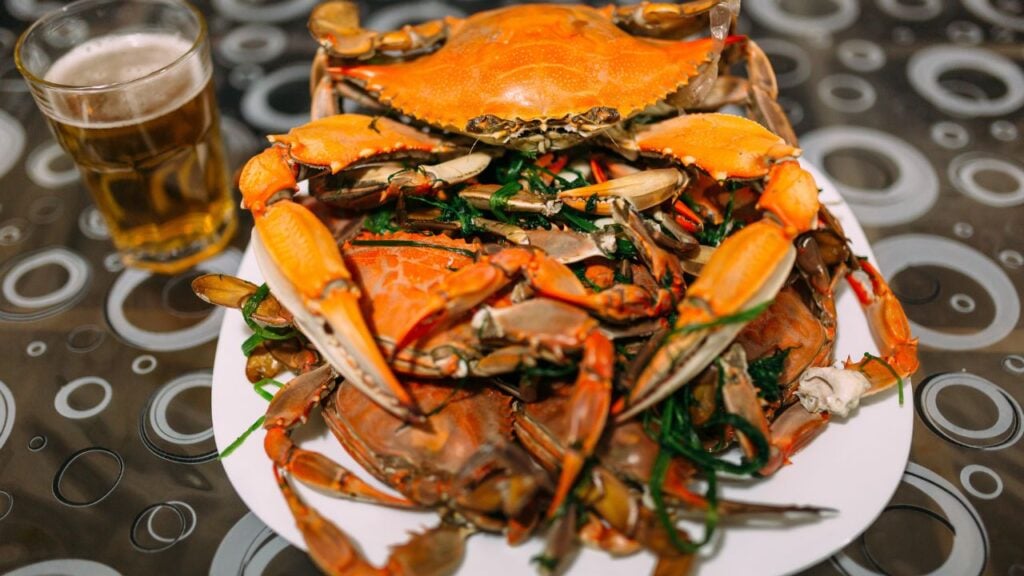
You spend a weekend on the water and haul in a good catch of blue crabs.
But in Maryland, a good catch isn't always a legal one, even if you're only crabbing for fun.
7 Maryland Blue Crab Rules That Turn a Weekend Catch Into a Fine
9 Maryland Foods That Horrify the Rest of the Country
On Maryland's Eastern Shore, a slice of fried scrapple often sits next to the eggs.
Tourists are better off asking what's in it after they've eaten.
