

5 Connecticut Property Tax Rules That Hit New Residents the First Fall

A new home comes with a long to-do list, and a tax bill is easy to overlook.
If you’re a new Connecticut homeowner, your first property tax season may work differently than you’d expect.
Learn these rules before that first bill arrives.
Note: This is general information, not legal or tax advice. Assessment rules and deadlines are subject to change, so confirm the current details with your town assessor’s office.
1. The Seller’s Name on Your Bill
If you own the house on January 1, Norwich’s tax office says you owe that property tax installment whether or not a bill arrives.
The bill that reaches you can still carry the seller’s name.
Westport addresses its tax bills to the owner on the October 1 grand list unless told to send them elsewhere.
Westport also asks a seller who receives a bill to forward it to the new owner.
Towns differ on who gets the bill.
Norwich, which bills in July and January, reflects ownership changes recorded through the end of May in its July bills.
Every Connecticut town uses October 1 as its assessment date, and the town’s published list of assessed property is called the grand list.
Meriden’s tax office says taxes based on that list are due the following July 1, and it lets you pay in four equal installments through April.
So if you bought after October 1, 2025, the October and January installments there should trace back to the list taken before your closing.
2. A Lien Older Than Your Deed
A seller’s unpaid property tax can stay with the house.
Connecticut law puts a lien on a house for its property tax on October 1, the year before the tax first comes due.
If you bought after October 1, 2025, any tax due this fall or winter already had a lien on the house before your deed.
That lien takes precedence over all transfers of the property, including your purchase.
It also lets a town enforce the lien by levy and sale of the real estate.
The lien lasts until two years after the tax, or its first installment, came due.
3. Late Tax Interest From the Due Date
If your first property tax bill arrives in the seller’s name, interest still runs from the due date, not from the day you open it.
State law sets the rate at 18% a year and counts any part of a month as a full month.
Westport’s collector says the tax stays due, and you keep owing interest, until the bill is paid or the assessor removes it.
Norwich lets you pay the installment due January 1 without interest until February 1.
4. New Construction After October 1
If you bought a newly built home that was finished after an October 1 list date, you owe its property tax from the earlier of two days.
One is the day the town issues its certificate of occupancy.
The other is the day someone first uses the home.
Because the home missed that year’s list, the statute has the town prorate its first bill for the year it was completed.
The assessor has up to 90 days after receiving the building inspector’s notice to set the added value.
If the assessor’s notice arrives after the town’s normal billing date, the collector has 30 days to mail you a bill.
That bill can’t come due sooner than 30 days after mailing.
Together, those deadlines mean a certificate issued this fall can bring a bill within about four months of the assessor receiving the building inspector’s notice.
5. Farm and Forest Land Classification
If you bought a house with a hayfield or a woodlot, the property tax break the seller had may not have come with the deed.
Under Public Act 490, a town assesses farm, forest and open space land at its use value instead of its market value.
The state Department of Agriculture says a change of ownership ends the classification, and the new owner has to reapply.
You apply at your town assessor’s office between September 1 and October 31.
In a year when your town revalues, you have until December 30.
For forest land, a certified forester’s report has to be dated on or before October 1.
Psst! How much do you know about property tax? Take our quiz and see if you can ace it.
Quiz
Property Tax Trivia
Answer these questions on how towns assess and bill property tax. We bet you can’t get them all right. Prove us wrong?
A home is only partly built on October 1. How does state law say the town assesses it?
Veterans Exemption Deadline
Fairfield, East Hartford and Bristol all ask veterans to file their discharge papers by September 30 to qualify for a property tax exemption.
It has passed.
If you're a veteran in Fairfield, you file your discharge form, the DD-214, with the town clerk by then to be eligible for the exemption the following year.
If you're a veteran who recently moved to Bristol, the city asks you to record your DD-214 with the city clerk by the same date.
Bristol limits that to veterans with 90 days or more of wartime service.
You then bring a copy of the recorded form to the assessor's office.
East Hartford runs a separate application period from February 1 to October 1 for enhanced state and town programs.
Mill Rates From Town to Town
Towns quote property tax in mills, and a mill is $1 of tax for every $1,000 of assessed value.
Patch, reporting state Office of Policy and Management data, put Washington's 2025-26 mill rate at 10.85 and Hartford's at 68.95.
For every $100,000 of assessed value, you'd owe about $1,085 in Washington and about $6,895 in Hartford.
That's a gap of about $5,800 a year for the same assessed value.
Where your bill falls between those two depends on your town's rate.
The Math Behind a Property Tax Bill
Connecticut assesses homes at 70% of their market value.
A property tax bill multiplies that assessed value by your town's mill rate.
So if your home's market value is $400,000, the town assesses it at $280,000, and at 30 mills the bill comes to $8,400.
Spring Circuit Breaker Window
The state's circuit breaker program gives a property tax credit to homeowners who are 65 or older or totally disabled.
If you bought after the October 1 assessment date, the Office of Policy and Management's homeowner Q&A booklet says you aren't entitled to benefits until the next grand list year.
Applications go to your town assessor between February 1 and May 15.
The income limit in the office's 2026 booklet is $56,500 for married couples and $46,300 for unmarried homeowners.
9 Things That Give a Nutmegger Away the Moment They Leave the State

Connecticut collected its last state highway toll in 1989, at the Charter Oak Bridge.
Never budgeting for tolls is only one of the giveaways.
9 Things That Give a Nutmegger Away the Moment They Leave the State
3 Connecticut Covered Bridges Nutmeggers Still Argue About
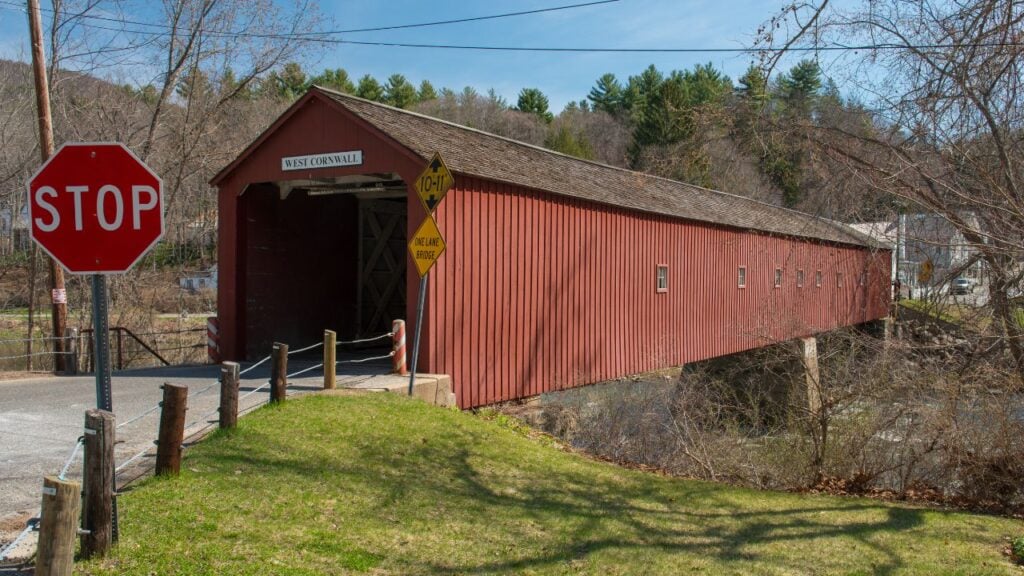
Connecticut's covered bridges look peaceful from the road.
Talk to the Nutmeggers who know them, though, and the arguments start.
