

5 Everyday Things From the 1950s That Florida No Longer Allows

Some parts of everyday life in 1950s Florida wouldn’t be allowed today.
Older Floridians may remember a few of them, and while some seemed harmless back then, others were never right.
Here’s what changed, and why.
Note: This is general information, not legal advice. Laws and rules are subject to change.
1. Baby Alligator Souvenirs
You could buy a baby alligator as a souvenir in Florida, since selling them was common before 1967, Florida Memory says.
Alligators gained endangered species status in 1967.
A 1962 photo shows a baby alligator bought at Silver Springs and kept in a Panama City backyard.
Not anymore.
Florida law now bars you from intentionally killing, injuring, capturing or possessing an alligator or its eggs, unless the Fish and Wildlife Conservation Commission’s rules authorize it.
Breaking that rule is a Level Four violation, which is a third-degree felony.
2. DDT Fog Trucks
In 1950s Florida, you could find mosquito fog machines almost anywhere, a mosquito control director told the Indian River Guardian.
He put the stretch at about 1950 to 1970.
A 2018 white paper from the Florida Coordinating Council on Mosquito Control says dichlorodiphenyltrichloroethane (DDT) became the go-to material for mosquito control after World War II.
Almost every mosquito control district in Florida then began spraying DDT from the air and the ground.
The insecticide was dissolved in diesel oil and heated up to 1,000 degrees.
Kids ran through the fog.
The Environmental Protection Agency (EPA) issued a cancellation order for DDT in 1972, citing harm to wildlife and potential human health risks.
That federal order applies nationwide, so you won’t see DDT fog trucks in Florida today.
3. Reef Souvenirs
Before John Pennekamp Coral Reef State Park existed, visitors collected souvenirs from the Keys reef, Florida State Parks says.
People hammered, chiseled and even dynamited corals, sponges and sea horses to make tourist knickknacks.
At a 1957 biological conference in Everglades National Park, Dr. Voss described the extent of the damage he had noted on the reef.
The park followed.
Florida held dedication ceremonies for John Pennekamp Coral Reef State Park on December 10, 1960.
Today, you can’t collect stony corals, fire corals or common sea fans in Florida, according to the Florida Fish and Wildlife Conservation Commission.
What Counts as a Coral Souvenir
Inside the Florida Keys National Marine Sanctuary, federal rules bar you from possessing any living or dead coral, even if you picked it up somewhere else.
The same rule bars you from moving, taking, breaking, touching or damaging coral.
4. Taking Sea Turtles
Taking sea turtles and their eggs remained rampant in Florida, the Sea Turtle Conservancy says.
In the 1950s, the sea turtle’s plight captured the attention of biologists.
A 1953 law banned taking sea turtle nests or eggs at any time and seemingly left the turtles themselves to county-by-county local laws.
A 1957 law made it unlawful to take, kill or possess a loggerhead, green or other turtle on beaches or within half a mile offshore, May through August.
That covered four months.
In 1971, a new section of state law extended the in-water ban for all species from half a mile to the state’s territorial waters.
Today, you can’t knowingly possess, take, disturb, harass or sell any marine turtle, its hatchlings, parts, eggs or nest in Florida, under state law.
If you break that rule, you’re facing a third-degree felony for taking, disturbing, harassing or possessing a turtle, plus $100 per egg on top of other penalties.
Psst! How much do you know about modern Florida rules? Take our quiz and see how many you can get right.
Quiz
Florida Rules Pop Quiz
Answer these questions on everyday Florida rules. We bet you can’t get them all right. Prove us wrong?
Under Florida’s texting-while-driving law, is a car stopped at a red light covered by the ban?
5. Segregated Public Facilities
In 1950s Tallahassee, you would have found a section on city buses reserved for white riders, according to Florida Memory.
In May 1956, two Florida A&M University students sat in that section, and students at the university then organized a campus-wide boycott of city buses.
Tallahassee repealed the segregated seating ordinance on January 7, 1957.
Buses integrated that summer.
Florida's Jim Crow laws mandated segregation of public places, including public schools, transportation systems, beaches, restrooms and drinking fountains.
In 1954, the U.S. Supreme Court unanimously decided in Brown v. Board of Education of Topeka, Kansas that school segregation was unconstitutional.
Florida's school desegregation process continued into the early 1970s.
Under state law, you're entitled to full and equal enjoyment of any place of public accommodation without discrimination or segregation based on race or color.
A separate state statute bars discrimination against a student or an employee in Florida's public K-20 education system, including discrimination based on race or color.
Mosquito Control Today
If you see a mosquito fog in Jacksonville today, it comes from a different method than the old one, according to the city's mosquito control division.
Older fogging mixed insecticides with kerosene or diesel fuel and heated them to produce the fog.
That method applied several gallons a minute in large swaths.
The difference?
Today, the division dispenses only three to four ounces a minute.
The division doesn't use DDT anymore, so you won't find it in that fog.
The Alligator Harvest
Florida bars you from capturing an alligator without authorization, but the state has run a statewide alligator harvest since 1988.
A permit lets a hunter take up to two alligators.
That's the exception.
You have to be at least 18 by August 15 of the application year to be eligible.
Harvest periods run from August 15 through November 1.
8 Florida Small Towns That Change Completely in October
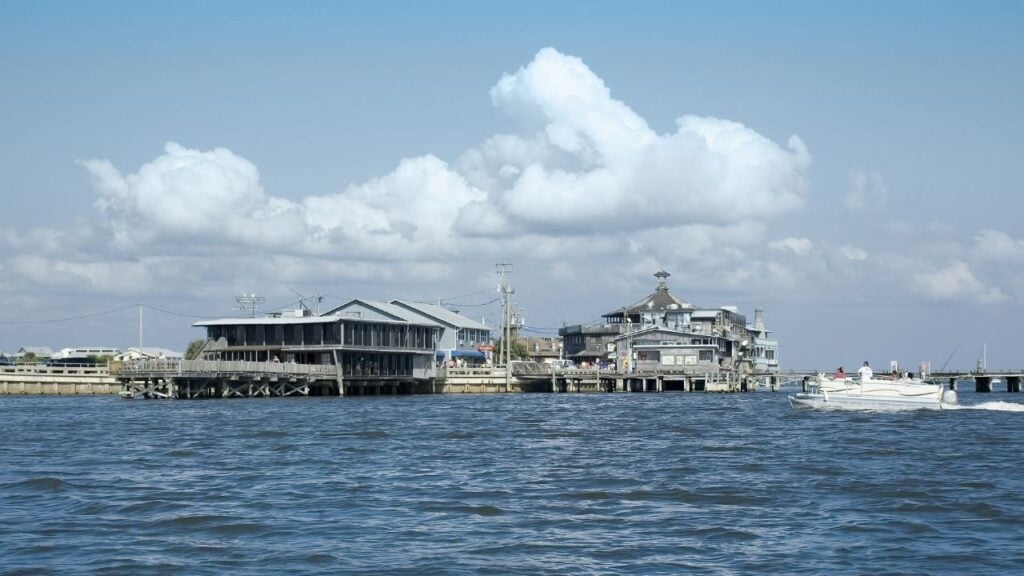
October turns a handful of sleepy Florida towns into somewhere else.
A fishing dock goes from empty to elbow-to-elbow.
8 Florida Small Towns That Change Completely in October
7 Florida Rivers Floridians Refuse to Swim In
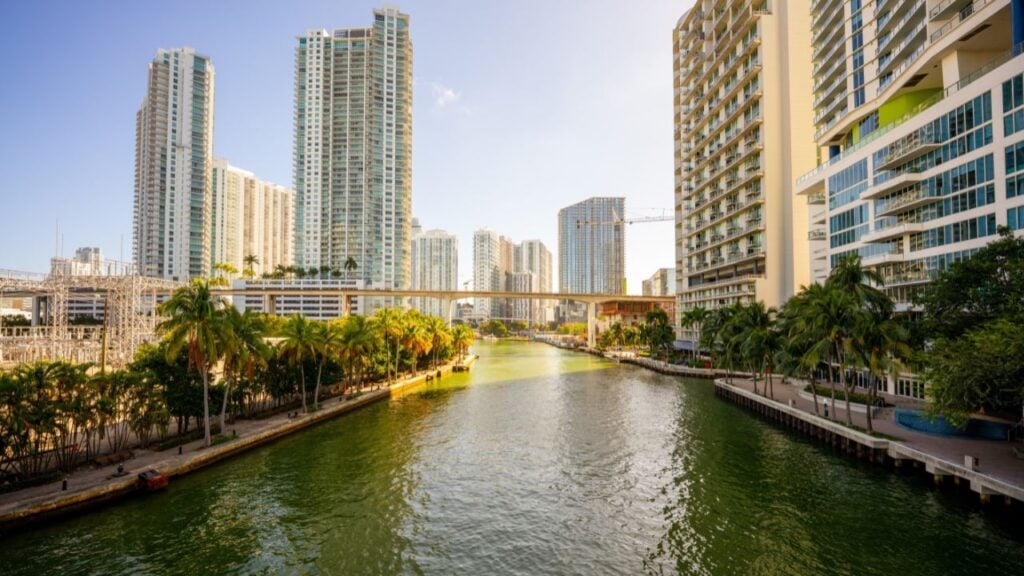
Not every Florida river is worth a swim.
The list might change where you take the kayak.
