
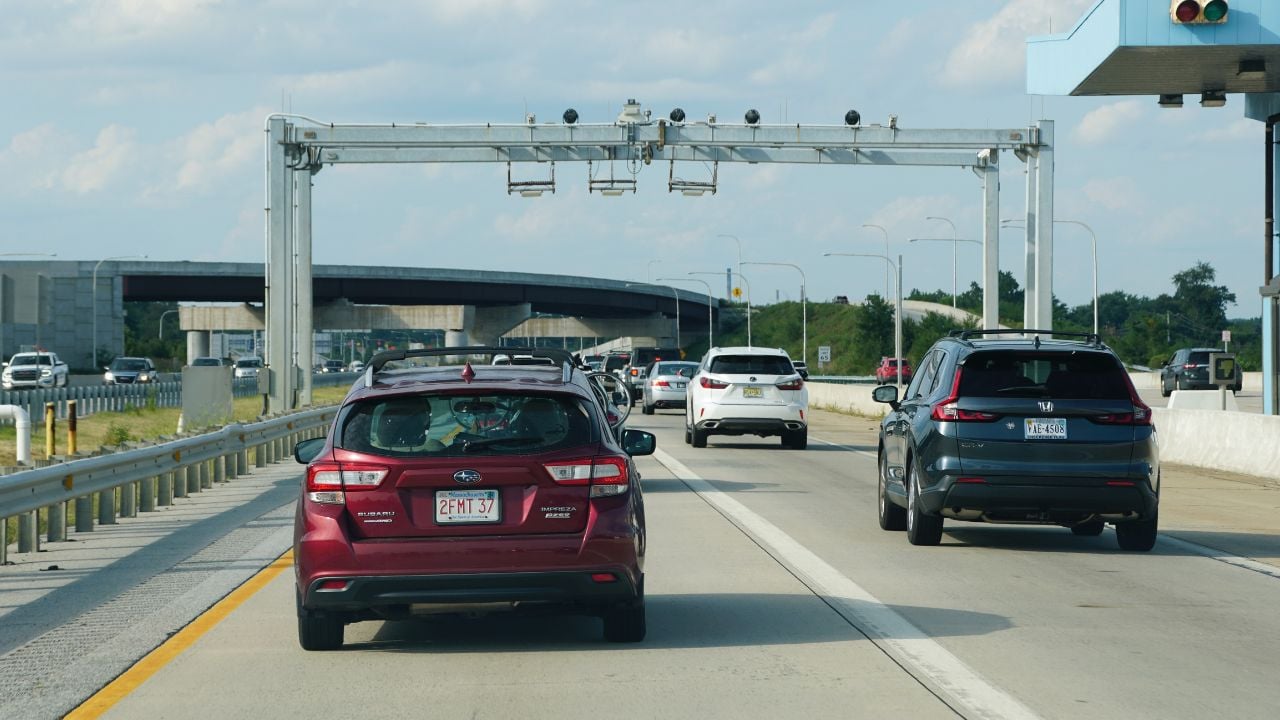
5 Fees That Turn One Missed Delaware Toll Into an $88.50 Bill

A mailed invoice says you drove through without paying.
Set it aside, and it can cost you far more than the original charge.
Here’s how a tiny bill snowballs for Delaware drivers.
Note: This is general information, not legal advice. Delaware’s toll violation fees and grace periods are subject to change, so confirm the current amounts with E-ZPass Delaware.
1. $25 Notice-of-Violation Fee
Delaware doesn’t charge you the $25 notice-of-violation fee the moment you miss a toll.
An unpaid toll first shows up as an ordinary invoice, the kind you’ll find in your mailbox if your E-ZPass transponder wasn’t working when a camera read your plate.
Ignore that invoice, and it converts into an official Notice of Toll Violation.
That’s when the fee lands, an administrative charge of up to $25 tacked straight onto the toll.
Your $1 toll is suddenly a $26 problem.
Ouch.
Delaware law spells out that fee in Title 21.
The fee applies whether you missed the toll on I-95 near Newark or on the Route 1 causeway toward the beaches.
2. Bankrolling an Ambulance Fund
Delaware adds a flat $10 fee to every toll violation notice, and it isn’t the last add-on you’ll see.
That $10 charge routes to the state’s Volunteer Ambulance Company Fund under 11 Del. C. §4101(j).
The law levies that fee on any Title 21 violation, a category that includes an unpaid toll.
You never called an ambulance.
The fee attaches to your violation anyway, on every single toll violation statewide.
That $26 problem is now $36, and you still haven’t paid the toll.
3. Fighting Crime You Never Committed
Delaware layers a second fund fee, $15 for the Fund to Combat Violent Crimes, on top of the $10 ambulance fund fee on the same toll bill.
That fee rides along with every toll violation, the same way the ambulance fund fee does, under 11 Del. C. §4101(h).
Neither fund has anything to do with a missed toll.
You committed neither crime.
Delaware Public Media confirmed both add-ons are still standard practice, not a one-time penalty you’d draw by chance.
The running total on that same $1 toll now sits at $51, and you haven’t even reached the deadline that makes the violation stick.
4. $25 Civil Penalty at Day 61
Delaware attaches a $25 civil penalty to your case the moment you miss day 61.
Day 61 is the deadline to settle a toll violation before the state can pursue it in court.
Miss that window, and liability under Delaware law attaches to your case for good.
That $25 penalty is the same figure written into the same Title 21 section that authorized the $25 administrative fee back at the notice stage.
It doesn’t replace those earlier fees.
It stacks on top instead, pushing your $1 toll to $76.
Now you’re at $76.
5. Paying Late a Second Time
Delaware tacks on a $12.50 civil penalty surcharge if your toll balance still isn’t settled once the civil penalty attaches.
That surcharge isn’t a freestanding number.
It’s 50% of the $25 civil penalty under 11 Del. C. §4101(g), the Transportation Trust Fund provision.
That’s why it always comes out to $12.50, no matter the size of the original toll.
It’s simple math.
The same five fees stack, one after another.
By the time the last fee lands, your $1 missed toll has grown into an $88.50 charge, the exact scenario Delaware’s transportation secretary has pointed to publicly.
How a $1 Toll Becomes $88.50
Delaware’s fee schedule adds up in a fixed order no matter what your toll costs.
Start with the $25 administrative fee, the $10 ambulance fund fee, and the $15 violent crimes fund fee.
That alone puts your $1 toll at $51, before the civil penalty stage even opens.
Add the $25 civil penalty and the $12.50 surcharge, and that same $1 toll lands at $88.50.
None of those five fees scale with the toll amount, so a $5 toll on I-95 ends up close behind at $92.50.
A bigger toll barely moves the final number at all.
Delaware’s Registration Freeze
The state doesn’t need a court date to make your toll violation expensive in a different way.
The state’s Division of Motor Vehicles places a hold on your vehicle registration once a toll balance goes unpaid.
That hold blocks your next renewal.
No new tags.
The hold stays in place until every toll, fee, and penalty on your plate clears.
There’s also a reciprocal agreement with Pennsylvania’s PennDOT, plus similar agreements with other neighboring states.
Each agreement lets one state ask the other to hold a driver’s registration renewal over unpaid tolls.
You might think the fee stack was the whole story, then find out at the counter that it wasn’t.
No one arrests you over a toll violation, and no court date shows up on your calendar for it.
The registration hold just sits there instead, until your balance clears.
Psst! Curious exactly how one skipped Delaware toll builds stage by stage to $88.50? Sort or filter the breakdown below and watch the total grow.
The $1,000 Tipping Point
The state reserves a stronger enforcement tool for you if several toll violations stack up on your plate.
Once the combined tolls, fees, and penalties tied to your license plate cross $1,000, state law lets Delaware immobilize your vehicle or tow it to an official pound.
Getting your vehicle back means paying off the full balance plus the towing and storage costs.
A single missed toll rarely reaches that $1,000 number on its own.
That takes more than one missed toll.
A few unpaid notices sitting on your plate get there faster than you’d expect.
Delaware has offered relief before: A one-time 2021 amnesty window replaced the full fee stack with a single flat payment, as long as you still paid the toll.
No such window is open right now, so the full fee stack applies until Delaware lawmakers open another amnesty window.
The stack is back.
Getting a towed vehicle back means clearing the full $1,000-plus balance before Delaware releases it.
The towing and storage bill comes due on top of that balance, not folded into a payment plan.
Each ignored toll notice can add $87.50 in fees on its own.
A handful of unpaid notices sitting on the same plate is enough to cross the $1,000 line that puts a tow truck on the way.
8 Things That Surprise Newcomers Who Move to Delaware
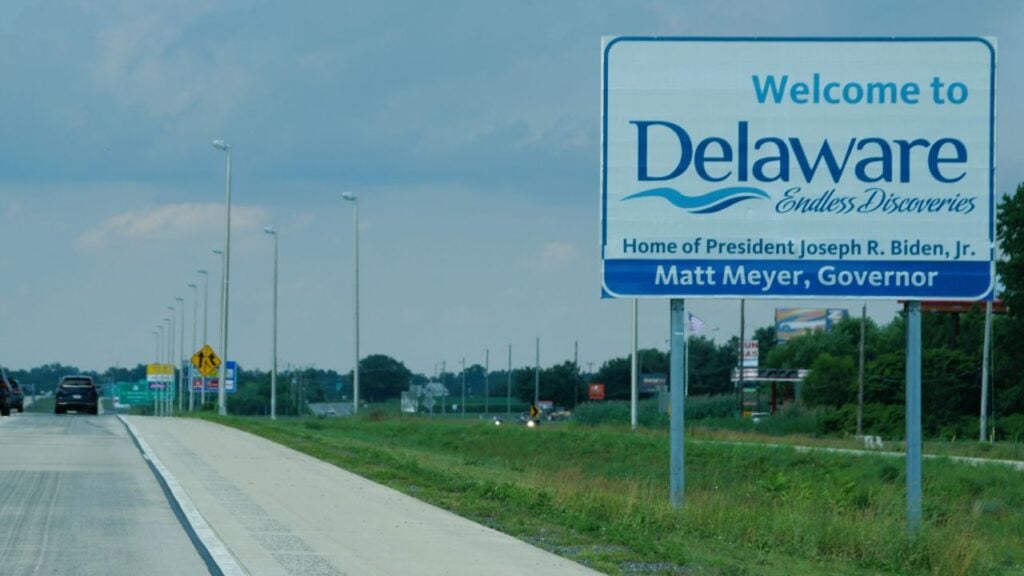
Delaware fits a beach, a battlefield, and its capital inside a two-hour drive, and that scale catches newcomers off guard fast.
The surprises don’t stop at geography, from toll booths to a wage tax that only some cities charge.
8 Things That Surprise Newcomers Who Move to Delaware
20 Decorating Tricks Delawareans Swore By Long Before Pinterest Existed

Delaware households leaned on creativity long before Pinterest existed, turning ordinary materials into a decorating trick worth repeating.
Twenty of those tricks still hold up decades later, long after the boards and the endless scrolling took over.
20 Decorating Tricks Delawareans Swore By Long Before Pinterest Existed
