
5 Florida State Park Rules Visitors Break Every October

Florida has received more hurricane landfalls in October than any other state, according to National Hurricane Center records going back to 1851.
State parks close campgrounds and tighten ranger enforcement as the season turns.
The visitors don’t stop coming, though.
These are the Florida state park rules some visitors break every October.
1. Sea Turtle Beach Curfew
Sea turtles are still coming ashore when October begins.
Sebastian Inlet State Park alone logged nearly 700 nests in 2018, and its posted nesting season runs from May clear through October.
Loggerheads lay most of those nests.
Green turtles and leatherbacks nest there too, and even a rare Kemp’s ridley has turned up on the same stretch of sand.
So the rules don’t relax just because summer crowds thin out.
October doesn’t slow the nesting down.
Beachgoers have to turn their lights off near the sand after dark and skip the camera flash near a nest.
They also have to haul their beach chairs, umbrellas, and coolers off the sand every single evening.
Left out overnight, those objects can block a nesting turtle or turn into a maze for hatchlings crawling toward the water.
Visitors have to fill in any hole they dig during the day before they leave the beach, too.
A hole that size can trap a hatchling before it ever reaches the surf.
After a full day in the sun, it’s easy to walk off the beach and forget a chair still wedged against the dune, or leave one hole half-filled while everyone’s packing up the car at dusk.
That’s exactly the kind of oversight rangers watch for during nesting season.
2. Storm Warning Shutdowns
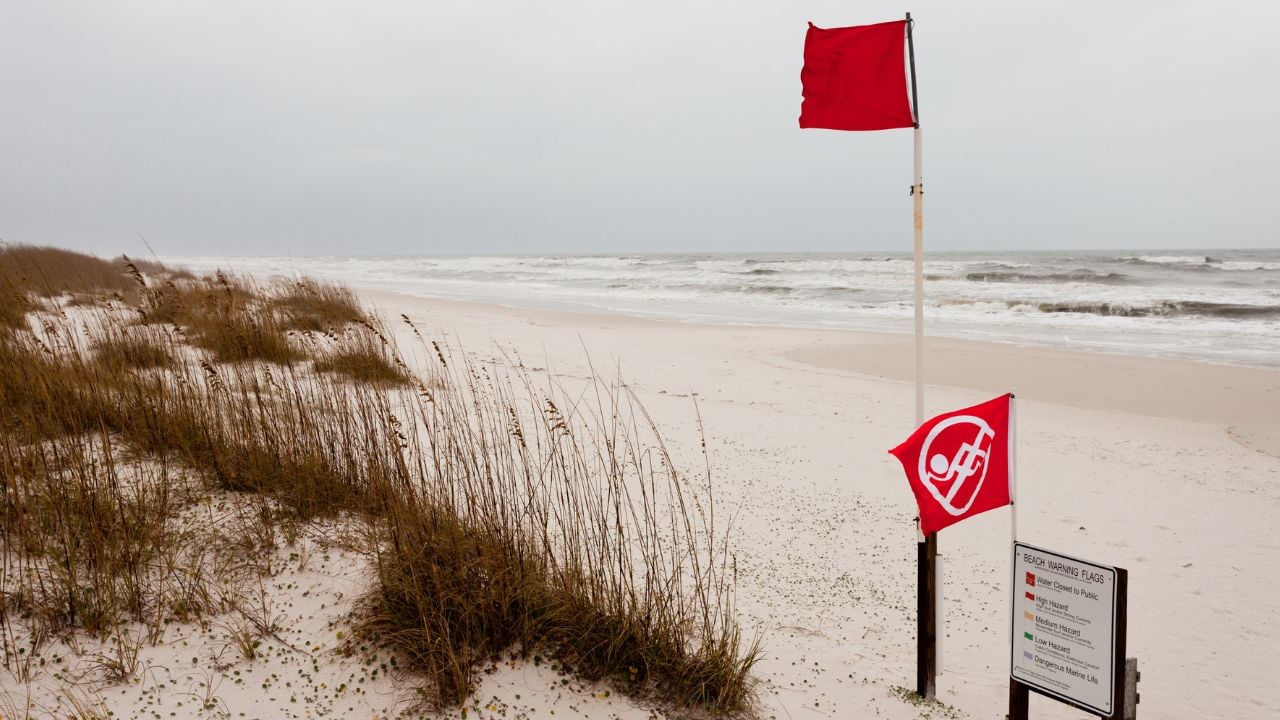
The state park system closes campgrounds and evacuates visitors well before a storm makes landfall, and the October numbers explain why.
Between 1851 and 2016, 32 hurricanes made landfall in Florida during October, more than in any other state over that same stretch. Louisiana is the runner-up, with nine.
Florida’s hurricane season officially runs June 1 through November 30, so all of October falls well inside it.
That history is why the park system’s storm rules kick in fast.
A storm warning doesn’t wait for a slow weekend to arrive.
A Tropical Storm Warning empties every campground in the danger zone, no exceptions for a paid reservation.
A Hurricane Warning closes the whole park, day-use areas included, until the state can confirm it’s safe to let visitors back in.
Visitors who’ve booked and paid for a campsite months out sometimes assume that reservation buys them some leeway once a storm warning goes up.
It doesn’t. The campground empties on the same timeline as everyone else’s, paid reservation or not.
What Triggers a Park Closure
A Florida state park’s storm closures follow two distinct triggers, and they don’t kick in at the same time.
A Tropical Storm Warning closes camping areas only, and everyone with a reservation has to evacuate the campground.
A Hurricane Warning goes further and closes the entire park, both camping and day-use areas, until officials confirm it’s safe to reopen.
3. Eagle Nest Disturbance Ban
Bald eagles start a new nesting season the same stretch hurricane season is winding down.
Florida’s bald eagle rule marks nesting season as running from October 1 through May 15, and it’s illegal to disturb an eagle at its nest for that entire stretch.
State wildlife officials say the densest nesting territories cluster along the Gulf coast and around Florida’s larger inland lakes and rivers.
That’s exactly the kind of scenery a state park is built around.
The ban takes effect before many visitors notice the season changed.
A pair nests every year at Pumpkin Hill Creek Preserve State Park, close enough to a park bench that visitors can watch from a respectful distance.
Get too close, linger too long, or spook a bird off its nest, and a visitor can run afoul of a state rule protecting the birds while they’re breeding.
Many people don’t even realize eagle season started that morning.
4. Bear-Proof Food Storage
Black bears need drastically more food in October to build fat reserves for the leaner months ahead.
State wildlife biologists say bears normally eat around 5,000 calories a day.
That number jumps to 20,000 calories a day each fall as bears bulk up for leaner months ahead.
That shift changes what a campsite looks like to a hungry bear.
Both sexes forage up to 18 hours a day during that window.
State parks in bear country build their rules around it.
Wekiwa Springs State Park and its neighbor, Lower Wekiva River Preserve State Park, post the same instructions every fall.
Lock coolers and food inside a vehicle, preferably in the trunk, never leave pet food out overnight, and use the bear-resistant trash cans instead of a regular trash can.
A cooler that was perfectly fine sitting out in September becomes a liability in October, once bears shift into that all-day foraging mode.
Visitors who don’t realize the season just changed are the campers who find their site raided.
Psst! How much do you know about Florida’s state parks? Take our quiz and see how many you can get right.
Quiz
Florida State Park IQ
Answer these questions on Florida state park history and wildlife. We bet you can’t get them all right. Prove us wrong?
Which Florida state park officially became the state’s first state park in August 1935, after Civilian Conservation Corps crews built its roads and bridges?
5. Earlier Gate-Closing Times
State parks close at a set time, not a flexible closing time, and that time moves fast during October.
Most parks open at 8 a.m. and close at sunset, every single day of the year.
In Orlando, sunset slides from 7:12 p.m. on October 1 to 6:42 p.m. on October 31, a 30-minute swing in a single month.
That works out to roughly a minute of lost evening light every single day.
Visitors who show up expecting September's longer evenings routinely miscalculate how much daylight they have left.
The gate follows the clock, not visitors' expectations.
Florida's park rule spells out the consequence: No one may remain in a park after its posted closing time without an overnight registration or a valid after-hours permit.
Rangers doing evening rounds ask stragglers to leave.
Someone who refuses can be treated like anyone else trespassing after hours.
A park that locked its gate at 7:15 in September locks it by 6:45 in October, with no grace period for a hike that ran long.
4 Things Florida Snowbirds Do in September That Give Them Away
Sarasota-Bradenton's population grows by 25% or more once snowbirds settle in for the winter.
Florida's snowbirds tip their hand weeks before they ever cross the state line.
4 Things Florida Snowbirds Do in September That Give Them Away
9 Signs Florida's Fear of AI Is Growing Faster Than the Technology

Florida's top prosecutor didn't send a warning letter before suing an artificial intelligence (AI) giant outright.
The state became the first in the country to take that step, and it's not the only sign Floridians are wary of the technology.
9 Signs Florida's Fear of AI Is Growing Faster Than the Technology
