
5 Roadside Businesses That Once Defined a Drive Through Alabama

Stuckey’s history puts its 1960s peak at 368 stores in more than 30 states, their teal roofs planted along interstates.
Alabama’s interstates have only a handful today.
These are the roadside businesses that once defined a drive through Alabama.
1. Filling Stations
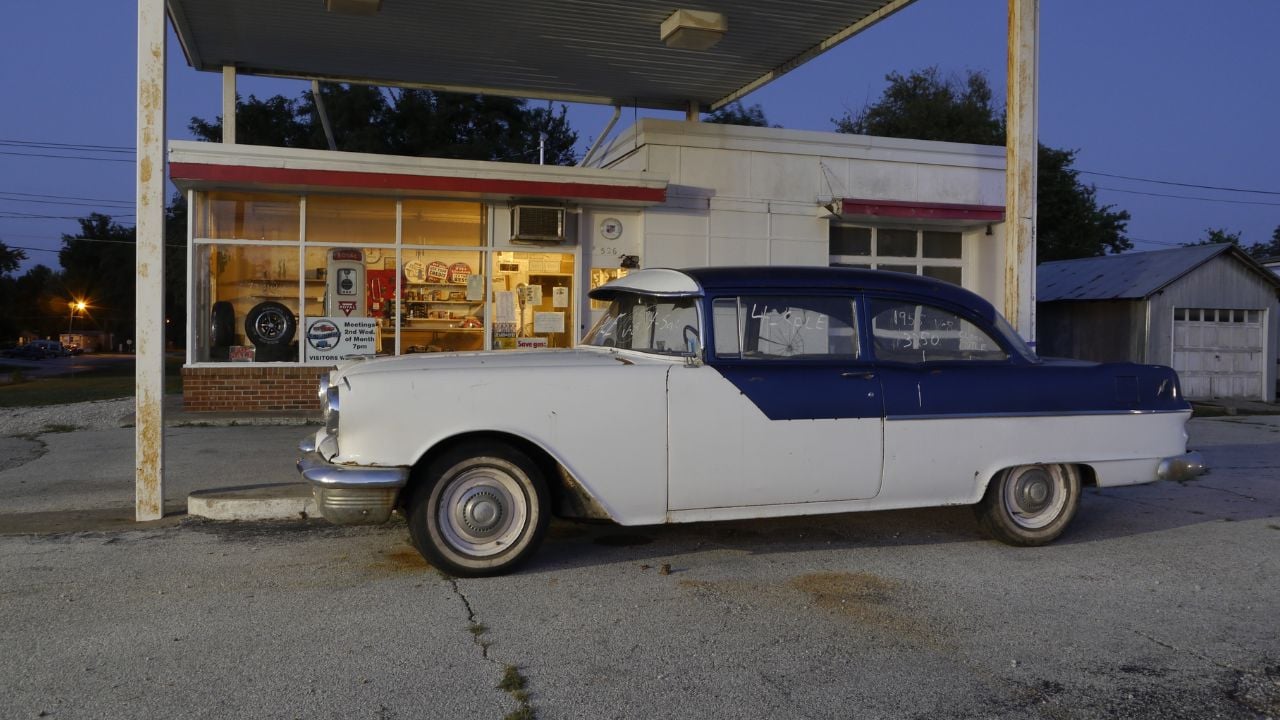
Filling stations used to be the reason drivers had any excuse to slow down between towns.
An attendant checked your oil, washed your windshield, and knew your name if you stopped there twice.
Self-service ended that.
Their look changed by decade, too.
Boxy, house-shaped stations from the 1920s gave way to curved art moderne fronts in the 1930s and ’40s.
Sleek, steel-sided designs took over by the 1960s, according to an architectural historian who spoke with National Public Radio about Alabama’s old stations.
Gas retailing standardized nationwide.
Drivers shifted to interstates lined with brand-name chains, and the small, independently run stations that once anchored crossroads and Main Streets fell into disrepair or closed outright.
The Alabama Historical Commission put several of these stations, including one in Brewton, on a 2005 list of the state’s most endangered historic places.
Another, in Wetumpka, had already been converted into a children’s clothing store by the time that list came out.
2. Tourist Courts
Tourist courts were built around one idea: Give a driver making a long trip a place to park for the night without leaving the car far behind.
Each room got a spot right outside the door, years before the highway motel came along with a shared lobby and hallway.
Tuscaloosa’s Moon Winx Lodge opened along what was then Highway 11 in the late 1920s, catching drivers moving between Tuscaloosa and the towns down the road.
Its winking neon moon sign, added in 1957, turned the lodge into a local landmark recognized well beyond Tuscaloosa.
Then it closed.
The lodge failed a health inspection in 2023, and the building came down that November.
Highway 11 later lost its through traffic to the interstate, the same shift that emptied filling stations and fish camps up and down the state.
3. Stuckey’s Pecan Stops
Stuckey’s built its business on a simple promise: Pecan candy, a clean bathroom, and a reason to pull off the interstate.
By the 1960s the chain ran 368 stores in more than 30 states, according to Stuckey’s count.
Then it nearly vanished.
The family folded Stuckey’s into Pet Milk Co. in 1964 for growth capital, and the store count held for years afterward.
Ownership changed again in 1977, when Illinois Central Industries bought Pet Milk and began closing Stuckey’s stores by the hundreds, and the brand slid for decades after that.
A 2023 count put Stuckey’s nationwide total at just 13 stores, down from that 1960s peak.
The interstate keeps a small handful of them today.
One runs as a Stuckey’s/Dairy Queen combination off I-65 in Hope Hull.
Another sits in Cuba, a truck stop about a mile past the Mississippi line, according to the brand’s site.
How Stuckey’s Grew Back
Stuckey’s isn’t building its comeback by reopening old roadside stores.
Stephanie Stuckey, the founder’s granddaughter, took over the company in 2019 and started selling its pecan candy through retailers like Hobby Lobby, Food Lion, and Wawa instead.
Sales went from $2 million to $14 million in two years under her direction.
4. Roadside Peach Stands
Roadside peach stands turned one stretch of Interstate 65 in Chilton County into Alabama’s best-known pit stop for fruit.
Farmer Marvin Durbin set up the county’s first roadside peach market along that stretch in 1961, aiming his stand at beachgoers and travelers passing between Birmingham and Montgomery.
The idea caught on.
Gene Gray expanded on the idea in 1980 with Peach Park, adding a restaurant and a gift shop along that same stretch.
Clanton added a landmark years later, a 120-foot peach-shaped water tower built in 1993 that still marks the exit off I-65 today.
Chilton County had already been celebrating the crop since 1947, when the peach festival started in nearby Thorsby before moving permanently to Clanton in 1952.
Psst! How many of these classic Alabama roadside stops have you experienced firsthand? Run through the checklist and see how you score.
5. River Fish Camps
River fish camps popped up along rivers wherever a new highway bridge met a good fishing hole, part roadside restaurant and part dock.
Bobby Dahlberg opened Bobby’s Fish Camp at Bladon Landing on the Tombigbee River in 1956.
He timed it to a new highway bridge, lock, and dam that brought fresh traffic through the crossing.
His family had worked that same landing since 1880, running a warehouse and then a general store for the steamboats that used to stop there.
The restaurant closed in March 2020, according to Rural Southwest Alabama’s tourism site.
The marina didn’t.
It still sells bait, ice, and fuel to the boats that pass the landing.
Camps like it were once a familiar answer to a new bridge going up: Build a kitchen right at the water’s edge and let the road bring in the crowd.
Drive-In Movie Theaters
Drive-in movie theaters put an entire evening’s plans behind one ticket window, speakers hooked over a rolled-down car window and a screen bigger than many barns.
Alabama already had 13 drive-in theaters by 1948, and the count kept rising through the 1950s.
The format hit a national peak of 4,063 screens in 1958, according to Mobile Bay Magazine.
Alabama now has about 10 left.
Mobile alone lost three.
The Bama ran from 1949 to 1986.
The Auto Show held 900 cars off U.S. Highway 90.
The Air Sho screened movies just up the road in Chickasaw.
Rising land values and air-conditioned multiplexes finished the job.
Barns as Billboards
The interstate highway system is the reason so many roadside businesses got left off the new route.
President Dwight Eisenhower signed the Federal-Aid Highway Act on June 29, 1956, launching the interstate system that rerouted Alabama’s traffic.
Around Alabama’s small towns, the new interstates ran as bypasses, skirting the old U.S. highways, like 31, 80, and 11, that filling stations and drive-in theaters had been built to catch.
In bigger cities, federal highway records show many routes ran straight through existing neighborhoods instead, chosen for where the right-of-way cost the least.
Even so, 82% of the system nationwide went onto brand-new land.
Alabama got three new interstates out of the bargain: I-65, I-20, and I-59.
Traffic followed the new road.
By 1962, the Commerce Department was reporting roughly 1,500 businesses displaced by interstate construction every year nationwide, per that same federal highway history.
That churn hit small towns the same way it hit everywhere else.
Barns Turned Into Billboards
Barns across the countryside once doubled as billboards, their roofs and sides painted with one message: “See Rock City.”
Sign painter Clark Byers covered close to 900 barns across 19 states with that slogan between 1935 and 1969.
One of them stood in Sunflower, Alabama, according to Rock City’s history.
Tennessee still holds onto more of the surviving barns than any other state.
American Heritage counted about 70 of the original barns still standing, most of them in Tennessee, several protected as historic landmarks.
Then the government stepped in.
The Highway Beautification Act of 1965 pushed states to start clearing roadside signs, and many of the barn ads came down soon after.
Byers retired the same era, in 1969, after painting close to 900 barns by hand, one slogan at a time, across nineteen states including Alabama.
6 Church Homecoming Traditions Alabamians Grew Up With That Are Fading
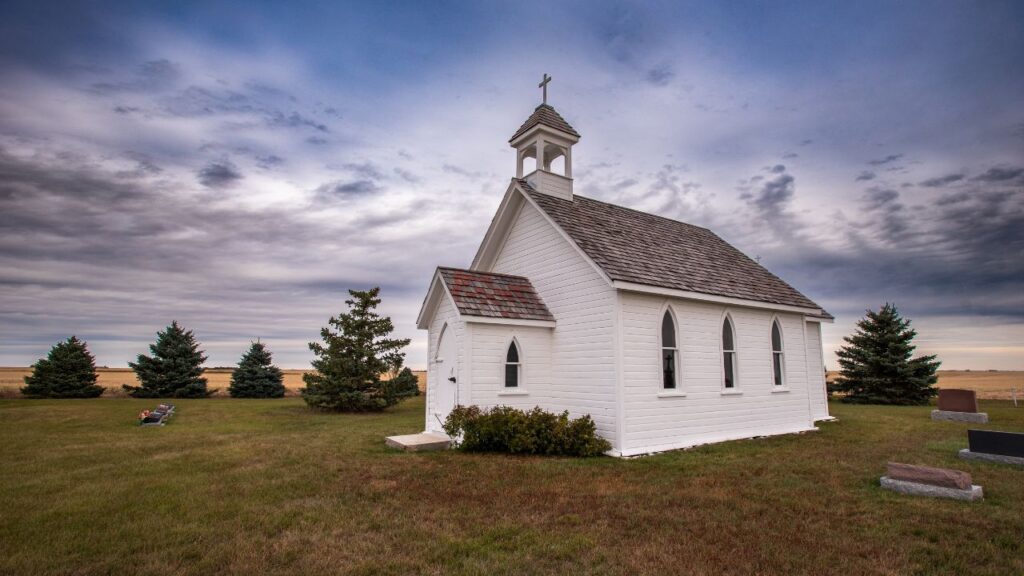
Sand Mountain in northeast Alabama still keeps a handful of churches singing straight from the Sacred Harp during a regular Sunday service.
Homecoming season used to fill Alabama’s country churches with the same rituals every year, and some of them are already fading fast.
6 Church Homecoming Traditions Alabamians Grew Up With That Are Fading
8 Sweet Tea Rules Out-of-Staters Break at Every Alabama Cookout
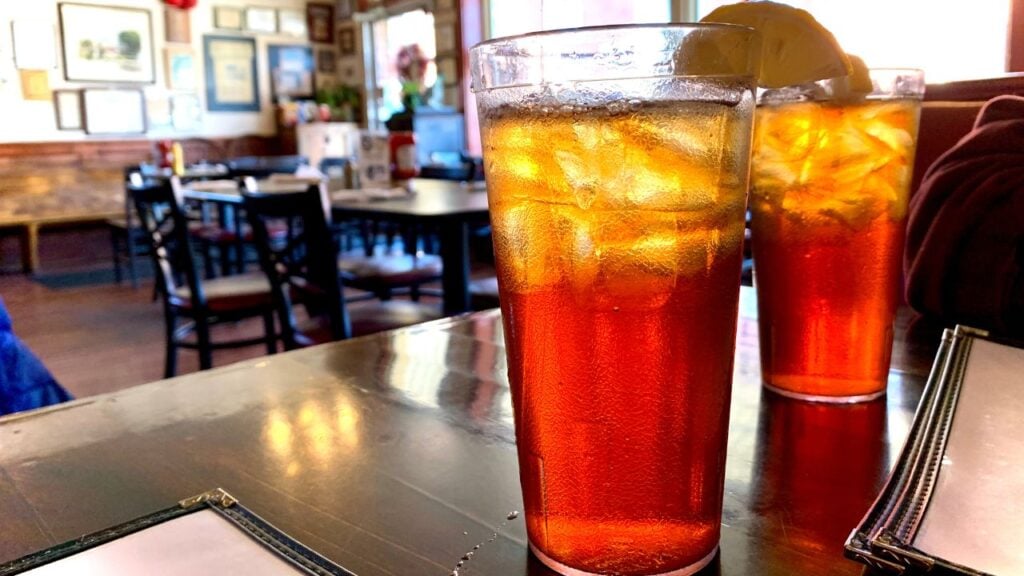
A cooler shows up to an Alabama cookout stocked with a national-brand jug of tea, no ice, and a fistful of sugar packets on the side.
Nobody says a word about it, and they just reach past it for the gallon somebody already brewed and left sitting cold on the table.
8 Sweet Tea Rules Out-of-Staters Break at Every Alabama Cookout
