
5 Things Wild Turkeys Do in Ohio Before Thanksgiving That Most Ohioans Never Notice

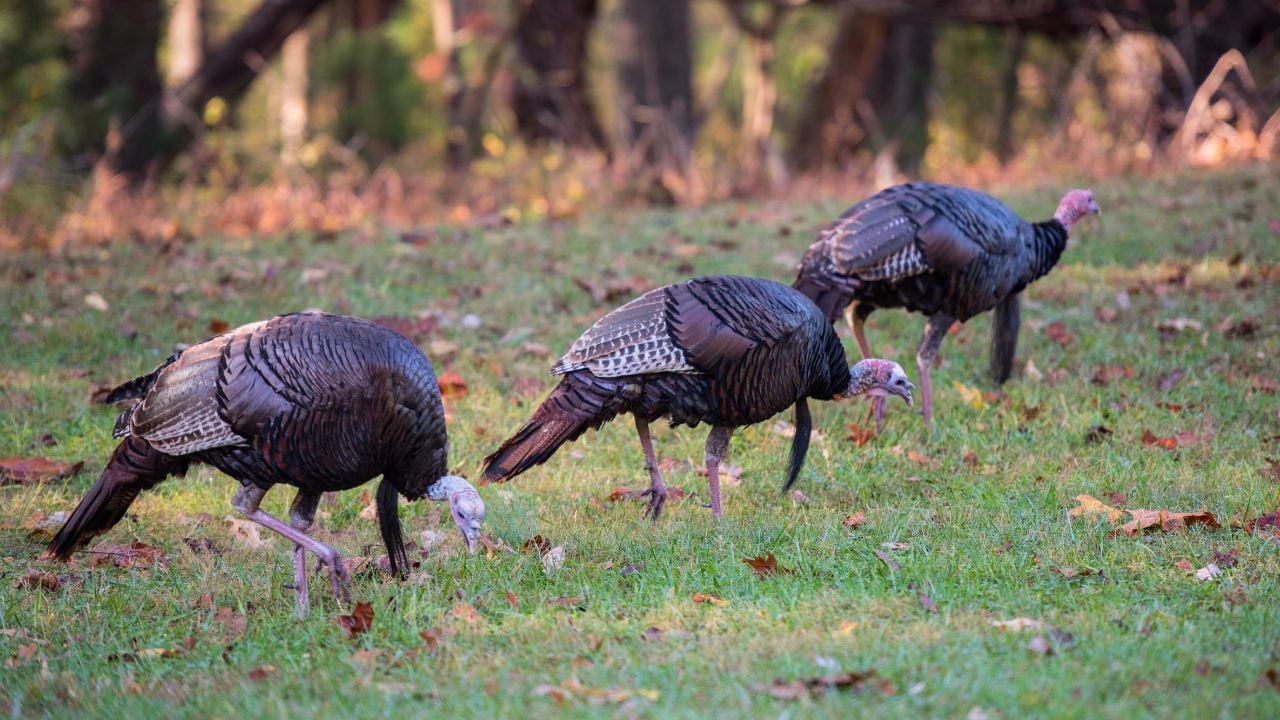
Hear leaves rustling under an oak this fall, and you may have found a flock of wild turkeys feeding on acorns.
These are the things wild turkeys do before Thanksgiving that most Ohioans never notice.
1. Joining Big Flocks
Wild turkeys tend to group together in large flocks during the fall and winter, the Ohio Department of Natural Resources (ODNR) told 10TV in 2022.
In the warmer months, they split into smaller flocks or sometimes go alone.
Then the crowd grows.
The Nature Conservancy says several hens and their young often combine flocks in fall, so groups of 50 or more birds are common.
Across their range, males gather in all-male flocks outside the breeding season.
If the turkeys near you are gathering in bigger groups this fall, you may be watching those large flocks form.
2. Scratching for Acorns
When wild turkeys feed in flocks, they scratch through leaf litter for insects, fruits, and acorns.
Cornell says that in fall, winter, and early spring, they scratch the forest floor for acorns from red, white, chestnut, and black oaks.
Beech nuts, hickory nuts, and wild black cherries are on the list too.
The Nature Conservancy says flocks may move several miles to find acorn-rich woods.
If you hear leaves rustling under oaks this fall, you may have found a flock feeding.
Occasionally, they feed in a vine or tree instead.
Look up, too.
3. Staying With the Brood
ODNR says most wild turkey broods stay together for four or five months.
A young wild turkey’s first flight usually comes at about two weeks.
Peak hatching runs from mid-May through June, so a brood hatched in June can stay together into November.
If you see a hen with a string of young turkeys this fall, you may be looking at a family that has been together since late spring or early summer.
Some stay even longer.
Young females may stay with their mother until the following spring.
Psst! How much do you know about wild turkey history? Take our quiz and see if you can ace it.
4. Roosting in Trees
At sundown, wild turkeys fly into the lower limbs of trees, then move up from limb to limb to a high roost spot, Cornell says.
They usually roost in flocks, but sometimes they roost alone.
In neighboring Indiana, turkey broods feed, roost, and loaf together until large flocks congregate in late autumn.
An Ohio Certified Volunteer Naturalist wrote in a September 2023 Vindicator column about a flock of four hens and 16 young turkeys.
The birds flew up into the trees in a yard to roost for the night.
They came back every evening.
If you pass a woodlot at dusk this fall, you may see a flock climbing into the branches.
5. Settling the Pecking Order
Across their range, wild turkey flocks are full of squabbles, dominance displays, and even fights in fall, the Nature Conservancy says.
Those fights show up from September through February.
Hens and gobblers each have an independent pecking order, with a constantly changing male ranking.
Rank matters again in spring.
Occasionally, an aggressive male even lets out a full gobble, though that is far less common than in spring.
If you hear a gobble on a November walk, you may be listening to a male asserting dominance.
In the Suburbs
Wild turkeys can live in areas with as little as 15 percent forest cover.
They can easily survive in urban areas and are accustomed to humans, ODNR told 10TV in 2022.
That year, viewers sent 10TV photos of wild turkeys in front yards, backyards, and on the roads in Hilliard and Dublin.
In many cases, an easy food source such as a bird feeder is what draws wild turkeys to a yard.
If a flock keeps showing up in your yard, taking down your feeders won’t starve the turkeys, since they will find a new food source elsewhere.
Year-Round Residents
Wild turkeys are upland birds, and ODNR says these birds typically don’t migrate but adapt to seasonal changes.
They’re year-round residents of open forests with clearings.
The National Wild Turkey Federation says fall ranges can overlap spring ranges, but many birds spend fall in other areas.
If you see a flock this fall, you may see the same birds in January.
Fall Turkey Hunting
Ohio’s 2026 fall wild turkey season ran from Oct. 1 to Oct. 25 in 70 counties, ODNR’s 2026-27 season dates show.
Fall turkey hunters must use shotguns with shotshells and can’t use archery equipment.
Deer archery season runs through Feb. 7, 2027, and deer gun season starts Nov. 30.
If you walk a woodlot this fall, you may be sharing it with deer hunters.
Tracking the Population
ODNR’s 2025 survey of young wild turkeys, called poults, drew 742 responses from people who reported what they saw in July and August.
The result was 2.7 poults per hen, just under the 10-year average of 2.8.
Southwest Ohio had the highest regional poult index in 2025 at 3.3 poults per hen, while central Ohio had the lowest at 2.1.
If you spot a hen with poults next July or August, ODNR relies on public reports from people like you.
The highest densities are in parts of eastern Ohio with a mix of forests, pasture, and agricultural fields.
In a 2022 update to its species page, ODNR put the statewide wild turkey population at 160,000 to 180,000.
14 Words Ohioans Use That Out-of-Staters Don’t Understand
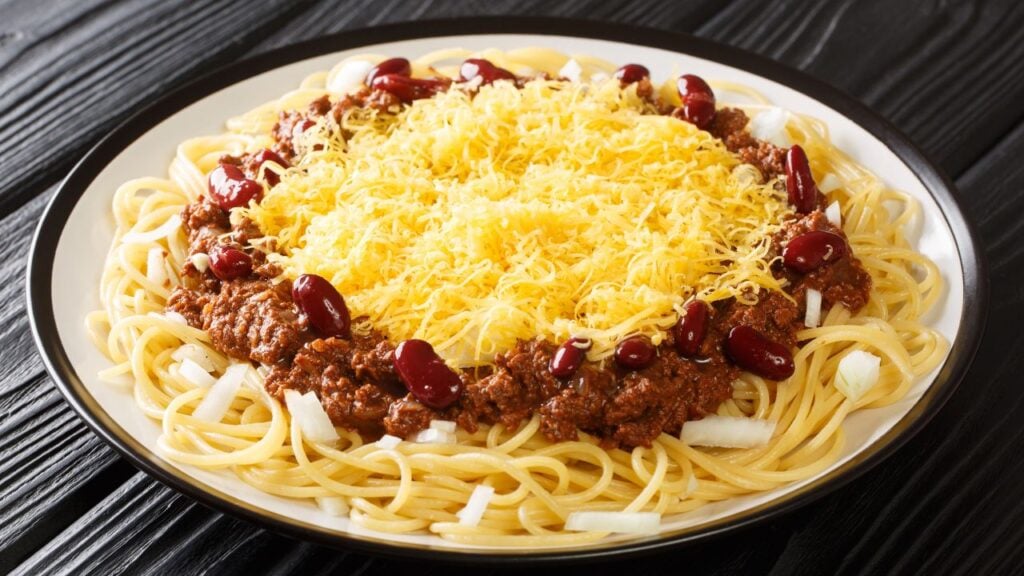
Ohio has words visitors never see coming.
Some of them are tied mainly to a single city.
14 Words Ohioans Use That Out-of-Staters Don’t Understand
8 Small-Town Ohio Storefronts That Only Open for One Season
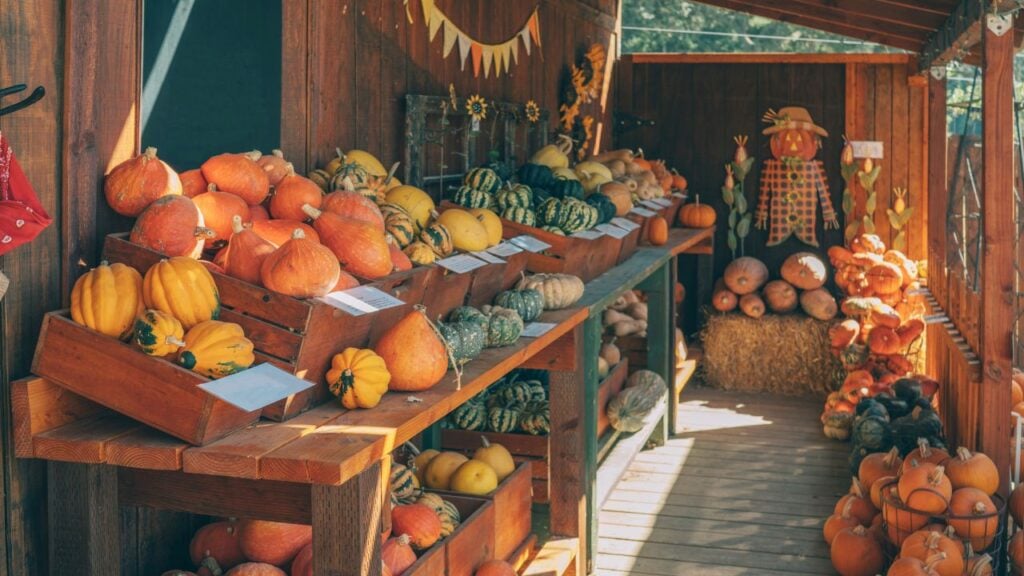
In fall, a costume shop can take over an empty storefront on a small Ohio town square.
Then the season ends, and the doors close.
