
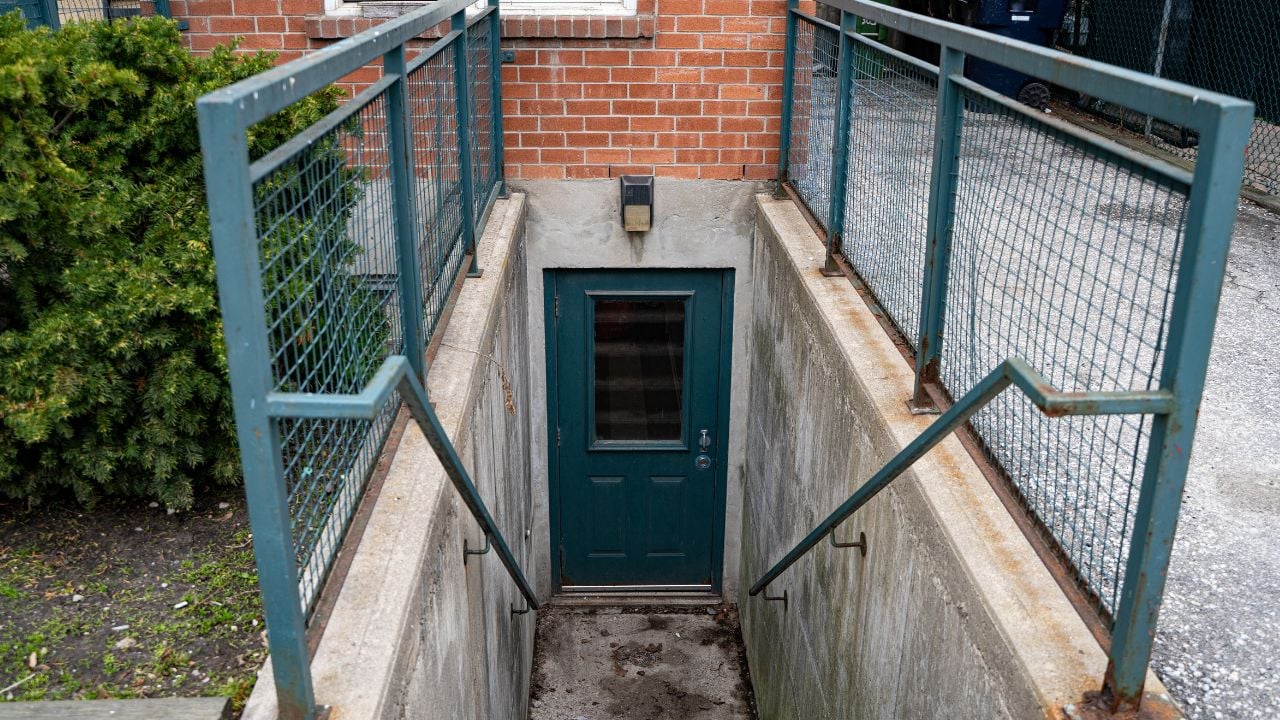
6 Basement Apartment Rules That Turn Into a Code Violation in Maryland

Every Maryland county has until Oct. 1 to pass a law letting homeowners legally rent out a basement or a backyard cottage, under 2025’s House Bill 1466.
That deadline is a week and a half out.
It won’t erase a violation already sitting in your basement, and the code that creates them isn’t changing.
These are the basement apartment rules that turn into a code violation in Maryland.
Note: This is general information, not legal advice. Basement apartment permitting, licensing, and building-code requirements vary by county and are subject to change.
1. Skipping the Escape Window
A Maryland basement apartment needs a way outside that doesn’t run through the rest of the house.
That’s the escape window or door building inspectors call an emergency escape and rescue opening.
It has to meet exact numbers, not just be big enough to squeeze through.
Maryland’s 2021 building code took effect in 2023, with every jurisdiction required to enforce it by May 29, 2024.
That code, adopted statewide as Maryland’s Building Performance Standards, sets a basement escape opening at a minimum of 5.7 square feet of clear space, with a sill no higher than 44 inches off the floor.
No exceptions on size.
Cutting a proper window well and enlarging the opening is common work in a Maryland basement conversion.
Skip it, and your finished bedroom turns into a fire marshal’s write-up instead of a rental.
2. Ceiling Height Falling Short
A Maryland basement apartment’s ceiling has to clear seven feet everywhere someone lives, works, or sleeps.
That minimum comes from Sections R305.1 and R305.1.1 of the same statewide code that governs the escape window.
Contractors can dip to six feet, four inches under a beam, a duct, or a girder, but only in short stretches, never across the whole room.
Seven feet, not six.
Skip that measurement, and your finished basement can lose its standing as a legal bedroom, even after the drywall goes up and the paint dries.
3. Forgetting the Bedroom Alarm
A Maryland basement bedroom needs a smoke alarm, not just the one at the top of the stairs.
State law requires an automatic smoke alarm inside every sleeping area of a home, under Section 9-102 of Maryland’s Public Safety Article.
A basement bedroom counts the same as an upstairs bedroom.
One alarm isn’t enough.
You might wire a single alarm into the hallway and call the basement covered.
An inspector checking your Maryland rental wants a working alarm inside the room where the tenant sleeps, not down the hall.
Psst! How many Maryland basement apartment myths could you spot? Flip each card and find out.
4. Missing the Carbon Monoxide Alarm
A Maryland rental basement needs a carbon monoxide (CO) alarm, separate from the smoke alarm upstairs.
State law spells this out for every Maryland rental under Section 12-1104 of the Public Safety Article.
An alarm belongs outside each sleeping area and on every level of the unit, including the basement.
The requirement applies to every Maryland rental unit regardless of heating type, under Section 12-1102 of the same subtitle.
It doesn’t matter whether your basement runs on gas or electric.
The rule has applied to Maryland rentals since April 1, 2018.
It’s set by state law, not Montgomery County zoning, so it applies the same no matter what a county’s zoning code allows.
A missing alarm shows up on a rental inspection, and it can hold up your rental license renewal the same way a missing smoke alarm does.
Every rental, every fuel type.
5. Renting Ahead of the License
Montgomery County requires a license before a basement apartment can legally take a tenant, not just a building permit.
Under the county’s Zoning Ordinance, Section 59-3.3.3, an accessory dwelling unit has to be licensed before anyone moves in.
That’s the county’s term for a basement, attic, or backyard apartment.
The license comes from the Department of Housing and Community Affairs (DHCA), under County Code Chapter 29.
Montgomery County has allowed these units since 2019.
One law firm’s count put the number at around 222 permitted through 2025, a small number next to a county of more than a million residents.
Finish the basement, pass the building inspection, and start collecting rent before DHCA issues that license, and you’ve skipped a requirement, not a formality.
Two separate steps.
One Accessory Dwelling Unit per Lot, Not Two
Montgomery County’s accessory dwelling unit rule caps more than the number of people living in the basement.
It also caps the property at one accessory dwelling unit total.
If you’ve already licensed a basement apartment, you can’t also rent out a garage loft or a backyard cottage on the same lot.
A second unit built without a license is a violation on its own, even when the first one is licensed correctly.
6. Housing One Renter Too Many
A Montgomery County basement apartment can’t house more than two adult renters, age 18 or older.
That cap comes from the same zoning section that requires the license, Section 59-3.3.3.
The count includes adults only, so a renter’s minor kids don’t count against the limit.
Rent your basement to grown kids and a friend, and you can trip this cap.
So can splitting the space into two informal rentals, without anyone touching a window, a wall, or a permit.
One renter too many.
Baltimore City’s Ordinance Gap
A basement apartment in Baltimore City has no accessory dwelling unit ordinance behind it, the way Montgomery County’s does.
There’s no zoning path to legal rental status yet.
Not yet, anyway.
The same 2025 state law, House Bill 1466, gives Baltimore until October 1, 2026, to pass an ordinance.
As of this spring, the city council still hadn’t introduced a standalone bill to do it, according to reporting from Baltimore Brew.
Until Baltimore City acts, the same basement rules that already apply everywhere in Maryland still apply inside the city.
Rent out a Baltimore City basement to someone outside your family, and the city already requires a separate rental license for it.
That license comes from the city’s Department of Housing and Community Development (DHCD).
That license needs a passing inspection, current lead certification, and zero open code violations, no matter what happens with the accessory dwelling ordinance.
9 Maryland Habits That Make No Sense Outside Maryland
Baltimore adds an extra syllable to the national anthem before every Orioles and Ravens game, right where Francis Scott Key wrote it in 1814.
It’s one of the small, unexplained habits that separate a Marylander from everyone else standing in the stands.
9 Maryland Habits That Make No Sense Outside Maryland
9 Maryland Foods That Horrify the Rest of the Country

Scrapple turns up on breakfast plates across Maryland’s Eastern Shore, pan-fried and served right beside the eggs.
Many tourists know better than to ask what’s inside until after they’ve cleared the plate, and scrapple isn’t even the dish that turns the most stomachs outside Maryland.
