
6 Deer-Hunting Land-Lease Rules That Surprise New Wisconsin Landowners

A standard Wisconsin farm or homeowners policy often doesn’t cover liability tied to a hunting lease at all.
What a lease does and doesn’t cover surprises a first-time landowner in more places than that.
These are the deer-hunting land-lease rules that surprise new Wisconsin landowners.
Note: This is general information, not legal or insurance advice. Wisconsin landowner-liability, insurance, and hunting-land rules are subject to change.
1. $2,000 Line Wisconsin Draws
Wisconsin shields landowners from many lawsuits tied to letting people hunt on their land, under a law known as the recreational-use statute.
That protection has a hard stop.
Once a landowner’s income from hunting access tops $2,000 in a year, the statute stops applying.
Just like that.
An ordinary hunting accident turns into a case the shield no longer blocks.
The law does leave a crack open.
Wisconsin still protects a landowner past that line, but only up to a point.
The exception is a malicious act or a malicious failure to warn of a hidden danger, a far higher bar than ordinary carelessness.
Carelessness alone isn’t enough to lose it.
New landowners drafting a first hunting lease rarely check where their lease payment lands against that $2,000 mark before they sign.
What Counts Toward Wisconsin’s $2,000 Line
Wisconsin’s $2,000 threshold isn’t only cash.
It adds up nearly anything of value a landowner takes in for hunting access, including a lease split into monthly payments.
A hunting lease paying $250 a month across an eight-month season reaches exactly $2,000, the point where the recreational-use shield stops applying.
A short list stays outside the count.
A gift of wild animals or another product of the hunt, like the deer itself, doesn’t count toward the $2,000 line, and Wisconsin puts no dollar limit on that exclusion.
Paying someone up to $5 per person per day for permission to gather a product of nature, like wild mushrooms or berries, doesn’t count either.
Conservation donations and payments from a government agency or nonprofit stay outside the count too.
A private hunting club’s rent doesn’t fit any of those categories.
2. Where the Homeowners Policy Falls Short
Wisconsin landowners leasing out hunting access run into a rule many leases build in: The tenant’s insurance has to name the landowner as an additional insured.
That clause exists because a standard homeowners or farm policy usually leaves the landowner exposed.
Standard farm and homeowners insurance often doesn’t cover liability tied to a hunting lease.
A landowner who starts collecting lease payments without checking their policy can find that gap only after someone gets hurt.
Not covered.
The fix is usually a specialized endorsement, a separate liability policy, or that additional-insured line written directly into the lease.
Skipping that clause is a common mistake among new Wisconsin landowners once they start renting out hunting access.
3. Lease Clause, Not a Shield
Wisconsin landowners often build a hold-harmless clause into a hunting lease, expecting it to cover them completely.
It doesn’t, not entirely.
Wisconsin attorneys who handle these cases say the clause is narrowly read by courts and only binds the people who signed the lease.
A hunter’s guest, a neighbor, or someone walking a boundary line during gun season never agreed to that contract.
Nothing in it stops them from suing the landowner directly if they get hurt.
That’s the gap insurance is built to close, not the lease paperwork alone.
4. The Missing Purple-Paint Law
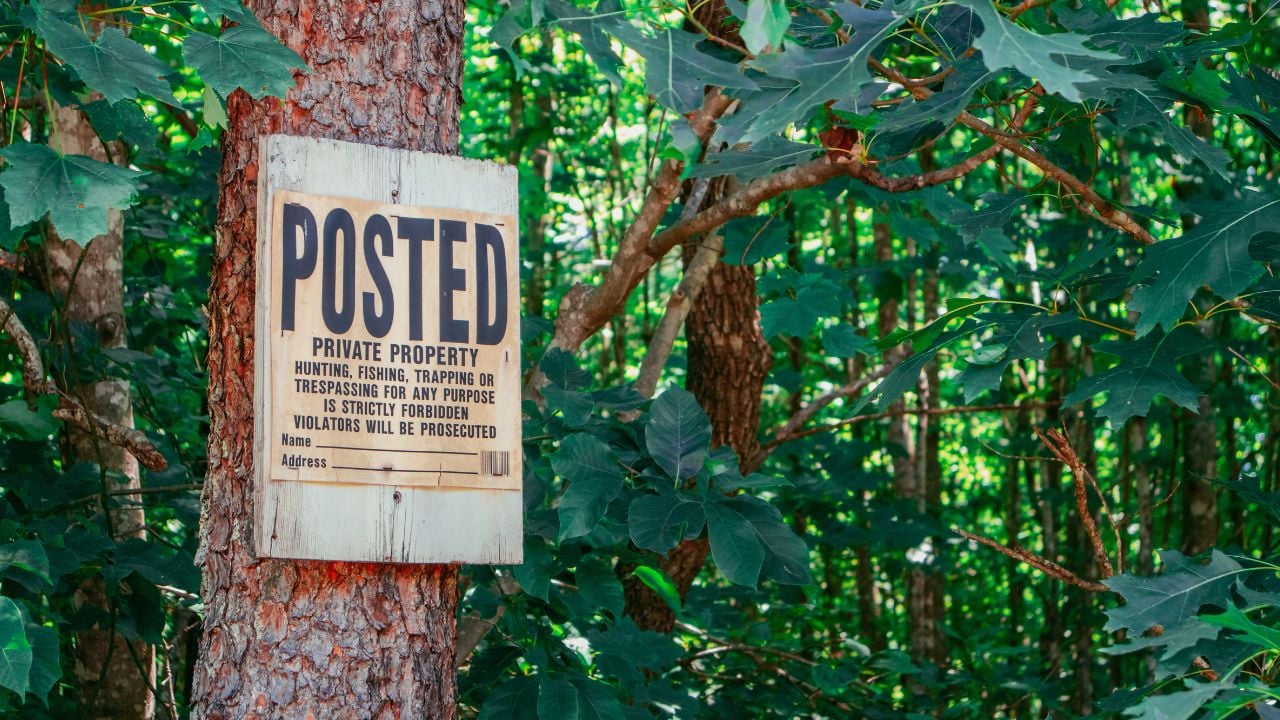
A Wisconsin landowner leasing hunting rights to one group still has to post the land to legally keep everyone else off that same acreage.
Wisconsin never adopted the purple-paint trespass law that neighboring states like Illinois use, so a splash of paint won’t cover that requirement.
A new landowner who slaps a can of purple spray paint on a few trees, expecting that to count as legal notice, hasn’t posted the land at all.
Paint alone won’t do it.
State law instead requires the words “private land” painted in a contrasting color, at least a foot tall.
The owner’s name has to go with it, marked at least twice per 40 acres.
Or a landowner can put up signs instead, at least 11 inches square, in at least two spots per 40 acres, naming the owner or occupant.
Skip both, and a trespasser can’t be cited under the posting law, even if a hunting club insists the boundary was marked.
5. Open Managed Forest Land
Wisconsin’s Managed Forest Law (MFL) gives enrolled landowners a significant property-tax break for keeping land undeveloped.
Land enrolled as MFL-Open comes with a catch many new owners miss.
Public access survives the lease.
The public keeps the right to hunt, fish, hike, and cross-country ski on that land regardless of any private arrangement.
Wisconsin’s Department of Natural Resources (DNR) bars a landowner from leasing hunting rights in a way that shuts the public out.
A hunting club paying for exclusive access on MFL-Open acreage is buying something the landowner can’t legally deliver.
Switching the enrollment to MFL-Closed keeps the land private, but it trades away part of the tax savings and takes a formal application to change.
Buy the land already enrolled, and that trade-off comes with it.
Psst! How much do you know about Wisconsin deer-hunting history? Take our quiz and see how many you can get right.
Quiz
Wisconsin Deer-Hunting IQ
Answer these questions on Wisconsin deer-hunting history and records. We bet you can’t get them all right. Prove us wrong?
A Wisconsin buck taken in 1914 held the world record for typical whitetail antlers until 1993. How many years did it hold the title?
6. The Deal-Killing County Ban
Wisconsin counties near a confirmed case of chronic wasting disease or bovine tuberculosis can trigger a baiting and feeding ban that overrides whatever the hunting lease promised.
The ban can take effect quickly once a county lands on that list, whether or not the lease was signed months earlier expecting a bait pile to draw deer.
No lease outranks it.
New landowners marketing a lease around supplemental feeding often don't realize a new detection nearby can flip the rule overnight.
The Wisconsin DNR's baiting and feeding page lists which counties currently carry a ban.
It changes often enough that checking it once before signing a lease isn't enough.
New landowners should recheck a management-plan lease against that list every season, not just the first one.
The bait pile a lease promised in August can turn into a citation waiting to happen by the time gun season opens.
6 Kwik Trip Habits Costing Wisconsin Shoppers More Than They Notice

Kwik Trip stocks its shelves with private-label products more than many shoppers realize, and that's a big reason prices and freshness beat many traditional grocery stores.
But shoppers who run on autopilot still leave savings on the table under its rewards program, especially at checkout.
6 Kwik Trip Habits Costing Wisconsin Shoppers More Than They Notice
9 Wisconsin Supper Club Rules Outsiders Break Without Knowing
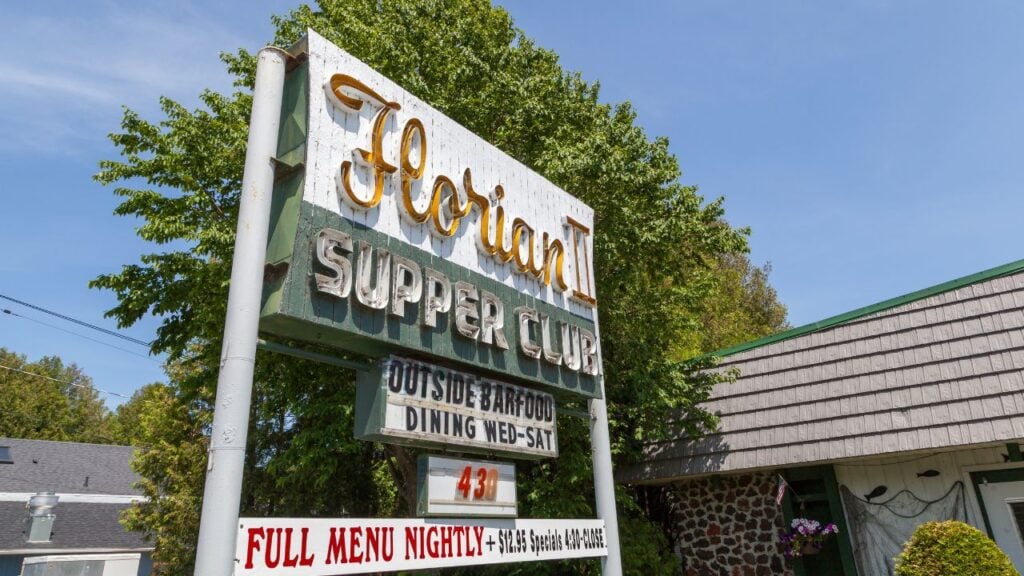
A Wisconsin supper club runs on habits most outsiders never see coming, starting at the bar instead of the table.
Order "an Old Fashioned" expecting bourbon, and the bartender pours brandy without asking, then waits on an answer to three words: Sweet, sour, or press.
9 Wisconsin Supper Club Rules Outsiders Break Without Knowing
