
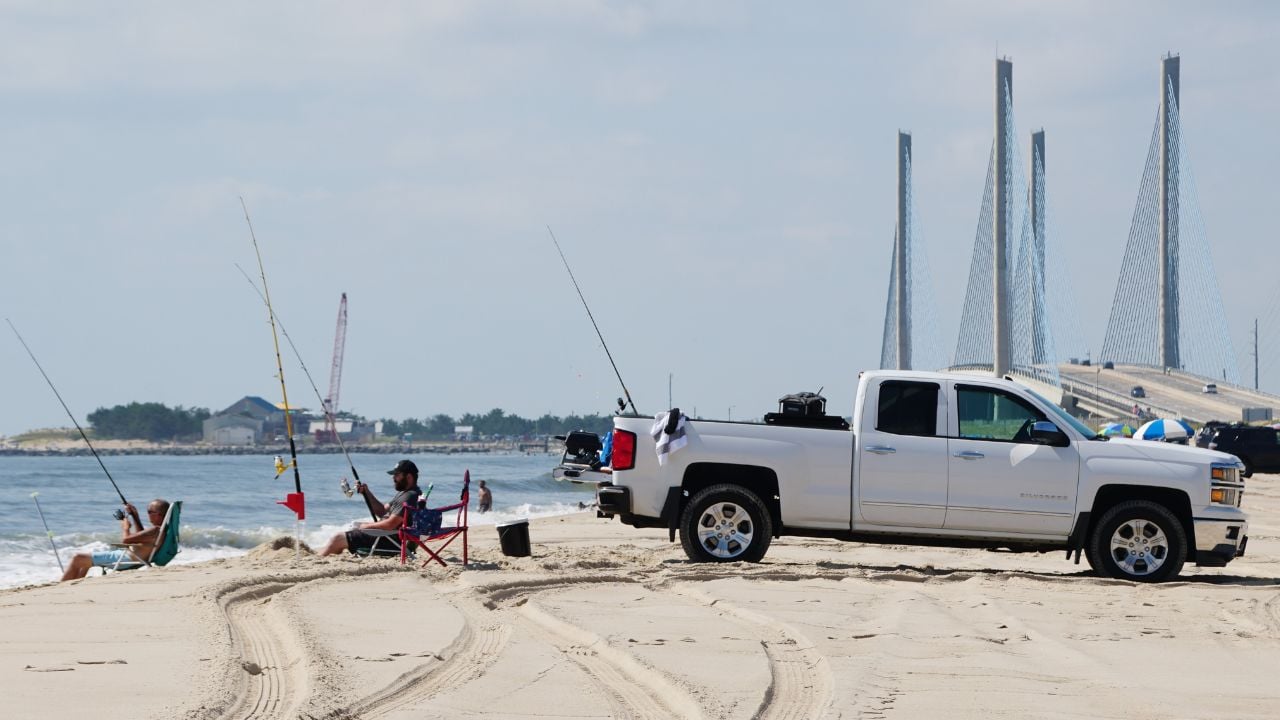
6 Delaware Surf Fishing Permit Rules That Can Get a Truck Turned Off the Beach

Your brother-in-law asks to borrow your surf fishing permit for the weekend.
Don’t be quick to hand it over.
Here are the Delaware surf fishing permit rules that can get a truck turned off the beach.
Note: This is general information, not legal advice. Beach driving rules and fees are subject to change, so confirm the current requirements with Delaware State Parks.
1. Actively Fishing Only
Your truck is covered by the permit only while someone in it is surf fishing.
Delaware’s regulation limits vehicle use on the designated beaches to people “actively engaged in surf fishing.”
The state defines that as taking all reasonable and necessary actions to maximize the probability of landing a game fish.
Your truck can’t stay parked on a state park beach unless someone who arrived in it is actively fishing.
In a July 2019 sweep of the Cape Henlopen State Park surf fishing beach, officers from the Delaware Department of Natural Resources and Environmental Control checked 303 vehicles on the designated beach.
They issued seven summonses and gave nearly 50 verbal warnings.
Parking alone doesn’t count.
The majority of the violations involved people who weren’t fishing or had invalid permits.
What Delaware State Parks Can Do to a Permit
Delaware State Parks sets fines of $50 to $250 for a first offense under the surf fishing permit rules, and $100 to $500 for a second.
The state can also suspend a permit for up to 90 days or revoke it for up to three years.
Without a permit, the regulation says no person may operate a vehicle on the beach areas or dune crossings.
The grounds are reckless operation, driving under the influence of alcohol or drugs, and breaking the permit regulations.
2. Five-Item Gear List
The surf fishing permit rules list five items your truck must carry.
You need a shovel, a jack, a tow rope or chain, a board or similar support for the jack, and a low-pressure tire gauge.
That 2019 sweep also checked the mandatory vehicle equipment, along with permits and proof of a fishing license.
If one of the five is missing from your truck, it doesn’t meet the equipment rule.
That includes the board.
Violating the regulations is grounds for the Director to suspend or revoke a permit.
3. Plates and Decals
A surf fishing permit does nothing for your truck until the right decal and plate are on its front.
The regulation calls for a current decal and a valid plate on the front of the vehicle.
It also requires you to keep your permit receipt available for inspection whenever your truck is on the beach.
Numbered surf plates issued before 2015 are invalid.
Last year’s decal won’t do.
Delaware State Parks issues each annual permit for the calendar year, so a low-numbered plate counts only if you’ve bought this year’s permit.
If you don’t follow the state park regulations, you can be cited and your permit may be revoked.
4. Speed and Parking
Under the surf fishing permit rules, your speed on the beach tops out at 15 mph.
The regulation also requires a reasonable and prudent speed.
That means slowing to whatever keeps your traction and steering under control.
Fifteen can be too fast.
Your truck also has to park in a single row between the dune and the high tide line.
Speeding on the beach is unlawful under the regulation, and violating the regulations is grounds for losing the permit.
Psst! How much do you know about Delaware’s coast? Take our quiz and see if you can ace it.
Quiz
Delaware Beach IQ
Answer nine questions on Delaware’s state park beaches, history and surf fishing paperwork. We bet you can’t get them all right. Prove us wrong?
Delaware Seashore State Park wasn’t always called that. What was the park named when the state began managing the land in 1965?
5. Closed Areas and Dunes
Your surf fishing permit doesn't cover any beach area posted as an endangered or protected species bird nesting area.
Delaware State Parks marks its access areas with 24-hour, limited or no-access symbols.
Driving into an area that isn't authorized for vehicles is a violation, and so is driving in that area during closed hours.
Entering a posted or barricaded closed area is a violation too.
A sand bypass system is running from September 15, 2026 to March 15, 2027, and portions of the beaches on both sides of Indian River Inlet are closed.
Closures aren't always scheduled.
Delaware State Parks says surf fishing areas can also close at any time for high tides, coastal storms, habitat protection or visitor safety.
You can cross the dunes only at designated crossings.
If you drive over a primary dune anywhere else, the regulation points to a state law.
That law carries a penalty of $200 to $5,000, up to two years in prison, or both.
The law also requires you to reimburse the state for the reasonable cost of repairing the damage.
Dunes aren't shortcuts.
6. Lending Your Permit
Lending your surf fishing permit is a violation.
The regulation also makes it a violation to use the permit on a different vehicle.
Delaware State Parks says a permit isn't transferable to anyone other than the people listed on the vehicle registration.
That means you can't use your permit on a friend's truck for the weekend.
A loaned or misused permit or plate may also be confiscated and held as evidence.
Keep it on your truck.
Off-Peak Permits
The surf fishing permit comes in an off-peak version that covers the Tuesday after Labor Day through Memorial Day weekend.
An off-peak permit won't get your truck onto the sand on weekends or holidays during peak season.
Peak season runs from Memorial Day weekend through the Monday after Labor Day.
If you plan to fish a summer weekend, check which permit you bought before you load the truck.
Weekends need the annual permit.
A resident off-peak permit costs $70, against $90 for the annual permit.
8 Things Delaware Requires for a License Renewal That Catch Drivers Off Guard

Renewing your license sounds like a ten-minute errand.
In Delaware, a few small surprises can turn it into a second trip.
8 Things Delaware Requires for a License Renewal That Catch Drivers Off Guard
5 Fees That Turn One Missed Delaware Toll Into an $88.50 Bill
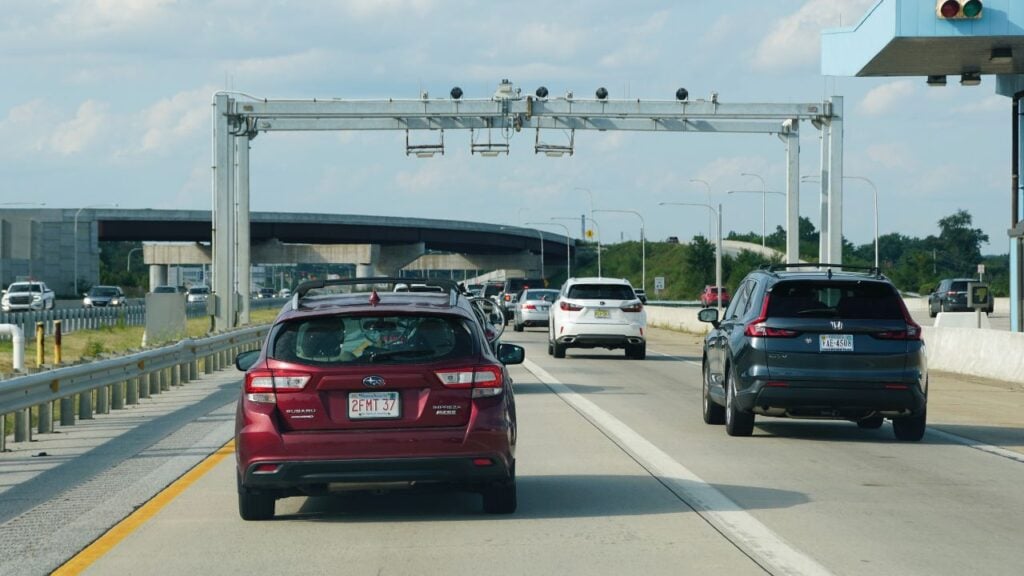
A mailed invoice says you drove through without paying.
Set it aside, and it can cost you far more than the original charge.
5 Fees That Turn One Missed Delaware Toll Into an $88.50 Bill
