
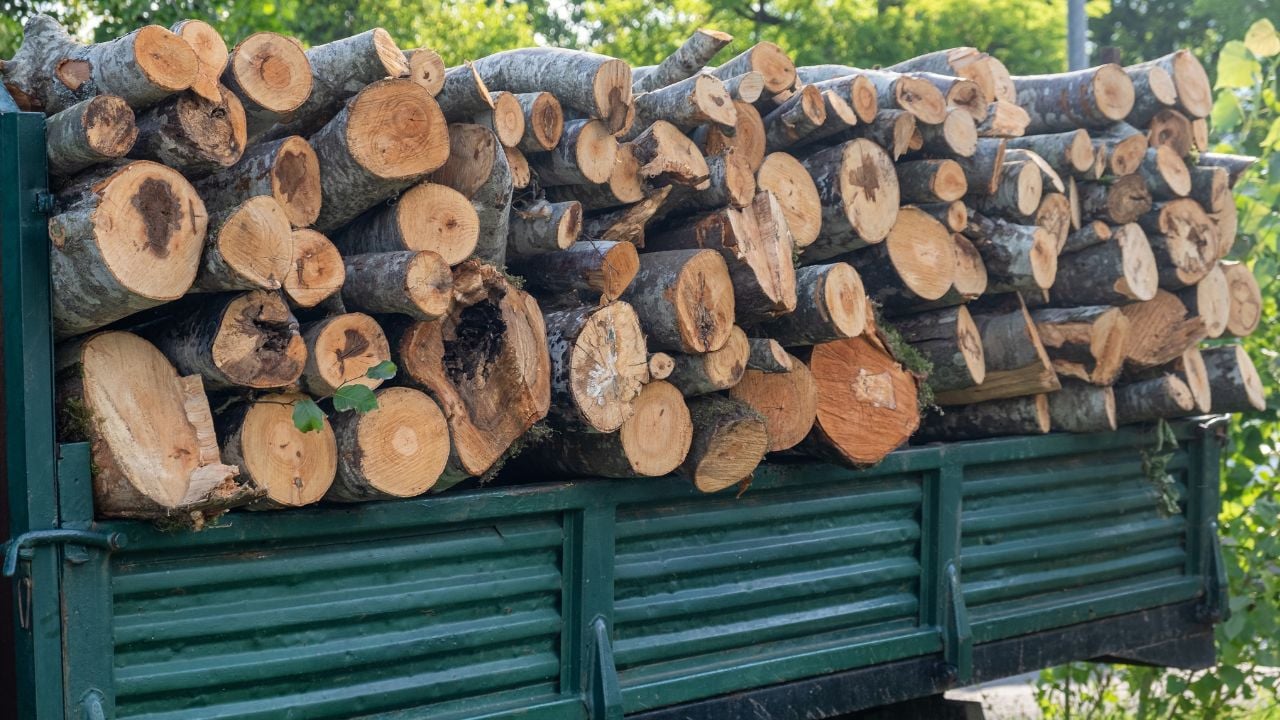
6 Firewood Buying Traps That Cost Pennsylvania Homeowners a Full Cord

Pennsylvania sells a permit to cut a cord of firewood off state forest land for $20.
Buy one from a dealer instead, and the price jumps by many multiples of that.
That gap only makes sense if the homeowner gets a full cord for the money.
These are the buying traps that turn a paid-for cord into less than what a $20 permit would have cut.
Note: This is general information, not legal advice. Weights-and-measures rules and penalties are subject to change, so confirm current requirements with the Pennsylvania Department of Agriculture’s Bureau of Ride and Measurement Standards.
1. Trusting a Truckload Price
Pennsylvania firewood sellers still quote “a truckload” or “a load” more often than a cord.
State law doesn’t recognize either term.
Firewood in Pennsylvania has to be sold only by the cord or a fraction of a cord, and the same rule bans the words truckload, rack, and pile from any firewood sale.
No fixed size exists.
A truckload is whatever fits on that particular truck, stacked however high the driver feels like going that day.
A homeowner who agrees to a truckload price has no legal volume to point back to once the load looks thin on the driveway.
2. Mistaking a Rick for a Cord
Pennsylvania homeowners who mistake a face cord for a full cord lose roughly two-thirds of a cord.
A face cord, sometimes called a rick, is a stack about 4 feet high and 8 feet long, commonly cut around 16 inches deep.
That works out to roughly a third of a full cord, not a full cord.
Pennsylvania law bans the term face cord outright, along with rack and pile, from any firewood sale in the state.
A seller who quotes a cord and delivers rick-depth wood has handed over about a third of what the word promised.
What Pennsylvania Law Means by a Cord
Pennsylvania’s legal definition of a cord is exact: 128 cubic feet of wood, stacked tight enough that the pieces touch and run parallel to each other.
That number doesn’t change based on what the receipt calls the load.
A stack labeled rick, face cord, or truckload still has to measure up to that same 128-cubic-foot standard if a homeowner ever files a complaint.
Pennsylvania law doesn’t recognize those words as sales terms in the first place.
3. Accepting a Dumped Delivery
Pennsylvania’s cord doesn’t just require a size.
It requires a shape too.
The law says wood must be ranked and well stowed, meaning pieces touching and parallel to each other, stacked in a compact manner, not just piled.
Wood dumped loose in a heap looks like plenty.
It rarely is.
Gaps and air pockets reduce the cubic footage, so a pile that looks generous on the driveway can measure well short of 128 cubic feet once it’s stacked and squared off.
The fix costs nothing but a little time: Ask the seller to stack it, or restack it and measure the pile before signing off on the delivery.
4. Skipping the Required Delivery Ticket
Pennsylvania sellers who skip the delivery ticket can shave a load with nothing in writing for a homeowner to check it against.
Under the same weights-and-measures rule that governs the word cord, every non-packaged firewood sale has to come with a delivery ticket or invoice.
That ticket has to show the seller’s name and address, the date, the quantity delivered, and the price.
Without one, there’s nothing signed to hold a seller to a promise once the stack comes up short.
Get it in writing before the truck pulls away.
A seller’s verbal promise that it’s a full cord doesn’t hold up the same way a signed ticket does.
5. Paying by the Ton
Some Pennsylvania sellers price firewood by the ton instead of the cord, especially for green wood sold off a farm scale.
That’s outside the law.
Pennsylvania’s rule requires firewood to be sold and priced by the cord or a fraction of a cord, with narrow exceptions only for bagged pellets and small packaged bundles.
Weight is a poor stand-in for volume anyway.
Green, freshly cut wood holds far more water weight than seasoned wood the same size, so a per-ton price can mask a shorted cord and unseasoned wood at once.
A homeowner paying by the ton is trusting a scale the law never asked for.
6. Assuming No One Polices This
Pennsylvania homeowners who accept a light delivery often do it because they assume there’s no way to challenge a firewood seller after the fact.
That assumption is wrong.
The Department of Agriculture’s Bureau of Ride and Measurement Standards inspects firewood sales under the same weights-and-measures law that covers gas pumps and grocery scales.
A homeowner who suspects a short cord can file a complaint through the department’s online complaint form or call its consumer hotline at 1-877-837-8007.
The penalties are severe.
A first or second violation is a summary offense.
A third is a misdemeanor.
Civil penalties under the same law can run up to $10,000.
Many homeowners never call after a short cord, mostly because they don’t know the office exists.
Psst! See how a full cord stacks up against a rick, a face cord, and every other term a seller might use. Sort the table or search for the term on your invoice.
County-Line Complications
Pennsylvania firewood carries rules that have nothing to do with cubic feet once a county line is involved.
More than 50 of Pennsylvania’s counties are under a spotted lanternfly quarantine, and the state asks residents not to move firewood out of a quarantined county at all.
Firewood coming into Pennsylvania from another state faces an even higher bar.
It has to be certified and heat-treated before it can legally cross the state line.
A homeowner chasing a cheap delivery from two counties over may be buying wood that was never supposed to travel that far in the first place.
Local wood skips the problem.
The Permit Price for Cutting Firewood
Pennsylvania will sell a permit to cut firewood on state forest land, and the price sits well below what many retail sellers charge for a delivered cord.
A fuelwood permit costs $20 per cord, capped at two cords per permit and five cords per household each year.
That’s a bargain.
The cutting season normally runs from April 1 through the day before rifle bear season opens each fall.
Buying still makes more sense for many homeowners.
Cutting, splitting, and hauling a cord by hand takes time and a truck.
The permit only covers dead or downed wood, not a healthy tree in the yard.
A fuelwood permit is only good for four weeks from the date Pennsylvania’s Department of Conservation and Natural Resources issues it.
It expires unused if the wood isn’t out by then.
9 Pennsylvania Inheritance Tax Rules That Catch Families Off Guard

A $300,000 estate doesn’t cost every Pennsylvania heir the same tax bill.
A child owes thousands less than a friend named in the same will, and a surviving spouse can owe nothing at all.
9 Pennsylvania Inheritance Tax Rules That Catch Families Off Guard
10 Financial “Rules” Pennsylvania Boomers Followed That No Longer Work the Same Way

A three-month certificate of deposit paid close to 18% back in 1981.
Banks don’t pay anywhere close to that now, and many Pennsylvania boomers are still running old money habits against a completely different set of numbers.
10 Financial “Rules” Pennsylvania Boomers Followed That No Longer Work the Same Way
