

6 Florida Deed and Title Scams That Can Transfer a Home Out From Under the Owner

A Broward County fraud ring took 44 homes worth $12 million before investigators finally caught on in 2018.
Florida doesn’t rely on just one trick to make that happen.
Different schemes chase the same result: A deed or title changes hands, and the owner is often the last one to find out.
These are the ways a Florida deed or title can end up in someone else’s name, sometimes with the rightful owner having no idea it happened.
Note: This is general information, not legal advice. Property recording rules and deadlines are subject to change.
1. Forging Your Deed Outright
Your Florida deed needs a notary’s stamp and two witnesses to record, and the county clerk who files it checks the paperwork, not the person who signed it.
That gap let a Hillsborough County couple, Michelle Cherry and Victor Rodriguez, forge a quitclaim deed on a house that wasn’t theirs.
They rerouted the owners’ mail, put the utilities in their own names, and started showing the house to real estate agents.
Nobody asked for proof.
Larry and Dreama Bilby had owned that house for almost 40 years, and neither of them had signed anything.
The Bilbys caught the fraud because they’d registered for Hillsborough County’s free fraud alert, which flagged the fake deed within two days.
Cherry pleaded to fraud and identity theft charges and drew 15 years in prison.
2. Stealing an Empty House
A Florida deed thief looks for a house nobody’s watching, and an empty one is the easiest mark of all.
Junior Simon moved into a Tamarac home in Broward County months after its owner died in 2020.
He didn’t inherit the house or buy it.
He just squatted.
Late in 2022, Simon filed a deed with the Broward County Property Appraiser’s office, and the document listed a witness who’d been dead for 12 years.
He tried to sell the house to a buyer who had no idea anything was wrong, and a title company caught the fake paperwork before the sale closed.
Simon didn’t walk away with the house.
He’s serving a 15-year state prison sentence instead, handed down in 2025.
3. Notarizing a Stranger’s Signature
Florida notaries are supposed to confirm that the person signing a deed is who they claim to be.
That check can fail in seconds.
An accomplice forged an 86-year-old nursing home resident’s signature 17 times on paperwork to sell the woman’s own house out from under her.
The accomplice used fake identification to convince a notary that she was the homeowner.
The notary signed off anyway.
The scheme listed the house for $500,000, and the sale nearly closed for about $462,100 before a title company caught the fraud.
Miami-Dade Judge Mindy Glazer put it plainly: “This property theft is a plague in our community.”
4. Disguising a Deed as Paperwork
A Florida deed doesn’t announce itself, and a quitclaim deed can look like almost any other form to someone who isn’t reading closely.
Evelio and Milagros Esteban of Miami-Dade County fell behind on their mortgage, and a neighbor offered to help them rent out the house instead.
He handed the couple paperwork they believed was a housing assistance application.
It was a quitclaim deed.
Signing it handed the neighbor their home’s title, and he moved the Estebans into a single bedroom while he rented out the rest of the house.
The couple still owed the mortgage on a house they no longer owned.
That debt didn’t disappear.
What a Quitclaim Deed Signs Away
A quitclaim deed transfers whatever interest the signer has in a Florida property, and nothing more than that.
It carries no promise that the title is clear and no guarantee against liens or competing claims.
That’s why scammers prefer it over a warranty deed.
A quitclaim deed moves fast.
Florida doesn’t require anyone to prove they own the home before the county records it.
5. Abusing Your Power of Attorney
Your power of attorney hands someone else the legal authority to sign documents on your behalf, including a deed to your Florida home.
Florida law expects that agent to act only in the principal’s interest.
Self-dealing, meaning the agent transferring the property to themselves, has to be expressly authorized in the power of attorney.
Lillian Morris, a 78-year-old caregiver from Lauderhill, spent two and a half years looking after an elderly Plantation man.
She obtained a document giving her his power of attorney, though investigators later said he may not have had the mental capacity to sign it.
Morris recorded a quitclaim deed transferring his $1.1 million home to herself.
Broward County deputies say she spent roughly $238,000 of his savings on trips to Amsterdam, Greece, Mexico and Africa.
Neighbors called it in.
Morris was arrested in September 2025 and charged with financially exploiting an elderly person.
It wasn’t an isolated case, either.
A separate Broward County ring used backdated powers of attorney, along with forged deeds and stolen notary stamps, to take 44 homes worth $12 million in an operation investigators called “Tomb Raider.”
6. Faking a Foreclosure Rescue
A Florida foreclosure rescue offer targets a homeowner already behind on payments, and the pitch always sounds like a lifeline.
One Florida company, Foreclosure Solution Specialists, ran that pitch on distressed homeowners from 2006 to 2009, promising to sell their houses to investors and let them buy the homes back later.
Instead, the company paid people to pose as buyers and used fake income and job information to push the loans through.
The homeowners’ equity vanished.
Federal prosecutors charged three people over the scheme in 2011, saying it forced most victims to move out once the properties foreclosed anyway.
Florida’s foreclosure-rescue law now requires a written agreement and gives the homeowner three business days to cancel before any deed can change hands.
Psst! How exposed is your Florida deed to a scam like these? Run through this checklist and see how well-protected you are.
Legally Losing a Home
Not every way a Florida home changes hands away from its owner involves a scam.
Your Florida property tax bill goes out November 1, and it’s officially delinquent if it’s still unpaid by April 1.
The county sells a tax certificate on the debt every May.
Interest on that certificate can run as high as 18% a year.
Two years after that April deadline, the certificate holder can apply for a tax deed, and the clerk auctions the house to the highest bidder.
That bidder can be anyone.
An owner who’s out of state, sorting out a parent’s estate, or simply behind on mail can miss every notice along the way.
Redeeming the certificate any time before the auction stops the whole process, but once the gavel falls, the house belongs to whoever bid highest, no deception required.
The Unpaid HOA Bill
A Florida homeowners association (HOA) can record a lien over almost any unpaid balance because state law sets no minimum amount before it can do that.
A Lake Worth homeowner named Deborah Megna found that out the hard way.
She owed her association $3,180 in dues, and interest and legal costs pushed that debt to nearly $18,000 by the time of judgment.
Her mortgage-free house was worth up to $900,000.
None of it followed her.
The association sold Megna’s lien to a company that buys and forecloses on HOA debt.
A first attempt to auction the house in March 2025 used alternative bidding rules and turned away a buyer’s $500,000 offer.
A judge canceled that sale after calling it “highly unusual.”
A second auction followed standard procedures in January 2026, and a different investor bought the house for $520,400.
Megna lost the house entirely over a bill that started under $3,200, and deputies evicted her from it in April 2026.
Her case is now on appeal, and she still hasn’t seen a cent of the sale.
9 Homestead Exemption Errors That Cost Florida Homeowners Their Savings
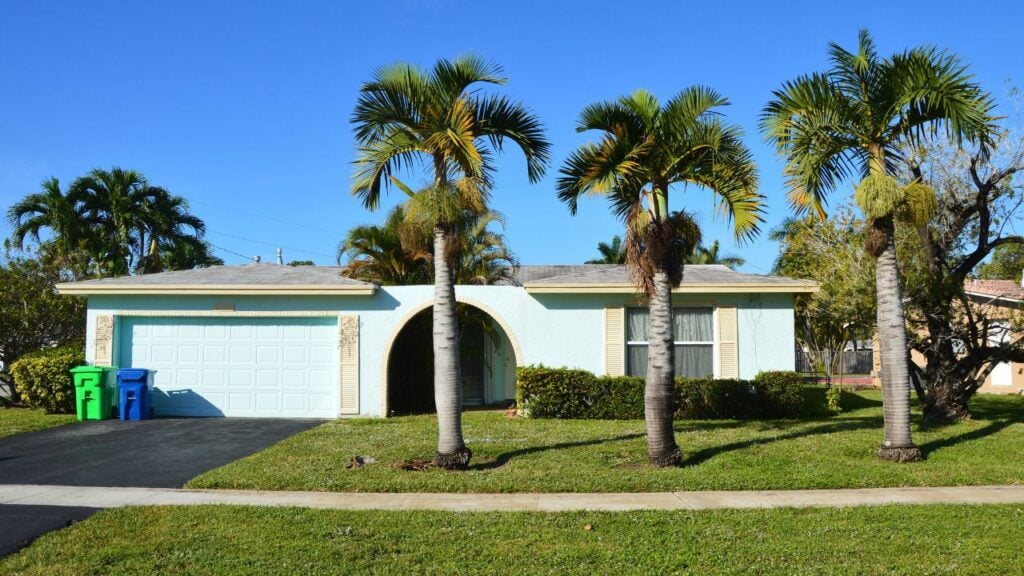
A Florida homestead exemption can trim tens of thousands off a home’s taxable value, but only for the owners who file every form correctly and on time.
These are the paperwork slips costing Florida homeowners their biggest property tax break.
9 Homestead Exemption Errors That Cost Florida Homeowners Their Savings
9 Hurricane Supplies Floridians Say Are a Waste of Money
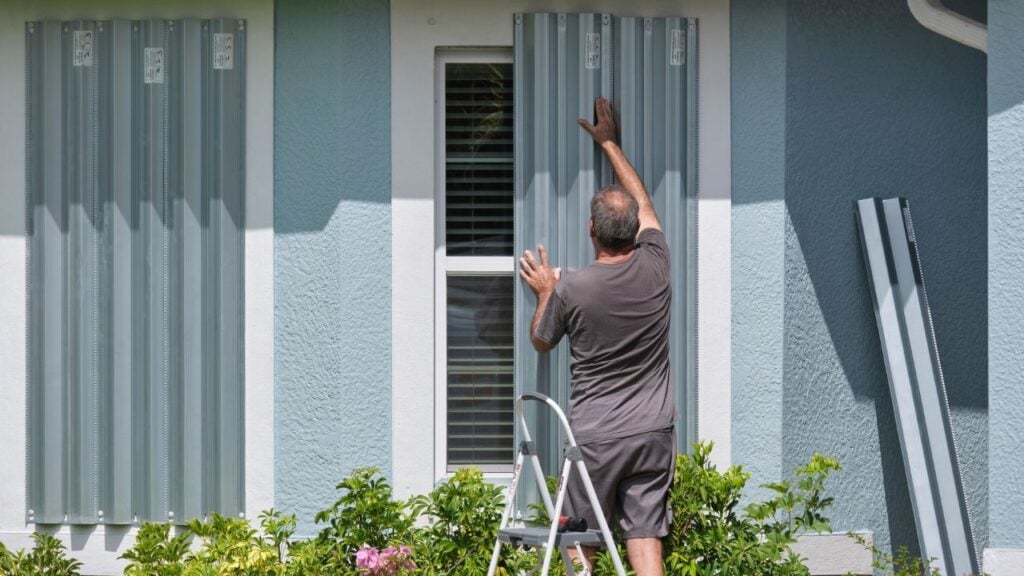
Florida emergency managers have spent years trying to talk homeowners out of taping an X across their windows before a storm.
These are the hurricane supplies Floridians keep buying that do little to protect a home.
