

6 Florida Property Tax Breaks Veterans and Their Spouses Often Miss

It’s Veterans Day, and in Florida, the days you spent deployed can earn you an extra property tax break.
Many veterans and their spouses often overlook breaks like that.
Here are the Florida property tax breaks veterans and their spouses often miss.
Note: This is general information, not legal or tax advice. Assessment rules and exemption amounts are subject to change, so confirm the current details with your county property appraiser.
1. $5,000 Disability Exemption
You may qualify for a $5,000 exemption on your property’s value.
You need to be a bona fide Florida resident who left military service under honorable conditions, with a disability of 10 percent or more.
The Department of Revenue says that disability can come from wartime service or from misfortune, and that the exemption isn’t limited to a homestead.
If your local rate works out to $18 for every $1,000 of value, that $5,000 saves you about $90 a year.
Over ten years, that’s $900.
If you die first, your unremarried surviving spouse is entitled to the exemption too.
A certificate of disability from the U.S. Government is prima facie evidence that you’re entitled to it, so bring yours to your county property appraiser.
2. Total Disability Exemption
If you have a service-connected total and permanent disability, you may qualify for a total exemption from property tax on your homestead.
You need an honorable discharge and a letter certifying the disability from the U.S. Department of Veterans Affairs (VA).
You also have to be a Florida permanent resident on January 1 of the tax year.
If you die first, the exemption carries over to your spouse until they remarry or sell the home.
If your spouse sells and doesn’t remarry, your spouse may be able to claim an exemption on a new primary residence, within limits.
Picture a homestead with a $250,000 taxable value. At a rate of $18 for every $1,000, the property tax would be $4,500.
You’d owe none of it.
3. Combat-Related Discount at 65
Once you’re 65, a property tax discount can match the percentage of your permanent, service-connected disability.
A 40 percent disability earns a 40 percent discount, figured after your other exemptions are counted.
The catch is that your disability has to be combat-related.
You also need an honorable discharge, and you have to own and live in the homestead.
Your application needs a VA letter stating your disability percentage, plus evidence that the disability is combat-related.
It also needs a copy of your honorable discharge and proof of your age.
Age counts on January 1.
Your surviving spouse can keep the discount as long as they hold title to the home, live there and don’t remarry.
Veteran Property Tax Breaks and the March 1 Deadline
Each of these breaks needs an application on file with your county property appraiser by March 1.
If you miss that date, you waive the exemption for the year.
The deployment exemption runs on a different clock. Its deadline is March 1 of the year after the deployment.
You may still be able to petition the county value adjustment board, but only by the 25th day after your county mails its assessment notice. Approval isn’t automatic.
You can also apply before the VA paperwork arrives.
Once it does, the exemption dates back to your first application, and the county refunds the excess taxes you paid, going back four years at most.
4. Deployment Exemption
Days you spent deployed can earn you an extra break through the deployment exemption, which sits on top of your homestead exemption.
It applies to current and former members of any U.S. military branch, the reserves, the Coast Guard and the Florida National Guard.
Your deployment has to be outside the continental U.S., Alaska and Hawaii, in support of an operation the Legislature lists in the statute, such as Operation Inherent Resolve.
Say you spent 73 days of a 365-day year on a qualifying deployment, and your homestead’s taxable value is $200,000 on January 1 of the next year.
Seventy-three days is one-fifth of the year, so your exemption is one-fifth of that value, or $40,000.
You file with your county property appraiser by March 1 of the year after the deployment, on a Department of Revenue form.
Your spouse can also file for you if the two of you hold the home as tenants by the entirety or jointly with the right of survivorship.
Psst! How much do you know about Veterans Day and veterans’ benefits? Take our quiz and see if you can ace it.
Quiz
Veterans Day Trivia
Answer these questions on Veterans Day, veterans’ benefits and the VA. We bet you can’t get them all right. Prove us wrong?
From 1971 until 1977, Veterans Day was moved to which date?
5. Wheelchair Exemption
Your homestead is exempt from property tax under the wheelchair exemption if you're a disabled veteran who needs a wheelchair for transportation.
A wheelchair alone isn't enough.
You also need an honorable discharge and a service-connected total disability.
On top of that, you need a federal certificate showing you received special financial assistance for specially adapted housing.
If you die first, your spouse can keep the exemption.
That works only if the two of you owned the homestead together as an estate by the entirety, a form of joint ownership between spouses.
It ends if your spouse remarries or sells the property.
6. Active-Duty Death Exemption
If your husband or wife died from service-connected causes while on active duty, your homestead is exempt from property tax under Section 196.081(4).
You keep the exemption as long as you hold title to the home, live there permanently and don't remarry.
The proof is a letter.
A letter from the federal government or the VA certifying that the death was service-connected is prima facie evidence that you're entitled to the exemption.
Checking Eligibility Early
A county property appraiser may give you a tentative verification before you file for the total exemption, the combat-related discount or the wheelchair exemption.
Ask whether your appraiser offers one, but know it isn't binding.
You still have to meet the statute's requirements and file the yearly application.
After you're approved, Section 196.011(7) has the appraiser mail you a renewal application each year.
A county can waive that yearly application for the combat-related discount for veterans 65 and older.
Reporting falls on you.
If your county waives that yearly application, you have to tell the appraiser promptly when the use of the property or your disability percentage changes.
If you don't, the county can collect the exempted taxes for up to 10 prior years, plus 15 percent interest a year and a 50 percent penalty.
3 Florida Flood Insurance Rules That Change for Homes Built Before 2018
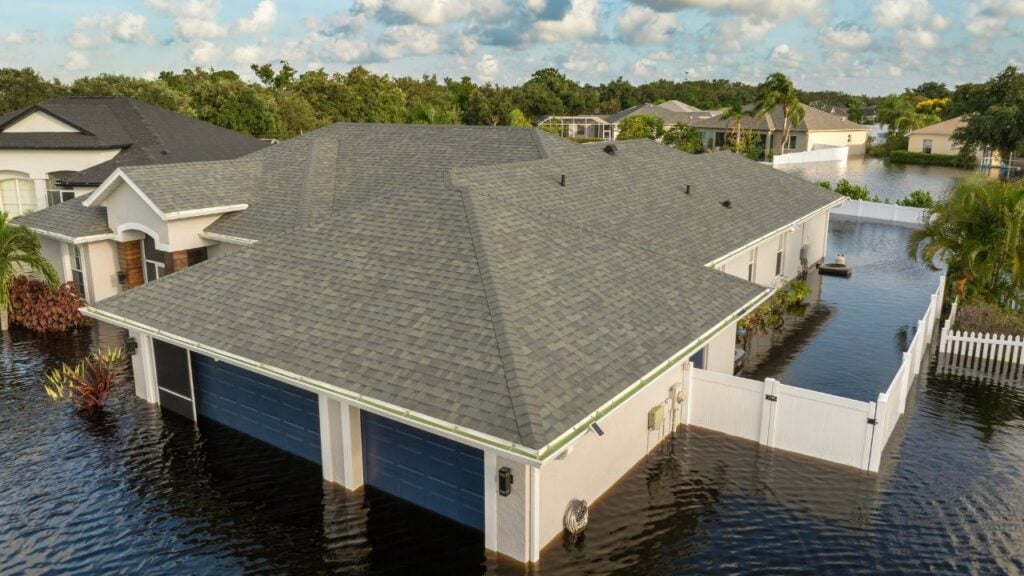
Some of Florida's flood insurance rules work differently for older homes.
This article walks through what changes.
3 Florida Flood Insurance Rules That Change for Homes Built Before 2018
9 Annuity Terms That Cost Florida Retirees More Than They Earn

Annuity contracts can be full of terms that work against you, and you may not learn about them until you need the money.
These are the annuity terms that often cost Florida retirees.
9 Annuity Terms That Cost Florida Retirees More Than They Earn
