
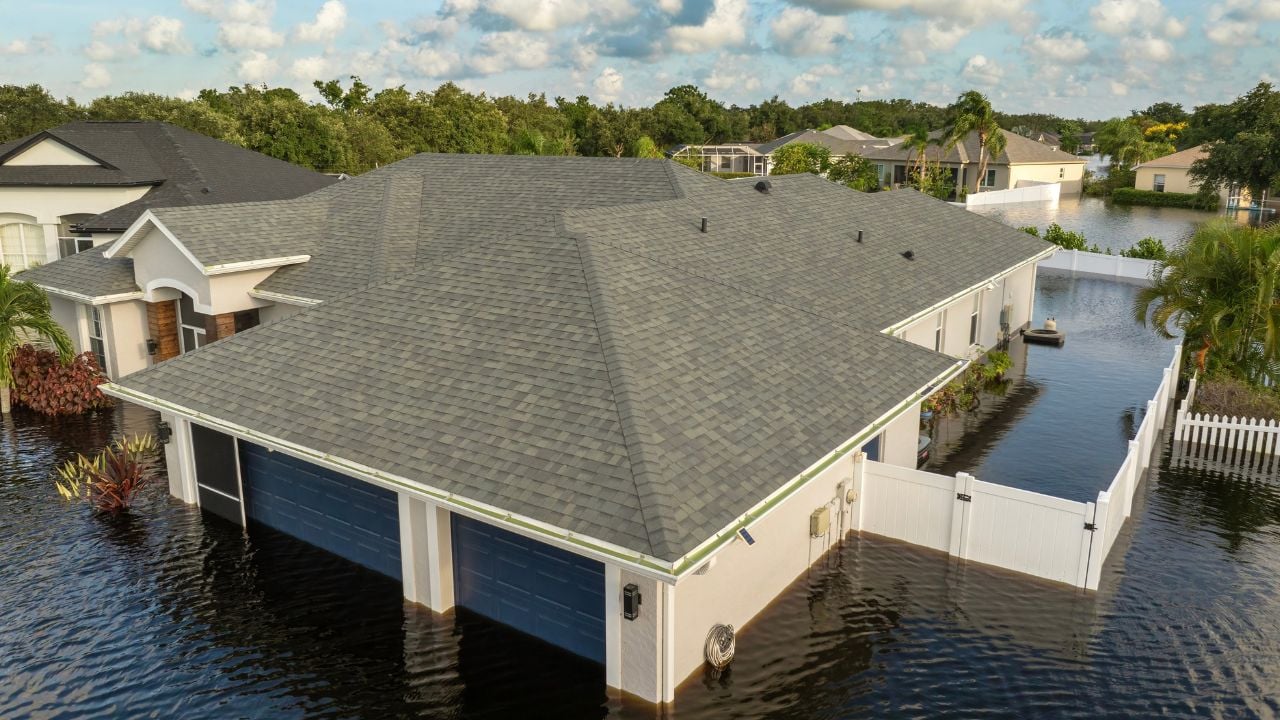
3 Florida Flood Insurance Rules That Change for Homes Built Before 2018

Florida spent the peak of this year’s hurricane season watching a storm that never showed up.
By late September, the Atlantic had gone longer without a single hurricane than in any year since 1966, per the National Oceanic and Atmospheric Administration’s (NOAA) tracking data.
A slow season doesn’t change the flood insurance rules, though.
These are the Florida flood insurance rules that change for homes built before 2018.
Note: This is general information, not insurance or legal advice. Flood zone construction requirements and coverage details are subject to change. Confirm your home’s status with FEMA’s Flood Map Service Center, and check your coverage with your insurer or agent.
1. One-Foot Freeboard Floor
Florida’s flood-zone building rules reset hard on December 31, 2017, when the Florida Building Code’s sixth edition took effect and rewrote how high a new home has to sit.
New construction in a flood zone now has to sit at least a foot above the base flood elevation, not just even with it.
The rule applies in every flood zone statewide.
That’s called freeboard, and it works like a safety cushion between a house and the water.
One foot buys margin.
A home permitted the day before that update took effect could be built exactly at flood level in many of the state’s flood zones.
No cushion was required there at all.
Coastal A Zone lots were already the exception.
Florida had required a one-foot cushion there since the 2014 code, years before the freeboard rule spread statewide.
Outside a Coastal A Zone, an older home’s cushion was never a given.
Whether it got one at all depended on whether its city or county had chosen to require one on top of the state’s minimum.
That difference shows up directly on a flood insurance bill, since a home’s height above the base flood elevation is one of the biggest levers its premium pulls.
Every inch counts.
What One Foot of Freeboard Buys
Florida’s one-foot freeboard rule is measured up from the base flood elevation, not up from the ground a house sits on.
A lot with a base flood elevation of nine feet needs its lowest floor at ten feet, not nine and a half and not nine with a shrug.
Some Florida communities require even more than that one-foot floor through their local rule, often two feet, to qualify for a discount under FEMA’s Community Rating System.
2. Coastal A Zone Upgrade
Florida’s coastal construction rules already carved out a Coastal A Zone before the sixth edition took effect.
The sixth edition didn’t invent that zone.
It redrew it.
The updated boundary now follows the Limit of Moderate Wave Action, a line FEMA maps for each community, in place of the looser boundary older maps used.
It covers lots close enough to the coast to catch waves between one and a half and three feet high.
Waves that size still knock down a wall that isn’t built for them.
A home a community designates inside that boundary now has to meet the same foundation standard as a full V zone in many cases.
That standard calls for an open, elevated foundation, engineered to let a wave pass underneath instead of pushing against a wall.
That standard isn’t absolute.
The code carves out two exceptions, a backfilled stemwall foundation and, for non-residential buildings only, dry floodproofing.
A house permitted before the sixth edition could still have gone up with a solid foundation under the older, looser Coastal A Zone standard.
That older standard never required open-pile construction at all.
The zone’s boundary moved.
The beach didn’t.
That distinction matters when an insurer or a building inspector checks whether the space under an older coastal home still meets today’s standard.
3. Breakaway Wall Vent Rule
Florida’s coastal building rules have long required breakaway walls under an elevated home in a V zone, engineered to fail under pressure instead of fighting a storm surge.
The sixth edition code added a detail the earlier rule skipped.
A breakaway wall now needs engineered flood openings too.
They’re sized to the same federal ratio used elsewhere in the code, one square inch of opening for every square foot of enclosed space.
A breakaway wall built under the prior code could be solid instead, since the whole point of the wall was always to give way, not to vent.
It’s still built to lose.
That’s on top of a rule the code already had in place.
A breakaway wall can’t carry a home’s utility equipment, an air-conditioning condenser or a water heater among them, mounted directly on or through it.
The wall’s actual strength requirement hasn’t moved.
A breakaway wall still has to give way at ten to twenty pounds of pressure per square foot, the same federal design-load figure the code has used for years.
An insurer checking storm damage now has one more line item to look for on a newer coastal home.
It’s whether the wall’s vents survived, not just whether the wall broke away as designed.
An older coastal home with a solid wall down there was built to whatever rule applied before this one.
That gap is the detail an inspector checks first after a storm.
Psst! How flood-insurance-ready is your Florida home? Run through this checklist and see where you stand.
Not the 2002 Code
Florida did get one statewide building code for the first time on March 1, 2002, replacing a patchwork of local rulebooks with a single set of standards.
Before that, a Florida city or county picked one of five state-approved model codes, the Standard Building Code and the South Florida Building Code among them.
It stuck with whichever one it had chosen.
The code changed anyway.
None of the flood-construction rules above trace back to that 2002 reset.
The statewide code didn’t fold flood-resistant construction into its chapters until the 2010 edition, years before the freeboard and Coastal A Zone changes arrived in 2017.
The 2002 code mattered mostly for wind and structural rules, the kind that mattered most after Hurricane Andrew exposed how weak some local construction standards had been.
None of these code dates move because of how a given hurricane season turns out, either.
The Atlantic went longer without a single hurricane this year than in any stretch since 1966, and Florida’s flood-zone construction rules didn’t shift an inch because of it.
Two Other Dates This Isn’t
Readers often confuse two other things with Florida’s 2017 flood-construction reset, though neither shares its date.
Two other dates, that’s all.
The first is called Pre-FIRM status, short for a community’s Flood Insurance Rate Map (FIRM).
It depends on when that map was first adopted, a date usually decades older than 2017 and different in almost every Florida county.
A pre-FIRM home often carries a different premium structure, regardless of any construction rule on this list.
The second is Risk Rating 2.0, the national pricing overhaul the Federal Emergency Management Agency (FEMA) rolled out for new policies on October 1, 2021.
Neither date is this one.
Risk Rating 2.0 changed how a policy’s price reflects a property’s flood risk, not just its flood zone label.
Two houses in the same zone can now carry very different premiums, based on distance to water and rebuild cost alone.
8 Boat Registration Renewal Traps That Catch Floridians Off Guard
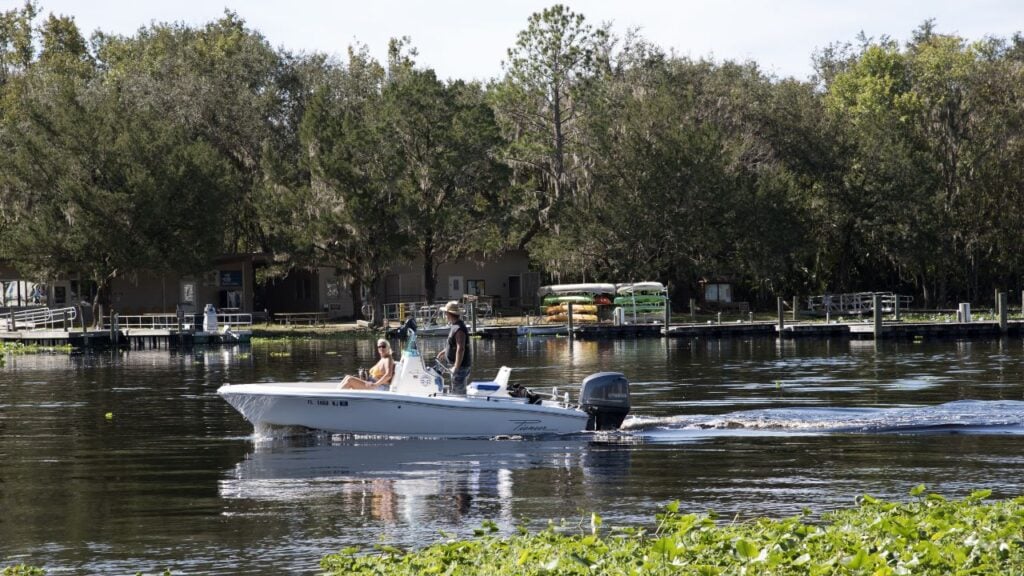
A boat sitting in a Florida driveway comes with a paperwork clock, separate from anything tied to the house behind it.
The most expensive part of owning one in Florida often isn’t what breaks on the water, it’s the renewal detail nobody checks until an officer asks for it.
8 Boat Registration Renewal Traps That Catch Floridians Off Guard
10 Hotel Features Florida Travelers Over 50 Care About More Than a Trendy Lobby

A hotel room can look perfect in photos and still miss what matters once someone is standing in it.
More than one in five Florida residents are 65 or older, and the features they notice first rarely make it into a glossy website description.
10 Hotel Features Florida Travelers Over 50 Care About More Than a Trendy Lobby
