
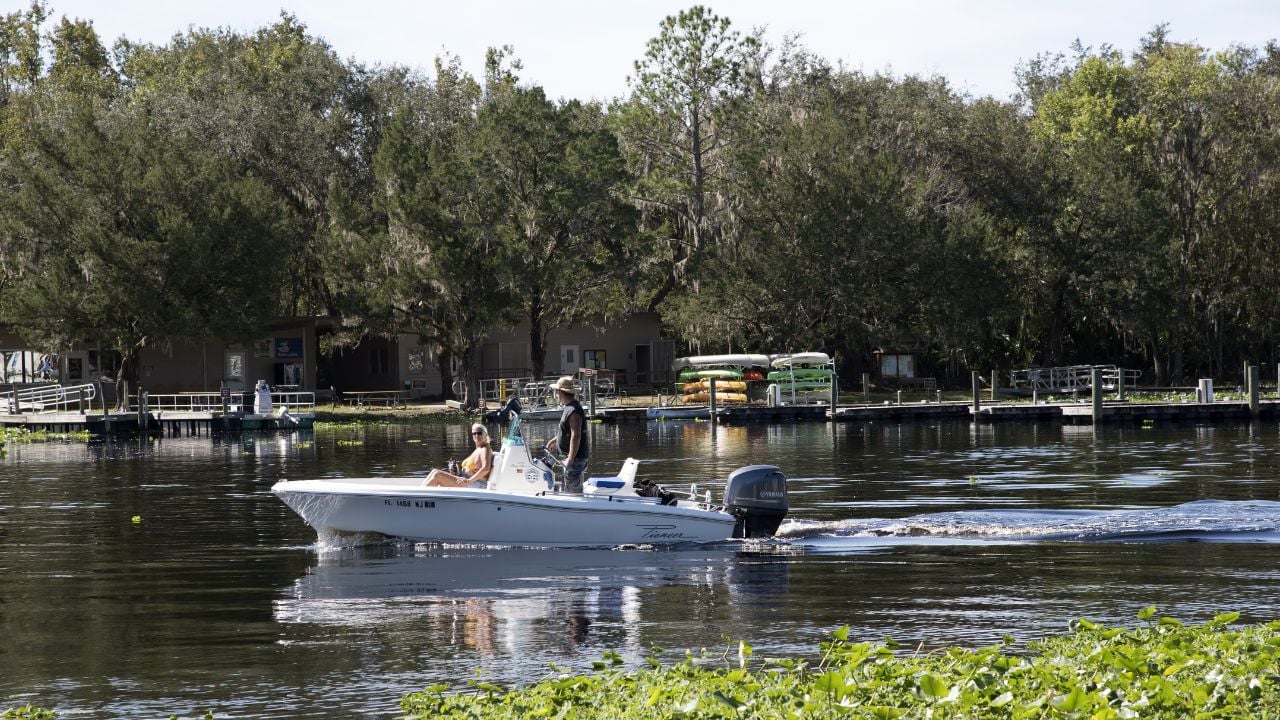
8 Boat Registration Renewal Traps That Catch Floridians Off Guard

The most expensive part of owning a boat in Florida isn’t always what breaks on the water.
Sometimes it’s the small registration detail an owner doesn’t discover until an officer asks to see the paperwork.
These are the boat registration renewal traps that catch Floridians off guard.
Note: This is general information, not legal advice. Registration rules and fees are subject to change, so confirm the current requirements with the Florida Department of Highway Safety and Motor Vehicles.
1. No Notice, No Excuse
You won’t get a promised reminder that your boat’s Florida registration is about to expire.
Many county tax collectors, including Polk and Lee counties, mail a courtesy postcard about three weeks before the deadline.
Florida law doesn’t require that notice to go out at all, so a missed mailing is never a valid excuse for your lapsed registration.
Silence isn’t an excuse.
If you moved last year and never updated your address with the tax collector, you might never see a reminder at all, notice or no notice.
A change-of-address form takes a few minutes online.
Skip it, and you could be the next boat owner in Tampa or Naples who finds out about a lapse the hard way.
The renewal date doesn’t move just because the mail never showed up.
2. The Early-Renewal Backfire
Your boat’s Florida registration renewal window opens only three months before the expiration date.
Not a day sooner.
Try to renew in, say, October for a March deadline, and you’ll find the system isn’t ready to take your payment yet.
Come back closer to the date.
Florida’s county tax collectors process many of these renewals themselves, whether online, by mail, or at a local office.
None of them can open your file before the window starts.
Mark the calendar, not just your birthday.
3. Your Birthday, Not a Fixed Date
Your boat’s Florida registration renewal follows your birthday, not a fixed date you might expect.
Midnight on that day is the actual cutoff.
Vessels titled to a business, a dealer, or a government agency skip the birthday rule entirely and expire every June 30 instead.
Two different clocks, one state.
Buy your boat in April and expect a full year from the purchase date, and Florida can still catch you off guard.
Your birthday can land just months later, not a full year out.
Whose Birthday Counts on a Joint Boat
Florida’s renewal clock follows one birthday even when your boat’s registration lists more than one owner.
The state counts the birthday of whichever owner is listed first on your registration, not whichever co-owner’s birthday happens to land first in the calendar year.
4. Picking the Wrong Renewal Length
You can renew your boat’s Florida registration for one year or two years at a time.
You might not even notice the choice is there.
Read every box twice.
Skip past it, and you land back at the counter every single year instead of every other year.
Assume you picked the two-year term, the same way you always do with your car tag, and you might be wrong.
Your boat’s registration can lapse a year sooner than you think, and you won’t find out until it already has.
The two-year box usually sits right next to the one-year option on your county’s renewal form, and habit sends you to the one-year box instead.
5. The Boat-Only Renewal
Renew your boat’s Florida registration, and you still haven’t touched the trailer that hauls it.
Florida registers a boat trailer as a separate vehicle, with a registration record at the tax collector’s office that has nothing to do with the boat’s file.
The trailer follows the same birthday-based clock as the boat when both are titled to you, but paying for the boat’s registration doesn’t pay for the trailer’s.
Same date, two separate bills.
Renew the boat online and drive home towing the trailer, and you might not notice the trailer’s tag is still unpaid.
A trooper checking your tag on the highway doesn’t care that the boat itself is current.
Renew both at the same visit, and the mismatch never gets the chance to catch up with you.
6. Mandatory Decal Placement
Your boat’s Florida registration renewal comes with a brand-new decal, and exactly where it goes on the hull isn’t up to you.
The decal belongs within six inches of the registration number, on the vessel’s port, or left, side.
Boats with U.S. Coast Guard documentation get one exception, since their decal can go on a window or windshield instead of the hull.
Guessing isn’t good enough.
The registration number itself carries rules too: the letters must run at least three inches tall in a color that contrasts with the hull.
A faded number and a stray decal read the same way to an officer on the water: noncompliant.
7. The Paperwork That Rides Along
Your new certificate of registration doesn’t show up the same day your boat’s Florida renewal payment clears.
It arrives by mail, sometimes days later.
Until then, your old certificate still has to do the job because Florida’s rule doesn’t name an exception for a renewal still in the mail.
That requirement doesn’t end once the new certificate arrives, either.
Keep the certificate on board every time your boat is operated, not just the decal on the hull, and not in a file at home.
The decal isn’t enough.
An officer can ask to see the certificate, and a boat with a current decal but no paperwork on board still fails the check.
Psst! How much do you know about Florida boating history and rules? Take our quiz and see how many you can get right.
Quiz
Florida Boating IQ
Answer these questions on Florida boating history and rules. We bet you can’t get them all right. Prove us wrong?
In what year did Florida’s Fish and Wildlife Conservation Commission announce the state had crossed one million registered recreational vessels?
8. Expired Registration, a Citation
Florida treats your boat's expired registration as a citation on the water, not a slow paperwork catch-up.
Operating past the deadline is a noncriminal infraction, and Florida prices the penalty in tiers.
A lapse of six months or less draws a civil penalty of up to $100.
Let it run longer, or do it twice, and the number rises.
A first offense past six months tops out at $250, and a repeat offense, or a case that goes to court, can reach $500.
An officer who stops your boat mid-trip expects a current registration, not a promise that renewal is coming soon.
The clock doesn't pause.
Nothing in the statute carves out a grace period for a lapse of a single day instead of a single month.
A citation can be dismissed if you can show proof the registration was valid on the date of the stop.
That proof has to be the actual paperwork, not a promise that renewal happened the same week.
7 Reasons Your Florida Driver's License Renewal Was Denied (and How to Fix Each One)
Florida can deny a driver's license renewal over paperwork that has nothing to do with your eyesight or your driving record.
One overlooked toll invoice that turned into a citation can trigger a statewide hold that shows up the moment you try to renew.
7 Reasons Your Florida Driver's License Renewal Was Denied (and How to Fix Each One)
8 Florida Fishing License Rules That Catch Newcomers Off Guard

Florida waives its saltwater fishing license requirement on only two Saturdays a year, and every other day runs on a stricter set of rules.
A newcomer who assumes one license covers every kind of fishing in Florida finds out the hard way that it doesn't.
8 Florida Fishing License Rules That Catch Newcomers Off Guard
