
6 Florida Wildlife Rules Snowbirds Break Without Realizing It

Half the fun of a winter down south is the wildlife you’d never see back home.
But being a good neighbor to that wildlife takes more than a kind heart.
These are the Florida wildlife rules snowbirds break without realizing it.
Note: This is general information, not legal advice. Wildlife rules and penalties are subject to change, so confirm the current rules with the Florida Fish and Wildlife Conservation Commission (FWC).
1. Feeding Sandhill Cranes
Is that sandhill crane on your lawn hoping for a handout?
Florida made it illegal to intentionally feed sandhill cranes in 2002.
Bread counts.
A first citation is a $100 civil penalty.
A second citation is a second-degree misdemeanor.
That’s a lot of trouble for a sandwich crust.
Even accidental feeding, like birdseed spilling from a feeder onto the ground, can put cranes at risk.
If a crane digs up your lawn for mole crickets, FWC says to accept some of it.
If a crane keeps scratching at its reflection in your car, cover or move the car.
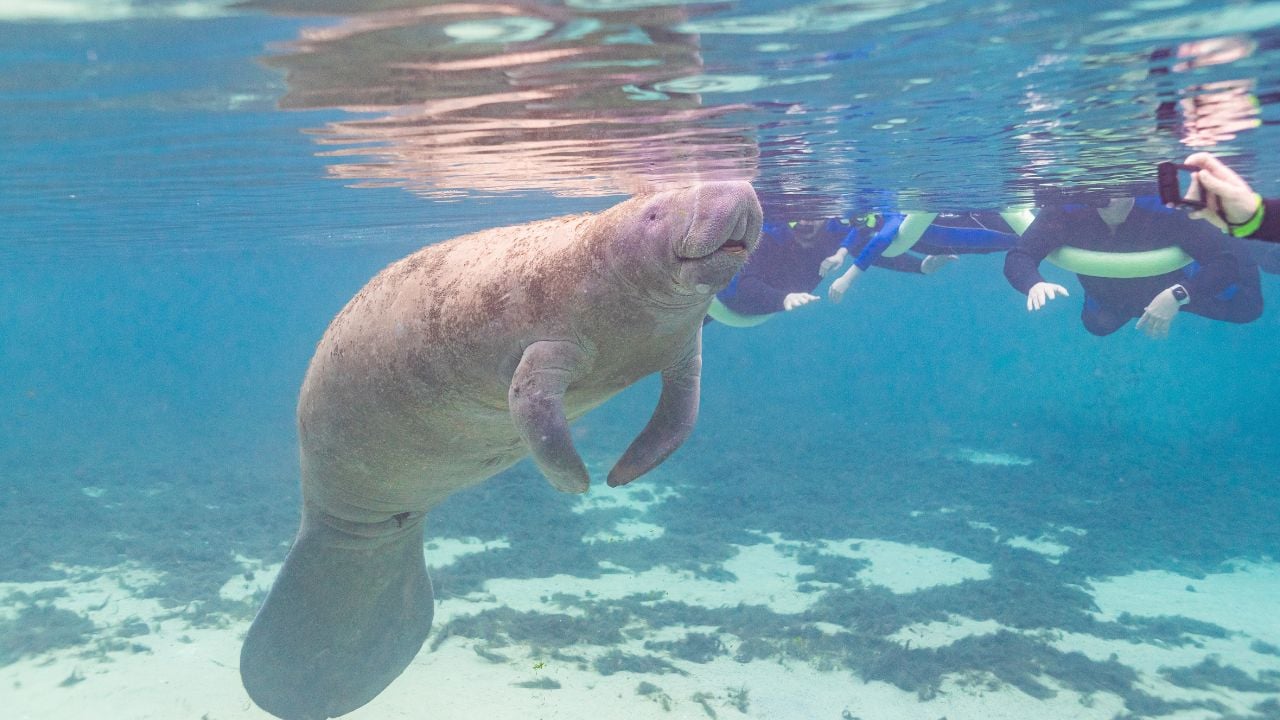
2. Harassing Manatees
Snowbirds aren’t the only ones who spend winter chasing warmth.
Manatees head for warm springs and power plant outflows when the water cools.
If you kayak a spring, you might paddle right up to one.
State law makes it unlawful to annoy, molest, harass or disturb a manatee.
Feeding one can bring a harassment charge, and so can using water to lure one to your dock.
Keep your snacks to yourself.
A first conviction under state law brings a fine of up to $500, up to 60 days of imprisonment, or both.
Federal protection laws go further, with fines up to $100,000.
3. Disturbing Sea Turtles
Think the sea turtle rules end when summer does?
FWC says the main nesting months run from May to October, but hatchlings can emerge well into the winter months.
So a winter beach walk can still put you near a hatchling.
Florida makes it a third-degree felony to illegally disturb, harass or take a sea turtle, a hatchling or a nest.
If you spot a turtle at night, skip the flashlight and flash photography, and keep your hands off the turtle.
Hatchlings need to make the trek to the water without your help.
They’ve got this.
Fill in any hole you dig so turtles and hatchlings don’t get caught.
12 Things Snowbirds Pack for Florida That Locals Find Hilarious

Many snowbirds arrive with a car packed to the roof.
These are the things they pack for winter that locals find hilarious.
12 Things Snowbirds Pack for Florida That Locals Find Hilarious
4. Feeding Alligators
If an alligator hangs around your community’s pond, feeding it is still illegal in Florida.
FWC says fed alligators can lose their natural wariness and start to associate people with food.
That puts you and the next person who meets that alligator in danger.
A first offense is only a civil penalty.
Repeats are another story.
How Penalties Add Up for Feeding Alligators
A first violation for feeding an alligator is a $100 civil penalty.
The second violation becomes a second-degree misdemeanor.
A third violation turns into a first-degree misdemeanor.
From the fourth violation on, it’s a third-degree felony.
5. Moving Gopher Tortoises
A gopher tortoise plodding across the road can look like it needs a ride.
Moving it to a new spot without a permit is illegal, even when you mean well.
If you find one in the road, FWC says you may help it cross.
Hold it on either side of its shell and set it down in the direction it was heading.
Don’t take it with you.
Florida lists the gopher tortoise as Threatened, so handle one with care.
Intentionally killing or wounding a Threatened species is a third-degree felony.
6. Feeding Bears
Even your patio can draw a bear, since bears are found throughout Florida and sometimes visit neighborhoods.
FWC says feeding bears is illegal, and so is putting out food or garbage on purpose in a way that attracts them and causes conflicts.
State law puts feeding bears on the same penalty ladder as feeding alligators.
If you hang a bird feeder, remove it or hang it at least 10 feet above the ground and 10 feet away from trees or structures.
A screened enclosure, like a lanai, won’t keep a bear out.
Screens aren’t locks.
Psst! How much do you know about Florida’s state symbols, parks and wildlife? Take our quiz and see if you can ace it.
Quiz
Florida Nature Trivia
Answer these questions on Florida’s state symbols, parks and wildlife. We bet you can’t get them all right. Prove us wrong?
Which stone is Florida’s official state gem?
Reporting a Violation
The Wildlife Alert Hotline is 888-404-3922, and you can dial #FWC from a cell phone.
Reports can be anonymous, and FWC says Florida law protects your identity.
That's handy if the person feeding the crane lives next door.
You can also call about injured, sick or dead manatees, dolphins, sea turtles, black bears or panthers.
A tip that leads to an arrest or citation may qualify the caller for a reward of up to $1,000.
Not bad for a call.
If a neighbor reports you for feeding an alligator, FWC's reward schedule lists $300 for that case.
A tip about someone who kills an endangered or threatened animal is worth $600.
8 Florida Dumpster Diving Rules That Surprise Longtime Residents
A single garbage can raises more questions than you'd expect.
It comes down to whose bin it is and where it sits.
8 Florida Dumpster Diving Rules That Surprise Longtime Residents
