
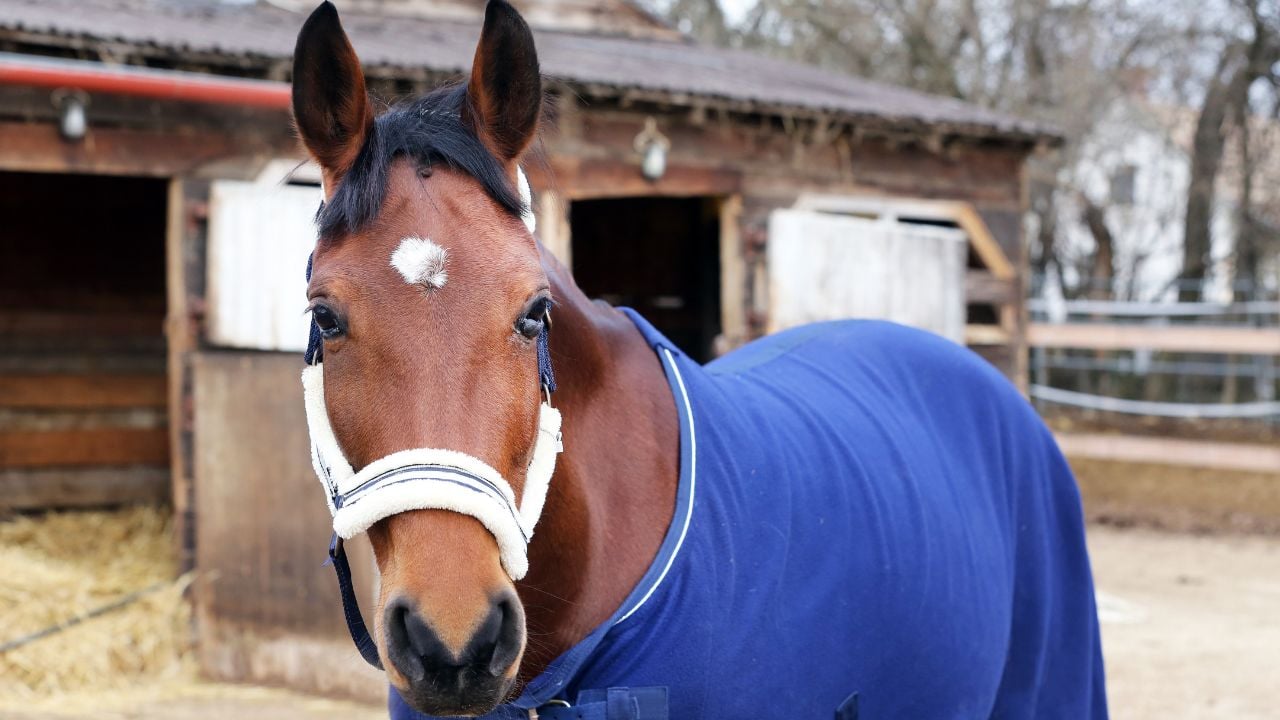
6 Signs Your Horse Needs a Blanket This Winter, Wyoming Veterinarians Say

How can you tell your horse is actually cold, not just fluffy?
A thick winter coat helps, but it doesn’t cover every Wyoming night.
Here’s how to know when your horse needs extra cover.
1. Shivering or a Hunched Stance
A cold horse doesn’t hide it well.
It hunches its back, stiffens its legs, and tucks in close to another horse nearby, sometimes standing shoulder to shoulder for warmth.
Run a hand along its side under the hair, and the skin itself runs cold, not just the coat on top.
Shivering is the giveaway.
It means a horse’s muscles have started to tremble on their own to generate heat.
That’s cold stress setting in, and it’s exactly what a blanket is meant to head off before it gets worse.
2. Low Body Condition Score
Body fat does double duty for a horse in winter: It insulates, and digesting the hay that replaces it generates heat on its own.
Extension programs score horses on a 1-to-9 scale for how much fat covers the ribs, spine, and tailhead.
A horse landing at a score of 3 or lower can have its ribs felt with almost no fat cushion underneath.
At a 1 or 2, the spine, hip bones, and tailhead start projecting on their own.
A hard keeper who’s already thin is short on both at once, with little fat to burn and little bulk left to digest.
That math never works out.
That horse can’t make up the difference on a hard night without help.
3. Clipped or Thin Coat
The moment the clippers come out, a horse’s built-in insulation goes with the hair.
A full winter coat works by trapping a layer of warm air next to the skin.
Shaving it down for a show ring, or so a horse in heavy winter work doesn’t soak itself in sweat, strips that layer away on purpose.
Brands like Rambo and Weatherbeeta build entire product lines around exactly that gap.
University of Wyoming Extension lists clipped coats right alongside older horses and horses without shelter as reasons to reach for a blanket, a call echoed by extension horse programs elsewhere.
Some horses just grow a naturally thinner coat than the horse in the next stall, even on the same feed and the same pasture.
That’s genetics, not neglect.
It still calls for the same blanket.
What a Blanket’s Weight Means
A horse blanket’s weight comes from how many grams of fill sit inside it, not the size of the horse wearing it.
A sheet with 0 to 100 grams of fill blocks wind and rain but adds almost no warmth on its own.
A medium blanket in the 150-to-250-gram range suits a clipped horse down into the 30s and a full-coated horse down into the 20s.
A heavy blanket at 300 grams or more is built for a clipped horse below 30°F or a full-coated horse below 20°F.
That’s the fill-weight system many tack shops use to label their blankets.
4. No Shelter From the Wind Chill
Wind strips heat from a horse far faster than cold air alone does, especially with no windbreak in reach.
Penn State Extension sets a concrete line for it: Once the temperature or the wind chill drops below 5°F and there’s no shelter for turnout, that’s the trigger to blanket.
Not every pasture has shelter.
In Arlington, Wyoming, an average January day runs about 15°F with winds near 35 mph.
Together, that works out to an average wind chill of roughly -7°F, according to the Wyoming Climate Atlas.
That’s well past that trigger point on a day that doesn’t even sound that cold.
A three-sided run-in shed, a windbreak of trees, or even a barn wall a horse can stand behind changes that math completely.
Take the shelter away, and the blanket has to do that job instead.
Psst! Think you know the rules on horse blankets? Flip each card below to find out.
5. Wet Coat Near Freezing
Rain and wet snow do what cold air alone can’t: They collapse a horse’s insulating air pocket in minutes.
Dry hair traps a layer of warm air against the skin, and once that hair mats down with rain or wet snow, the air pocket disappears with it.
The University of Georgia’s equine program flags rain or mud near or below freezing as one of the clearest calls for a blanket.
A horse turned out in the elements needs one that’s waterproof, too.
That’s an easy fix.
A non-waterproof blanket just soaks through and makes things worse.
Mud does the same damage as rain.
A horse standing in a wet pen through freezing rain has effectively lost its coat for the night.
One more catch: A blanket only helps once the horse underneath it is dry, since buckling it over damp hair traps moisture against the skin instead of keeping it out.
6. Young, Old, or New to the Cold
Foals and senior horses can’t regulate body heat the way a healthy adult in its prime can.
That’s just biology.
Penn State Extension lists both ends of that age range as needing a blanket earlier than everyone else in the pasture.
So do horses freshly shipped in from a warmer climate.
A horse trailered in from Texas in November hasn’t built the coat a horse that’s wintered in Wyoming before grows every year without anyone thinking about it.
That horse needs a blanket its first winter, almost no matter what its coat looks like on paper.
Give it a season or two, and its hair usually starts catching up.
How Fast Winter Arrives
In Wyoming, winter skips the gradual start a horse might get somewhere milder.
Cheyenne’s earliest recorded freeze landed on September 7, and its latest didn’t show up until October 27, per the National Weather Service.
Many years land much closer to the early end of that range than the late one.
January takes it further.
Statewide morning lows average 5 to 10 degrees Fahrenheit, dropping to roughly 5 below zero in some western valleys.
A horse standing out in that without any help isn’t dealing with a rare cold snap.
It’s just an average Tuesday.
8 Things Wyoming Ranchers Wish Weekend Visitors Understood
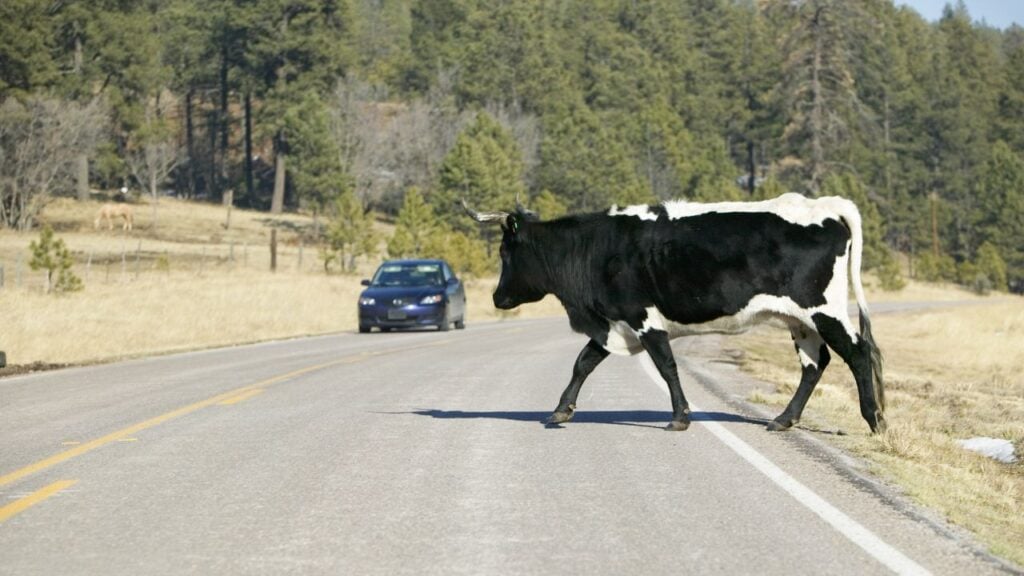
Wyoming runs about 1.16 million head of cattle against a human population barely half that size, and that ratio shapes the rules of the road as much as it shapes the range.
Leaving a gate or fence bar open counts as a misdemeanor there, carrying a fine up to $750, and ranchers want an even steeper $3,000 fine for speeding through an active cattle drive.
8 Things Wyoming Ranchers Wish Weekend Visitors Understood
9 Things Wyomingites Miss Most Once They Live Somewhere Else
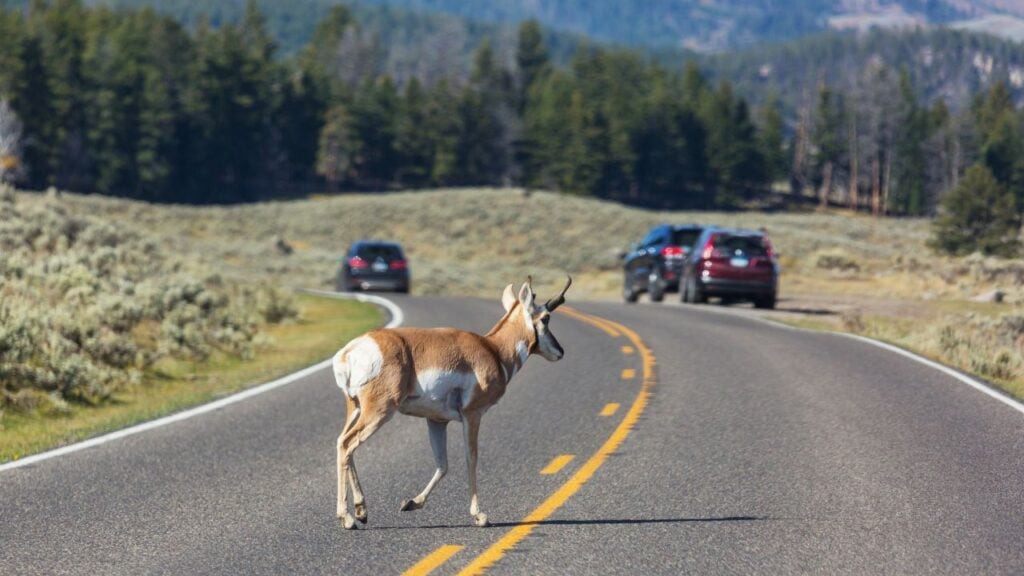
What a longtime Wyoming resident misses after a move rarely fits in a moving truck.
It’s the space between towns, the dark night skies, and wildlife that still wanders through on its natural schedule, the kind of ordinary that’s hardest to replace.
9 Things Wyomingites Miss Most Once They Live Somewhere Else
