
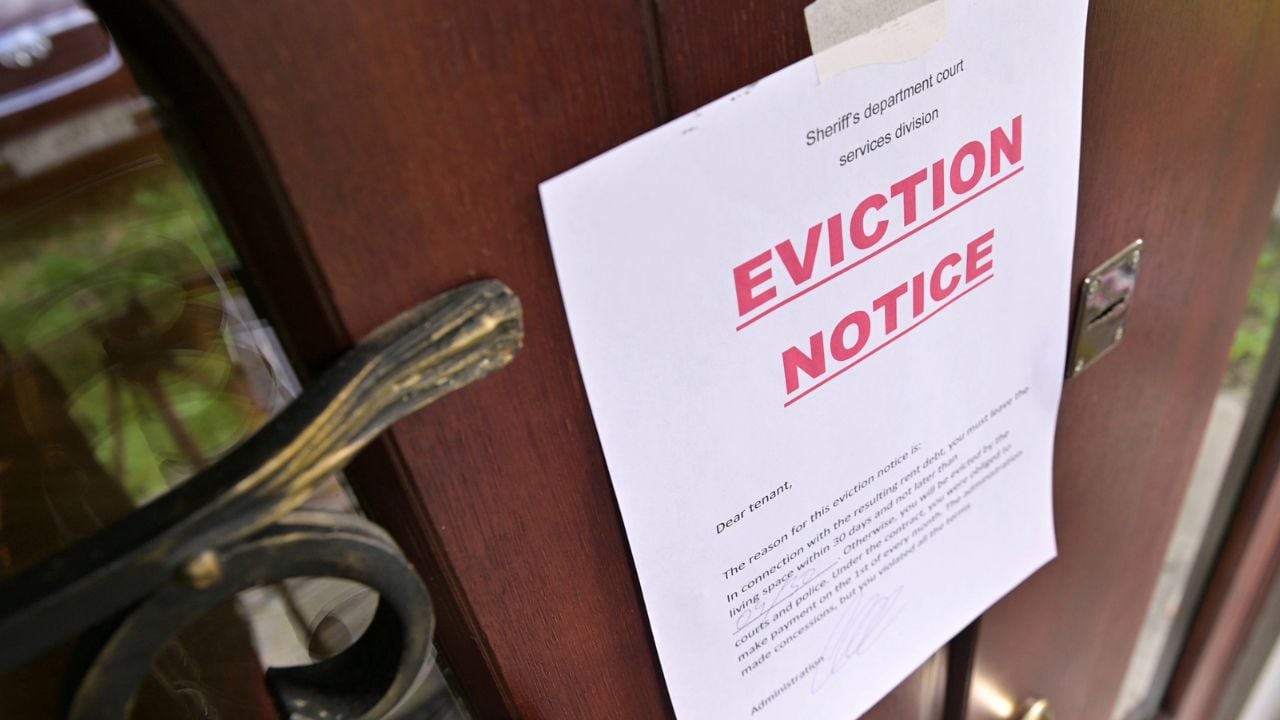
6 Squatter Laws Every California Homeowner Needs to Know in 2026

Much of what people know about squatters comes from a news story or a friend of a friend.
The law itself is more specific, and parts of it are more on the owner’s side than the stories suggest.
Here are the squatter laws every California homeowner needs to know in 2026.
Note: This is general information, not legal advice. Property laws and required timelines are subject to change.
1. Adverse Possession Requirements
Adverse possession is the law that can turn a squatter into an owner, and California’s version, unchanged since 2011, still applies in 2026.
A squatter has to occupy and claim your land for five years straight.
That’s a long stretch to go unnoticed, which is why a cabin or a rental you don’t check often is the kind of property to watch.
Then comes the expensive part: The squatter also has to pay the property taxes on that land for the same five years.
That’s five years of tax bills, all paid on time.
That’s a lot of paperwork.
A squatter with no written deed also has to show the land was protected by a substantial enclosure or usually cultivated or improved.
A fenced yard or a tended garden fits that description.
2. Residential Trespass
Under California’s residential trespass law, unchanged since 2001, a squatter who enters or stays in your home without your consent still commits a misdemeanor in 2026.
If you walk in on a stranger in your living room, your presence can turn the charge into aggravated trespass.
That can mean up to a year in county jail, a fine of up to $1,000, or both.
Jail is on the table.
If a judge grants probation for aggravated trespass, it can run up to three years with counseling required.
3. Entering and Occupying Property
A squatter doesn’t have to be in your house to break California’s general trespass law.
In 2026, it’s still a misdemeanor to enter and occupy land or structures of any kind without the owner’s consent.
Vacant property is covered too.
That includes a rental you haven’t relisted yet.
And if a peace officer asks someone to leave at your request, refusing to go is a misdemeanor too.
14 California Tenant Protection Laws That Kick In the Moment You Sign a Lease
If you’re renting, your protections can start before you’ve unpacked the first box.
Many tenants find out what they’re owed only when something goes wrong.
14 California Tenant Protection Laws That Kick In the Moment You Sign a Lease
4. Forcible Detainer
In 2026, California’s forcible detainer law, last updated in 2019, still covers a squatter who unlawfully enters property at night or while the occupant is away.
The squatter also has to refuse to hand it back for five days after you demand it.
Despite the name, that route doesn’t require any force.
You count as the occupant if you were in peaceable and undisturbed possession of the place within five days before the entry.
Dates matter here.
So if you’ve been away, write down the date you last had the place to yourself and the date you asked the squatter to leave.
If you sue, the complaint can describe any force, violence or fraud that came with the entry and claim damages for it.
5. Unnamed Occupants
If you sue a tenant and a squatter has moved in too, California’s claim of right law can reach that squatter in 2026, even though your lawsuit never named them.
The form is called the Prejudgment Claim of Right to Possession, and a marshal, sheriff or registered process server has to serve it.
When you don’t know who’s inside, the notice can be posted and mailed to “all occupants in care of the named tenant.”
Once an occupant has been served that way, they can’t later object to enforcement of the eviction judgment, whether or not it names them.
That means you don’t need every occupant’s name before you file, under a law that has read the same since 2015.
That’s a wide net.
6. Legal Title Presumption
California presumes a squatter’s occupation is subordinate to your legal title whenever you sue to recover property, and that rule still applies in 2026.
The squatter can overcome that presumption only by showing the property was held adversely to your title for five years before you filed.
That’s a high bar.
It’s the same five-year line adverse possession draws, seen from the owner’s side of the courtroom.
So keep the deed that proves your legal title where you can find it.
Squatter or Holdover Tenant
Squatter laws only help once you know the person is a squatter, and California’s unlawful detainer law, last updated in 2025, opens with a tenant.
A holdover tenant keeps living in the home after the lease term ends.
The same law reaches someone who moved in as an employee, agent or licensee once that arrangement has ended.
The law never mentions a stranger who walked in uninvited, so that person falls under the trespass laws above.
The label matters.
So pin down whether the person ever had your permission to be there, and write down the date you first noticed them.
Under the eviction statute, anyone who hires real estate counts as a tenant, so an occupant who says you agreed to rent them a room is claiming that status.
If you change the locks on an occupant who turns out to be a tenant, California’s lockout law can cost you.
The law bars a landlord from changing locks or cutting off utilities to end a tenancy, however that tenancy was created.
A landlord who does it can owe up to $100 for each day.
Eviction Response Deadline
If the squatter you suspected turns out to be a tenant, your eviction lawsuit runs on a longer clock in 2026, thanks to Assembly Bill 2347.
Since January 1, 2025, a tenant served with an unlawful detainer summons and complaint has 10 court days to respond.
The old deadline was five days, so the new rule doubles it.
That’s an extra work week.
Weekends and court holidays don’t count toward those days, so the window runs about two calendar weeks, longer if a court holiday lands inside it.
The same bill gives a tenant’s early challenges to the complaint a hearing five to seven court days after filing, unless a judge finds good cause for a later date.
If you’re the owner counting days after the papers are served in 2026, count 10 court days, not five.
Psst! How much do you know about squatters and the history of claiming land? Take our quiz and see if you can ace it.
Quiz
Land Claim IQ
Answer nine questions on squatter law, land claims and homesteading. We bet you can’t get them all right. Prove us wrong?
The original 1862 Homestead Act let a settler claim a parcel of public land of what size?
Failed Squatter Bill
Senate Bill 448 would have let you serve a squatter with a demand to vacate and, after 72 hours, ask local law enforcement to remove them.
That would've been fast.
The Senate Appropriations Committee held the bill on May 23, 2025, and it never became law.
So if you ever face a squatter in 2026, don't plan around a 72-hour shortcut.
The bill would also have made fake paperwork a crime for both sides, from a fraudulent removal to false documents a squatter shows police.
Under the bill, a person removed through a fraudulent removal could have sued for damages and restoration of possession.
8 Water Restriction Rules California Homeowners Break Without Realizing It

Squatters aren't the only trouble California homeowners can run into without trying.
Many start with everyday yard and household habits.
8 Water Restriction Rules California Homeowners Break Without Realizing It
