
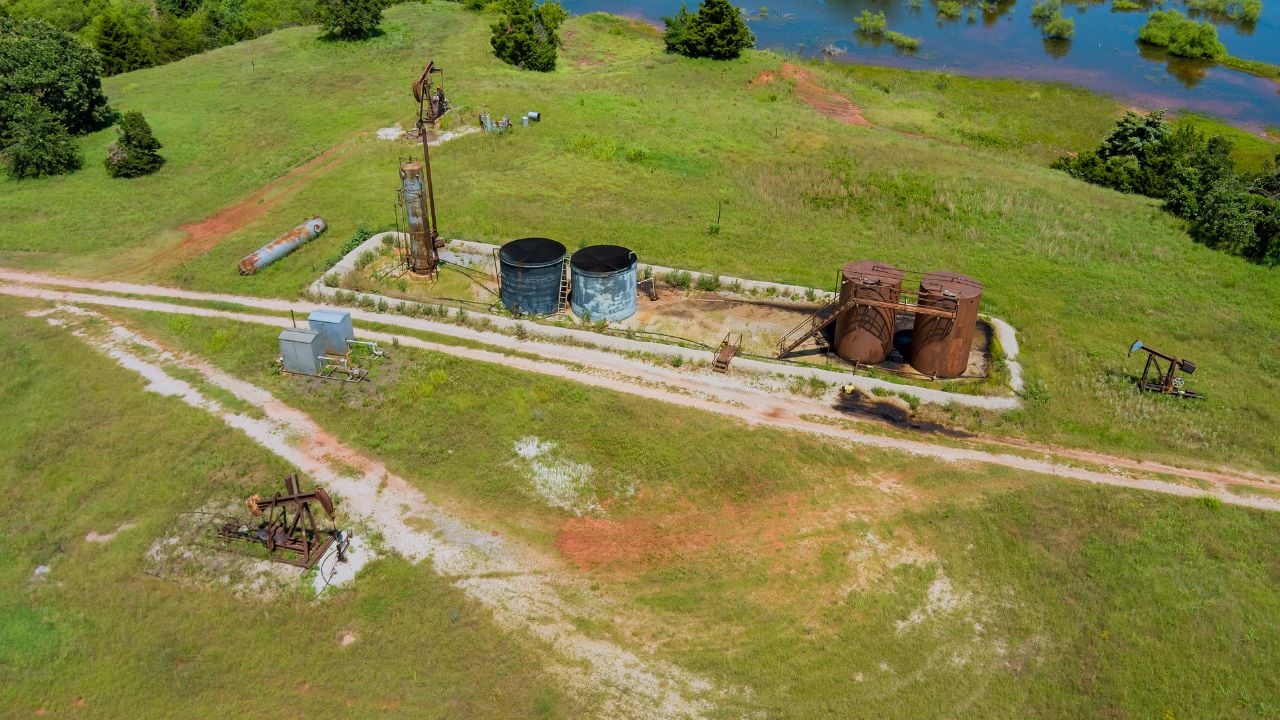
6 Surface Damage Settlements Oklahoma Landowners Accept Too Cheaply

Oklahoma’s Surface Damages Act lets an oil and gas operator start drilling on your land after posting a bond of just $25,000 with the Secretary of State.
That bond exists so you always have money to collect once damages are set, not so the operator can point to it as the final price tag.
That mix-up is easy to make.
These are the surface damage settlements Oklahoma landowners accept too cheaply.
Note: This is general information, not legal advice. Surface damage procedures and deadlines are subject to change, so confirm your situation with the Oklahoma Bar Association’s Lawyer Referral Service.
1. Signing Away Future Damage Claims
Sign a standard Oklahoma surface damage release, and you discharge the operator from “all damages of whatsoever kind and character,” wording broad enough to cover harm nobody has spotted yet.
That’s the trap.
Oklahoma property lawyers call that phrase a common trap in surface damage paperwork.
It protects the operator at no added cost and leaves you exposed once new damage turns up.
A cracked foundation from heavy equipment, erosion that shows up two years later, or a spill nobody reported at the time can all fall under wording that broad.
Once you sign, none of that pays out again.
2. Leaving the Access Road Unpriced
Your well pad is only one piece of what an operator disturbs under Oklahoma’s Surface Damages Act.
The Act itself never spells out exactly what counts as damage.
A private oil and gas lease often has to define it instead: One law review analysis points to lease language covering “crops, timber and improvements” as a typical example.
Settle for one flat number covering “the location,” and you can end up never separately pricing the access road cut across your pasture.
That adds up.
The settlement rarely prices the gathering and disposal lines buried through that same ground, or the erosion the runoff causes for years after the rig leaves.
Hunting and livestock losses tied to that same disturbed ground routinely go unmentioned too, since nobody puts a number on them unless you bring them up first.
How Oklahoma Prices Your Surface Damage
Oklahoma splits your surface damage into two math problems, not one flat guess.
Appraisers price permanent damage, like a well pad nobody farms again, as the drop in your land’s fair market value from before drilling to after.
They price temporary damage, like a pipeline trench across a wheat field, as either lost rental value or the actual cost to restore it.
Oklahoma’s Surface Damages Act did away with the old defense that let an operator dodge payment by calling its drilling “reasonable and necessary.”
The Oklahoma Supreme Court confirmed in 1986: Once the Act covers your well, the operator owes for the drop in your land’s value no matter how reasonable the drilling looked.
That old defense survives only for one well drilled before the Act took effect in July 1982.
The Oklahoma Supreme Court drew that exact line in 1993, and it doesn’t apply to any well like the wells in this article.
3. Accepting Unlimited Footprint Growth
Your surface use agreement doesn’t have to freeze the operator’s footprint at what you first see staked in the pasture.
One Oklahoma City oil and gas firm that reviews these agreements for surface owners says it regularly sees undefined expansion rights in the contracts it reviews.
That kind of language can let the operator widen a road, add a second tank battery, or drill another well from the same pad later without paying you again.
One number covers today’s footprint.
Everything the operator adds after that rides free unless your agreement says otherwise, and you might never think to ask.
4. Signing Vague Restoration Promises
Many Oklahoma surface damage agreements promise the operator will “restore” your land once a well stops producing.
The same Oklahoma City firm that flags undefined expansion rights points to a related pattern it says it sees often.
Restoration language often carries no set timeline and no defined standard for what “restored” even means.
A promise like that can sit unenforced for years.
Nobody has to rush.
Without a deadline, you have no date to point to when your cleared well site is still bare caliche five years after the pump stopped running.
Without a defined standard, “restored” can mean the operator reseeds your land once and leaves it to whatever comes up.
A restoration clause with no deadline or standard isn’t just an enforcement headache.
It means the cost of restoring your land was never priced into your settlement at all.
5. Skipping the State’s Appraisal Process
Oklahoma law doesn’t require you to take the operator’s opening number.
Once an operator gives notice of intent to drill, Oklahoma law gives you and the operator five days to enter good-faith negotiations.
If those talks stall, either you or the operator can ask a district court to appoint appraisers instead.
Few landowners ever make that call.
The same Oklahoma City oil and gas firm reports it regularly sees surface owners taken advantage of simply because they don’t realize how much leverage the law gives them.
That’s the gap.
Part of the confusion traces back to the Oklahoma Corporation Commission, the agency that regulates Oklahoma drilling.
The commission doesn’t referee surface damage compensation fights.
The Act only preserves the commission’s existing authority over drilling and production, so a dispute over what your land is worth goes through negotiation, appraisal, or district court instead.
If you assume a state regulator is watching the fairness of your number, you’re on your own.
6. Assuming the Deal Covers Pollution
Your surface damage settlement answers exactly one question: How much did the land’value drop because the operator entered, drilled, and produced from it.
It doesn’t settle pollution.
The Oklahoma Supreme Court ruled in 2003 that a surface damage claim runs on a separate track from a pollution or nuisance claim.
Water contamination from a spill falls in that second category.
The Act was never built to cover that kind of harm.
You might sign a surface damage settlement and assume it closes the book on everything tied to that well.
That assumption can be wrong, since your settlement never touched the contamination at all.
Psst! How much do you know about your rights as an Oklahoma landowner? Flip these cards and see how many you get right.
What the $25,000 Bond Buys
Oklahoma’s Surface Damages Act requires a $25,000 bond, letter of credit, or cash deposit before an operator can enter your property without an agreed number.
The Secretary of State holds it.
Not a price tag.
It exists purely as a guarantee that the money is waiting once negotiation, appraisal, or a jury lands on your final number.
If the appraisers or a jury award more than that $25,000 covers, Oklahoma law requires the operator to pay you the difference immediately or post additional security to cover it.
The bond sets a floor for how fast you can collect something, never a ceiling on what your land is worth.
That $25,000 only guarantees the opening claim, not whatever a jury or the appraisers eventually decide your land is worth.
A pasture, a pipeline easement, and a ruined access road on your land all cost more than $25,000 to make right.
9 Things Nobody Warns You About Before Moving to Oklahoma

Oklahoma can make a new resident feel financially lucky and unprepared in the same week.
A property tax bill brings relief, while a home insurance quote turns a newcomer’s stomach into knots.
9 Things Nobody Warns You About Before Moving to Oklahoma
9 Arguments Texas and Oklahoma Will Never Settle
Texas leads its all-time football series against Oklahoma by fourteen games.
Ask an Oklahoman what that proves, and the answer comes back fast: Nothing.
