

6 Texas Title Loan Traps That End With Your Car Gone

Roughly four in a hundred active title loans in Texas end with the car gone.
Ouch.
These are the title loan traps that can leave you without a vehicle.
Note: This is general information, not legal or financial advice. Texas title loan rules, fees, and local ordinances are subject to change, so confirm the current requirements with the Texas Office of Consumer Credit Commissioner.
1. Signing Over a Spare Key
A Texas title loan usually starts with more than your signature.
The Federal Trade Commission (FTC) warns that many title lenders require a duplicate key for your vehicle at signing.
Some install a Global Positioning System (GPS) or starter-interrupt device instead, a device that can locate the car and shut off the ignition by remote.
You agreed to that access the day you signed.
It’s buried in paperwork many borrowers skim past on their way to the cash.
The lender skips the search.
Once you default, the lender already knows where the car sits, and it can cut the engine before a tow truck ever shows up.
2. Skipping the Rate Cap
Texas title loans run through a legal structure the state calls a credit access business, and it’s built around a loophole.
The company handing you cash isn’t technically the lender.
It’s a broker that arranges a loan from a separate lender behind the scenes, and it charges its own fee on top of that loan.
Texas caps the lender’s own interest rate at around 10%.
The fee carries no cap.
State law treats it as a service charge, not interest.
Add the fee back in, and Texas’ own consumer credit regulator puts the annual cost of a typical title loan between 262% and 366%.
That’s the number on the paperwork you signed, just not the one printed at the top.
A rate that steep outruns many paychecks long before the due date.
Texas’ own numbers show where that shortfall lands: Something close to four of every hundred outstanding title loans statewide end with the lender taking the car.
3. Rolling the Loan Forward
A Texas title loan is often written as a single payment due in a matter of weeks, and paying it off that fast rarely happens.
Refinancing feels like the easy fix.
Pay the fee again, push the due date out, and keep the car another few weeks.
Texas sets no statewide limit on how many times a lender can let you do that.
In 2024 alone, Texas’ consumer credit regulator logged 7,485 single-payment title loans that had been refinanced more than ten times.
That’s ten renewals on one loan.
Every one of those loans paid a fresh fee without necessarily paying down a dollar of principal, and every renewal is another month the car stays on the line.
4. Trusting a Partial Payment
A borrower can feel progress the moment a title loan payment clears.
The FTC’s own guidance says otherwise: A lender can still repossess your car “even if you’ve been making partial payments.”
Your contract sets an exact amount due on an exact date.
Come up short, and you’re technically in default, no matter how much of the bill you covered.
Close doesn’t count.
Some Texas borrowers send whatever they can scrape together and assume goodwill counts for something.
It doesn’t, unless the lender agrees in writing to change the terms.
Psst! How much do you know about Texas lending law? Take our quiz and see how many you can get right.
Quiz
Texas Lending Law IQ
Answer these questions on Texas lending law, military protections, and title loan history. We bet you can’t get them all right. Prove us wrong?
Nationwide, a 2016 study by the Consumer Financial Protection Bureau found that about how many single-payment auto title loan borrowers end up losing their vehicle to repossession?
5. Assuming You'll Get a Warning First
A Texas title loan hands the lender a legal shortcut the moment you default: No judge, no lawsuit, no advance phone call required.
State law lets a lender repossess your car without going to court, as long as the repossession doesn't cross into a breach of peace.
That standard is looser than many borrowers assume.
A repo agent can take the car from your driveway, a parking lot at work, or a Texas street in the middle of the night.
Not one call is required by law.
Once the car is gone, the next question is what happens to the money.
The Math After Your Car Sells
Once a Texas title lender sells your repossessed car, the payout follows a strict order.
The sale first covers the costs of the repossession and the auction, then whatever's left goes toward your loan balance.
Come up short, and Texas law lets the lender or a debt collector chase you for the difference, a deficiency you can still owe with no car to show for it.
Sell for more than you owe, and the rule flips: The law says that surplus belongs to you, and the lender has to pay it.
6. Borrowing Outside an Ordinance City
Some Texas title loan borrowers do have guardrails, just not because of state law.
Austin and Dallas were the first Texas cities to pass a local ordinance capping how big a title loan can be against your income or your car's value, and limiting how many times it can be rolled over.
Texas Appleseed, a nonprofit that tracks lending reform, now counts 49 Texas cities with a version of that protection on the books.
The state has more than 1,200 incorporated cities.
Location decides everything.
Take the loan a few miles outside city limits, or in one of the hundreds of Texas cities that never adopted the ordinance, and none of those caps apply.
State law alone leaves the loan size and the rollover count entirely up to the lender.
An uncapped loan can be sized to the car's full value, with no limit on how many times the lender can renew it.
That combination sits behind the state's roughly four-in-a-hundred repossession rate on title loans overall.
Protection Most Texans Don't Get
One group of Texas title loan borrowers does get a hard interest cap under federal law, and it isn't most of the state.
The Military Lending Act caps the cost of a title loan at a 36% military annual percentage rate for active-duty service members, activated Guard and Reserve troops, and their covered dependents.
That single federal rule turns a loan that can legally run into the hundreds of percent into something closer to an ordinary personal loan, for the households it covers.
The uniform matters here.
Everyone else in Texas, veterans included once they leave active duty, borrows under the same uncapped state rules as any other resident.
No branch of service changes that math once the uniform comes off.
A lender that charges a covered borrower more than that 36% cap doesn't just risk a fine.
Federal law makes that loan void from inception, meaning the contract never legally existed and the lender has no right to collect on it at all.
9 Texas Toll Road Rules That Catch Even Longtime Drivers off Guard
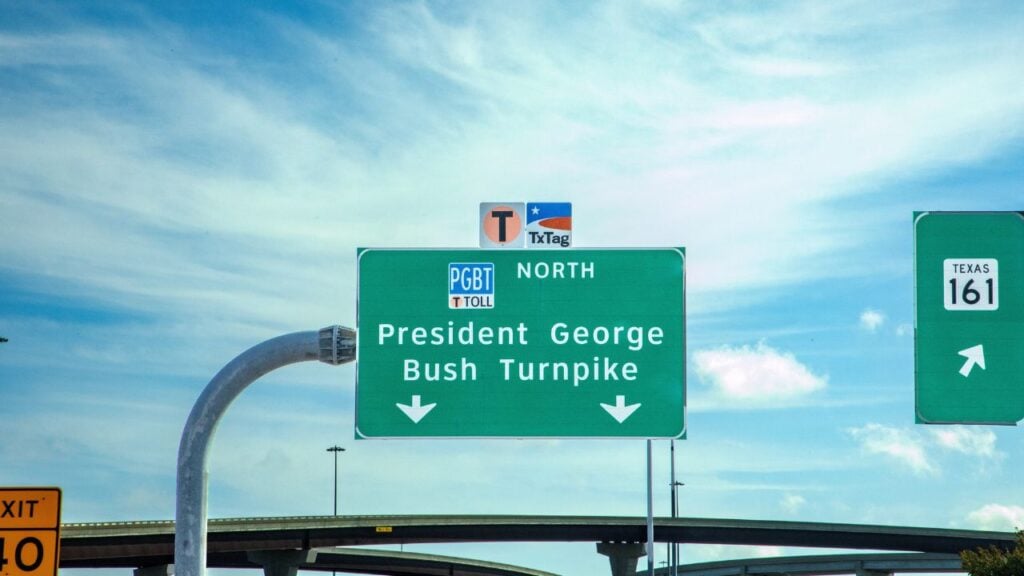
Texas runs its toll roads through half a dozen separate agencies, and not one of them plays by the same rulebook.
A driver who's paid Texas tolls for twenty years can still get caught by a rule that costs money, or miss a perk that would have handed some back.
9 Texas Toll Road Rules That Catch Even Longtime Drivers Off Guard
8 Tenant Rights Texas Renters Don't Know They Have

Renters occupy more than a third of the homes in Texas, and many have never read the state code written to protect them.
Texas law spells out exactly what a landlord has to fix, and how fast, long before a dispute ever reaches a judge.
