
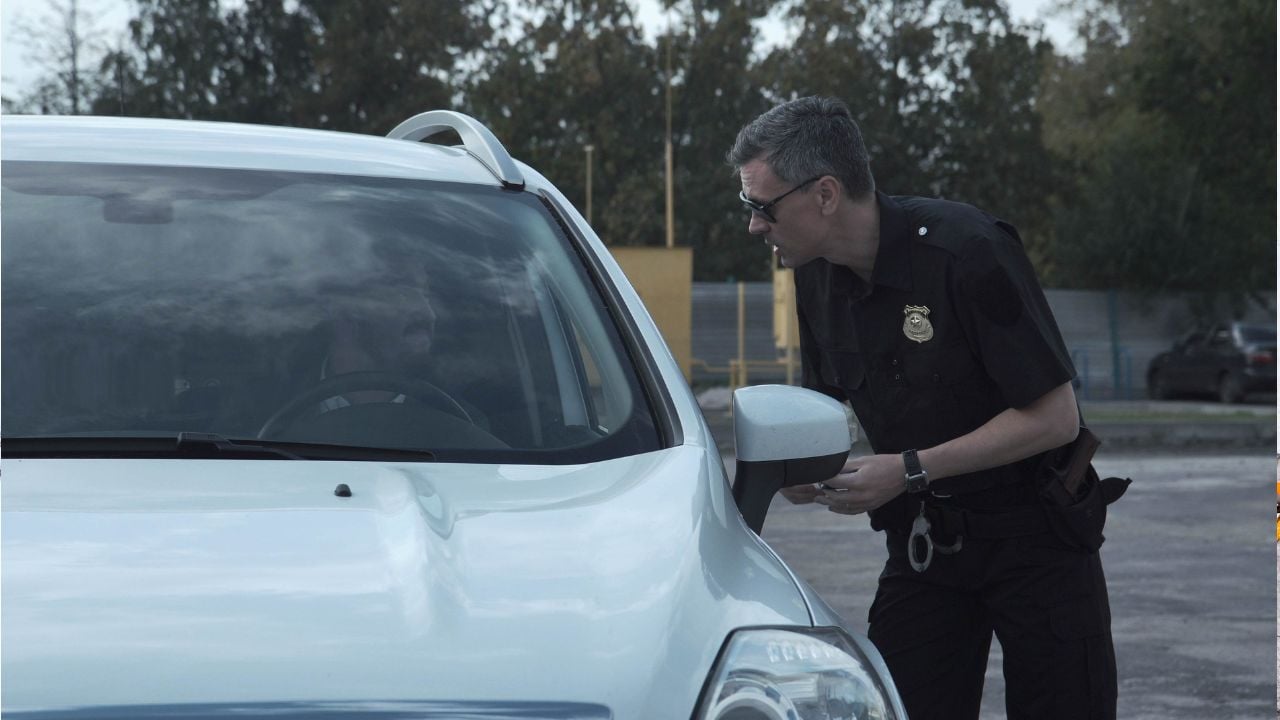
6 Things Pennsylvania Police Can’t Legally Make You Do During a Traffic Stop

Holiday road trips mean more miles behind the wheel, and more chances to see flashing lights in your rearview mirror.
You probably know to have your license ready.
But the requests you can turn down are less obvious.
Before you head out, these are the things to know that Pennsylvania police can’t legally make you do during a traffic stop.
Note: This is general information, not legal advice. Traffic-stop rules and court rulings are subject to change.
1. Consent to a Car Search
A search by consent is valid only if you gave your consent voluntarily, the U.S. Supreme Court ruled in 1973, and not as the result of duress or coercion.
An officer who asks to look inside your car is therefore asking for something you aren’t required to give.
Under the automobile exception, the Pennsylvania Supreme Court ruled in 2020 that police need both probable cause and exigent circumstances to search your car without a warrant.
Danger to police or the public can satisfy that requirement, but the court has said officers have to be able to describe the danger in your stop.
2. Answers Beyond the Paperwork
In Berkemer v. McCarty in 1984, the U.S. Supreme Court wrote that an officer may ask you a moderate number of questions to determine your identity.
But the opinion adds that a driver detained in the stop isn’t obliged to respond.
It also held that a routine traffic stop isn’t custody, so officers don’t have to read you Miranda warnings before they ask.
3. Roadside Sobriety Tests
In its 1996 ruling in Commonwealth v. Hayes, the Pennsylvania Supreme Court found no legislative requirement that would compel a suspect to comply with a request for a field sobriety test, such as walking a line.
The court also held that the state Constitution doesn’t provide a right to refuse the tests, and so no right to be told of one.
No Miranda warnings are required before an officer asks you to perform them, either.
The ruling doesn’t say what a refusal can cost you, since the question in the case was whether officers must warn of a right to refuse.
4. Revealing a Password
In one case, Commonwealth v. Davis, the Pennsylvania Supreme Court held in 2019 that forcing a defendant to reveal a computer password violated the Fifth Amendment.
The device in that case was a desktop computer, and the court said it wasn’t deciding anything about biometric features such as fingerprint or face unlock.
Davis didn’t involve a phone or a traffic stop, so it doesn’t answer whether an officer can demand your passcode at the roadside.
A search of the phone itself is a separate question, and the U.S. Supreme Court ruled in 2014 that police generally need a warrant to search the data on a cell phone seized from someone they’ve arrested.
If you pull up proof of insurance on your phone, Pennsylvania law says the officer shall only view content reasonably necessary to show your coverage.
5. Waiting for a Drug Dog
Stretching your stop to wait for a drug-sniffing dog is off limits without reasonable suspicion of a crime.
Rodriguez v. U.S. set the cutoff in 2015: officers lose their authority to hold you once the tasks tied to the traffic violation are, or reasonably should have been, finished.
The U.S. Supreme Court said a dog sniff isn’t one of those tasks, since it’s aimed at finding ordinary criminal wrongdoing instead of handling your traffic violation.
Reasonable suspicion is the exception, and the ruling sent the question of whether the officer had it back to the lower court.
6. Searches Over a Ticket
A ticket doesn’t, by itself, give an officer the right to search your car, the U.S. Supreme Court ruled in 1998 in Knowles v. Iowa.
The officer in that case could have arrested the speeder under state law, but he wrote a citation instead and then searched the car.
Neither of the two reasons for searching after an arrest, officer safety and preserving evidence, justified that search, the opinion explained.
What Police Can Require
Some demands at a traffic stop do carry legal weight, unlike the requests above.
You have to show your driver’s license when an officer asks, and if the officer requests it, you have to write your name in front of them.
Pennsylvania law requires your registration card to be shown on demand too.
As a vehicle’s owner, you’re deemed to have agreed to produce proof of insurance when an officer asks.
The U.S. Supreme Court ruled in 1977, in Pennsylvania v. Mimms, that officers can order a driver out of a vehicle lawfully stopped for a traffic violation.
Maryland v. Wilson extended that rule to passengers in 1997.
Breath and Blood Tests
Chemical tests work the other way from field sobriety tests, since Pennsylvania’s implied consent law penalizes a driver who refuses them.
Before an arrest, an officer with reasonable suspicion of drunk driving can require a preliminary breath test on a device approved by the Department of Health.
That test only helps the officer decide whether to arrest you.
Refusing it doesn’t trigger the license suspension that comes with refusing a chemical test.
When an officer has reasonable grounds to believe you were driving drunk, the implied consent law deems you to have agreed to a breath or blood test.
If you’re arrested for drunk driving and refuse, the test isn’t conducted, and the state Department of Transportation suspends your license for 12 months, or 18 months in some cases.
Blood is treated differently from breath, though, and in Birchfield v. North Dakota the U.S. Supreme Court ruled in 2016 that motorists cannot be deemed to have consented to a blood test on pain of committing a criminal offense.
Psst! How much do you know about Pennsylvania traffic stops? Tap each card and see if you can call it right.
The Passenger ID Question
Whether you have to hand over ID as a passenger at a traffic stop is where the sources disagree.
A 2004 Pennsylvania Superior Court ruling called asking a passenger for identification reasonable.
That court also noted Pennsylvania has no stop-and-identify statute and left open whether a passenger can refuse to answer.
The Superior Court said in a 2020 case, Commonwealth v. Bumbarger, and repeated in a 2025 decision, that police can require the driver and passengers in a lawfully stopped vehicle to identify themselves.
The court designated the 2025 decision non-precedential.
The American Civil Liberties Union of Pennsylvania takes the other side, saying police may not force passengers to provide ID unless they have reasonable suspicion of a crime.
Giving a false name is a separate problem.
Pennsylvania makes it a third-degree misdemeanor to give officers false identity information after an officer has said you’re the subject of an official investigation.
3 Cold-Weather Dog Rules That Can Get Pennsylvanians Cited

If your dog spends time outdoors, the colder months are a good time to brush up on a few things.
Here’s a closer look before the next cold snap.
3 Cold-Weather Dog Rules That Can Get Pennsylvanians Cited
9 Precautions Pennsylvanians Should Take When Shopping at Wegmans

Thanksgiving shopping at Wegmans goes more smoothly with a little preparation.
Here are some precautions worth knowing before your next trip.
9 Precautions Pennsylvanians Should Take When Shopping at Wegmans
