
6 Things Texans Used to Get for Free That Now Cost Money

A driver merges onto Highway 121 in Frisco, and there’s a toll gantry hanging over lanes that used to be just another stretch of Texas asphalt.
No coins, no booth, just a camera reading a license plate and a bill that shows up later.
These are the things Texans used to get for nothing that now come with a checkable price tag.
Note: This is general information, not financial or legal advice. Fees, tolls and program rules named here are set by different cities, districts and agencies and are subject to change.
1. Getting Into a State Park
Texas state parks didn’t charge visitors a cent at the gate for the system’s first four decades.
Voters approved a $75 million bond in 1967 to buy new parkland.
Lawmakers instituted entrance fees the following year, in 1968, to help pay that bond back.
That fee never went away.
Today, walking into many Texas state parks runs a few dollars a person, and the Texas Parks and Wildlife Department (TPWD) sells an annual pass for families who visit often.
A handful of sites, like Lyndon B. Johnson State Park, still skip the charge, but they’re the exception now, not the rule.
2. Driving Highway 121
Highway 121 through Collin County carried no toll for years before Texans saw a single gantry over it.
The North Texas Tollway Authority (NTTA) started collecting tolls on the rebuilt stretch in December 2006.
NTTA took over the whole corridor in September 2008.
Its board renamed the road the Sam Rayburn Tollway about six months later, in March 2009.
Drivers who want to skip the toll can still take the frontage roads running alongside the main lanes, but those extra stoplights cost time instead of money.
TxDOT has leaned on the same playbook, rebuilding formerly free lanes into tolled ones, on stretches of Highway 290 and Highway 183 in Austin too.
3. Visiting Caldwell Zoo
Caldwell Zoo, in Tyler, Texas, let every visitor walk through the gate for free for almost fifty years.
It didn’t last.
The zoo started charging admission for the first time in its history in the summer of 2003, right as it wrapped a $6 million construction project and marked fifty years serving East Texas.
Zoo director Hayes Caldwell said the timing lined up too well to pass up, with new exhibits finished and a golden anniversary to promote.
Admission today runs $20 for ages 13 to 54, $15 for kids three to 12, and $18 for seniors 55 and up.
Kids two and under still walk in free.
What Made Caldwell Zoo the Last Free One
Caldwell Zoo held onto free admission longer than almost any zoo its size in the country.
Of the 208 zoos accredited by the Association of Zoos and Aquariums (AZA) in 2002, Caldwell Zoo was the only one charging no admission and taking no public funding, according to Hayes Caldwell.
The Caldwell family’s own foundation covered the bill instead, the same money that had kept the gate free for nearly five decades.
4. Parking on South Padre’s Beach
South Padre Island, on the Texas Gulf Coast, let drivers park on its beach for free for decades before charging a cent.
The city council adopted a Beach User Fee Plan on May 20, 2015, setting a charge of up to $13 a day or $50 a year.
That adds up fast.
The Texas Open Beaches Act still guarantees anyone the right to walk onto that sand for free, so the fee only hits drivers who bring a vehicle onto the beach.
Corpus Christi and Port Aransas run a similar beach parking permit down the Texas coast.
Neither city charged a permit fee before the early 2000s.
5. Playing School Sports
Hays Consolidated Independent School District (CISD), just south of Austin, Texas, let students play school sports for free, until this year.
That changes with the 2026-27 school year, when the district starts charging $175 for a student’s first sport, with a family cap of $315.
Families feel that too.
Students who qualify for free lunch get a 90% discount on the fee.
Those who qualify for reduced-price lunch get 50% off, so the district built in some cushion.
Voters rejected a tax rate increase in November 2025.
The new fee is one piece of the $12.5 million in cuts the board approved afterward.
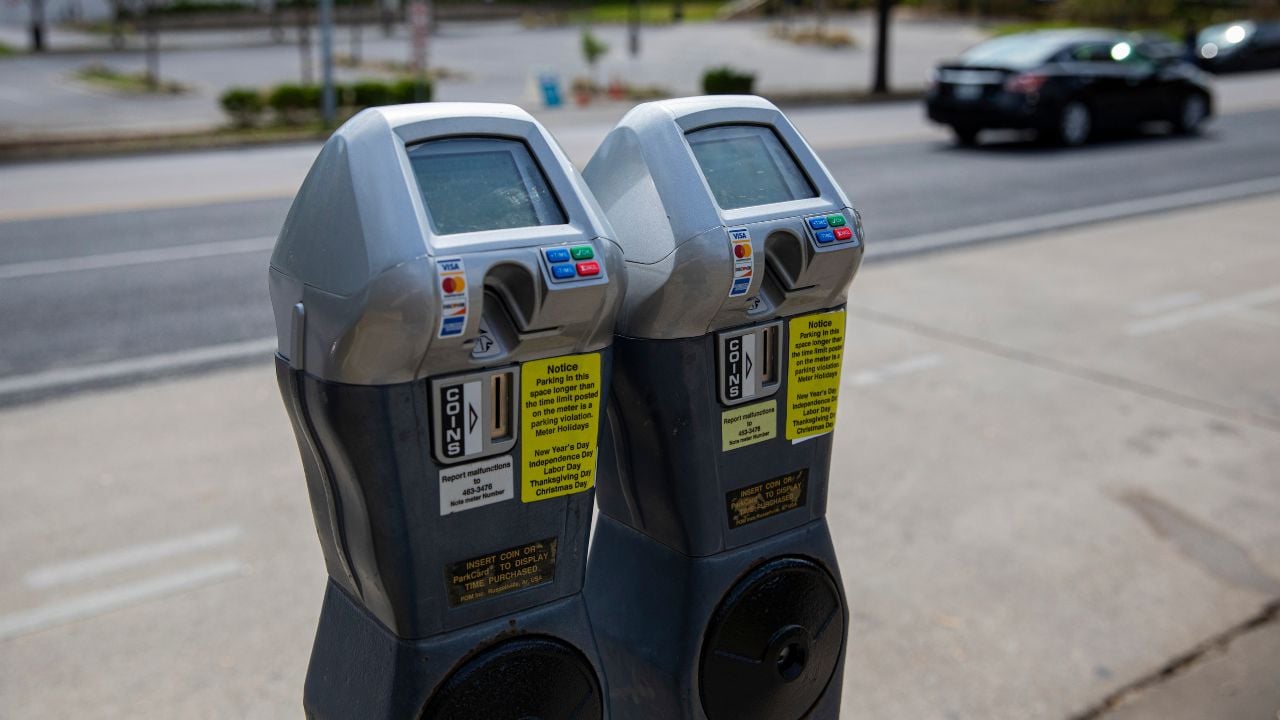
6. Saturday Parking in Austin
Downtown Austin, Texas, left its parking meters unenforced on Saturdays for years, a free day to park on Congress Avenue or Sixth Street.
The city council voted 6 to 1 in 2011 to start charging Saturdays too, running the meters from 11 a.m. to midnight.
Six votes decided it.
City staff projected the change would bring in about $4.2 million a year.
Sundays are still free to this day, so the old free-weekend habit only half survived.
Psst! Think you know what’s still free in Texas and what started costing money? Take our myth or fact cards and see if you can ace it.
Why More Texas Districts Are Adding Fees
Texas has historically been an outlier on charging families for school activities, leaning on general district budgets, ticket sales and booster clubs instead of participation fees the way many northern states do.
That’s shifting.
The state’s basic per-student funding allotment hasn’t seen a meaningful increase in years, even as inflation pushed up what districts pay for buses, coaches and equipment.
Hays CISD isn’t the only district having this conversation. Fine arts programs at many Texas schools, band, orchestra and dance among them, have carried participation and instrument rental fees for years without the same public attention athletics fees now draw.
What Still Doesn’t Cost Texans a Dime
The Galveston-Port Bolivar Ferry still carries Texans across the water for free, a rare crossing that went the opposite direction of everything else on this list.
It’s been free since 1950.
Texas dropped the ferry’s only toll that year and never brought it back, so the ferry now carries about five million passengers a year for nothing.
A stretch of San Antonio’s Loop 1604 tells a similar story.
San Antonio’s Loop 1604 stayed free too, after Bexar County Commissioner Kevin Wolff pushed the region’s transportation planners to drop the toll lanes planned for its Bandera Road to I-35 stretch.
The state covered the roughly $500 million cost with non-toll highway funding instead, and drivers still cross that stretch of 1604 for free today.
8 Property Tax Mistakes Costing Texas Homeowners Every Year

Miss a Texas property tax deadline by even one day, and the penalty jumps to 6% overnight.
By July, that penalty reaches 12%, with 1% interest stacking on top every month and no cap in sight.
8 Property Tax Mistakes Costing Texas Homeowners Every Year
9 Odd Texas Laws Most Americans Have Never Heard Of
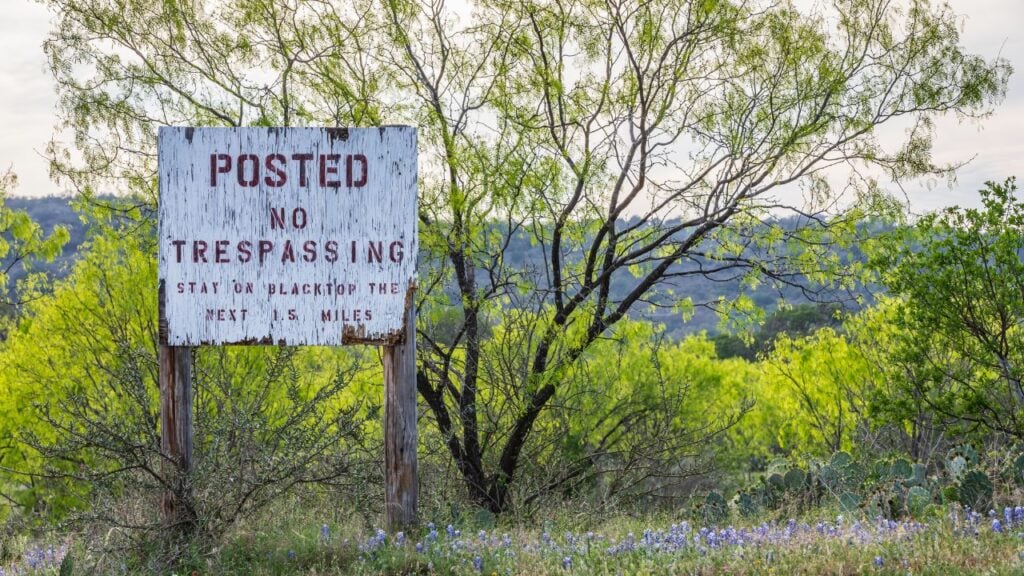
Texas law books hide stranger things than toll roads and park fees.
A few of these rules sound made up, and every single one of them is still on the books.
