

8 Property Tax Mistakes Costing Texas Homeowners Every Year

Pay a property tax bill one day late, and Texas charges a 6% penalty by the next morning.
By July, that penalty reaches 12%, and 1% interest keeps adding on top every month with no cap.
These are the property tax mistakes costing Texas homeowners money every single year.
Note: This is general information, not tax or legal advice. Property tax rules, exemption amounts, and deadlines are subject to change, so confirm the current details with your county appraisal district or a tax professional.
1. Skipping Your Homestead Exemption
Texas homeowners leave money on the table every year over one blank line on a form nobody makes them fill out.
A homestead exemption is the slice of your home’s value the tax office agrees to leave alone.
Texas requires every school district to exempt $140,000 of a primary home’s value, so a home appraised at $350,000 owes school taxes as if it’s worth $210,000.
That’s money back in your pocket, every single year.
It also never happens automatically.
Nobody files it for you.
You apply once with your county appraisal district, and the deadline generally falls on April 30.
Missed it? Texas still takes a late application for up to two years afterward and refunds the difference once it’s approved.
2. Your Notice Isn’t the Bill
A letter from the appraisal district lands in Texas mailboxes every spring, and many owners assume it can wait.
That letter is a Notice of Appraised Value, not a bill.
You get one shot to argue with the number, starting the day that notice arrives in your mailbox.
Homestead notices generally go out by April 1, and you have until May 15 or 30 days from the mailing date, whichever lands later.
Set it aside for the summer, and that window closes for good.
Your county tax office mails the actual bill separately, and it doesn’t arrive until October.
It’s a different office entirely.
By the time that bill lands, the number on it is already final.
3. Skipping the Free Protest
Every homeowner in Texas can argue with an appraisal, and most never do.
A study found that 53% of Texas homeowners don’t know they can protest their appraisal.
Filing costs nothing.
Many appraisal districts offer an informal conference first, a quick sit-down or online exchange with a staff appraiser where you show comparable sales or repair estimates.
A large share of protests settle right there, before anyone sees a formal hearing.
Homeowners who skip this step either eat the higher value or pay a company a cut of savings a free phone call could have gotten them.
Bring evidence, not frustration.
The appraisal review board weighs facts about value, not how annoyed you are about the number.
4. Misreading Your 10% Cap
Ask a Texas homeowner what the appraisal cap protects, and many say the whole tax bill.
It doesn’t.
The cap only limits how fast your home’s taxable value can rise each year, not the tax rate applied to it and not your total bill.
Texas voters created the 10% cap for homesteads in 1997, and it works like this: Once your home has carried the exemption for a full prior tax year, its taxable value can rise by at most 10% a year, no matter how much the market moves.
Say your home was worth $300,000 last year and grows to $360,000 this year.
The cap limits your taxable value to $330,000, even though the market value rose further.
The catch is the timing.
Buy a home this January, and the cap doesn’t start protecting you until the January after next, so that first year of ownership can carry the single largest jump in your bill.
Psst! How much do you know about how Texas built its property tax system? Take our quiz and see how many you can get right.
Quiz
Texas Tax History IQ
Texas lawmakers spent nearly two centuries building the rules behind your tax bill. Put your Texas history to the test.
In what year did the Republic of Texas pass its first homestead protection law, now considered one of the first of its kind in the country?
5. Assuming Your Cap Transfers
Texas buyers fall for a seller's low tax bill almost as fast as they fall for the house.
That number was never theirs.
The 10% cap belongs to the person who held the homestead exemption, and it resets the moment ownership changes hands.
A new owner starts at full market value in year one, with no cap protection at all.
That's the year the appraisal district often closes the gap between what the seller's capped value said and what the home is worth on the open market.
The appraisal district can reappraise a home that sold with a capped value of $280,000 at its true $360,000 market value the very next January, once a new buyer files their own exemption.
Budget for the seller's number, and the real bill can arrive $80,000 higher in taxable value alone.
Protest that first year hard.
It's the one year the cap can't help you.
6. Ignoring Your Escrow Warning
Few Texas homeowners with a mortgage ever write the property tax check themselves, and that's exactly why the shortfall catches so many off guard.
Escrow is the account your lender uses to collect a slice of your tax bill with every mortgage payment, then pays the county on your behalf once a year.
Lenders review that account annually and true it up to whatever the new tax bill costs.
Say your annual tax bill spikes from $6,000 to $7,800 after a reappraisal.
Your lender divides the new total by 12, and next month's payment doesn't rise by a little.
It jumps by $150 a month.
It happens all at once.
A successful protest doesn't fix this instantly either.
The lower bill has to reach your lender and flow through the next annual review before the payment adjusts back down.
7. Missing the Jan. 31 Deadline
Texas homeowners who treat tax day like an April deadline miss the Jan. 31 deadline that costs them most, back in the dead of winter.
Property taxes are due by Jan. 31, and anything unpaid on Feb. 1 counts as delinquent.
The penalty hits immediately.
A 6% penalty and 1% interest land the very next day.
By July 1, the penalty reaches 12%, and 1% interest keeps adding on top every month after that, with no cap.
On a $6,000 tax bill, that's $720 in penalty alone by midsummer, before interest.
Pay part of the bill, and the rest still accrues the same way.
There's no partial credit.
8. Blaming the Wrong Office
Win a protest as a Texas homeowner, and the bill can still land bigger the next fall.
Don't blame the appraisal district for the bigger bill.
Wrong office.
The appraisal district only sets your home's value.
Your actual bill comes from separate taxing units, the city, the county, the school district, and sometimes a hospital or water district, each setting its own rate.
Those taxing units set every one of those rates through public hearings under a process called truth-in-taxation, and taxpayers can show up and speak before the taxing units adopt them.
Almost nobody does.
Texas taxing units set rates per $100 of taxable value, so when a school district moves its rate from $1.05 to $1.10, the change looks small on paper.
On a $300,000 taxable value, that nickel per $100 adds $150 to the bill without a single appraisal changing.
12 Texas Habits Transplants Can't Fake No Matter How Hard They Try
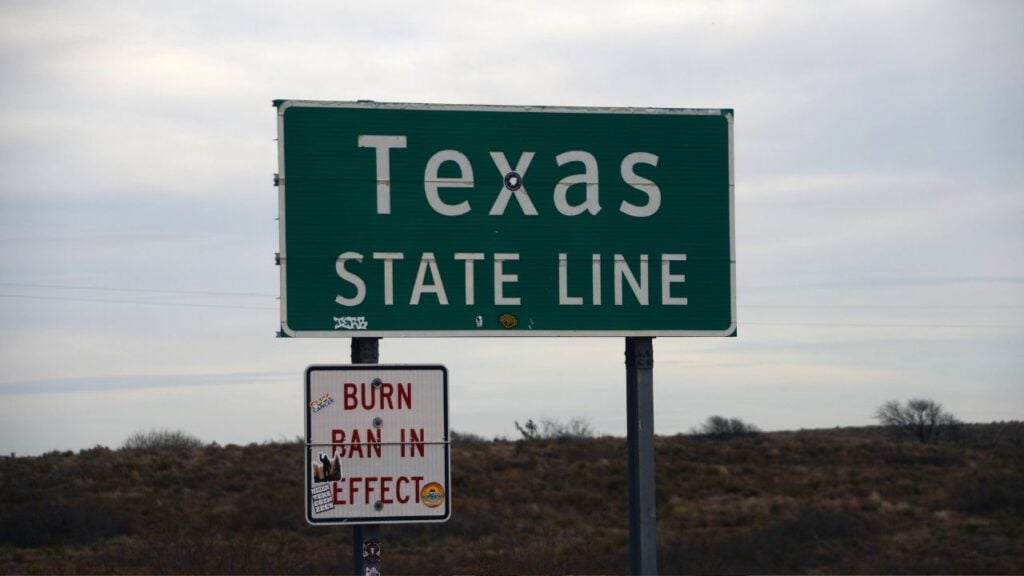
A Fort Worth native rattles off directions without blinking, "Take FM 1187, a farm-to-market road, past the feed store, then watch for the water tower."
A transplant just nods and has no idea what FM even means, one of a dozen Texas habits nobody can fake.
12 Texas Habits Transplants Can't Fake No Matter How Hard They Try
11 Ways Texans Beat the Summer Heat

A stretch of highway outside Houston buckled clean in half during rush hour back in the summer of 2023, and it wasn't from a wreck.
The heat expanded the pavement until it had nowhere left to go, and Texans have their own tricks for surviving summers exactly like that one.
11 Ways Texans Beat the Summer Heat That Baffle Everyone Up North
