
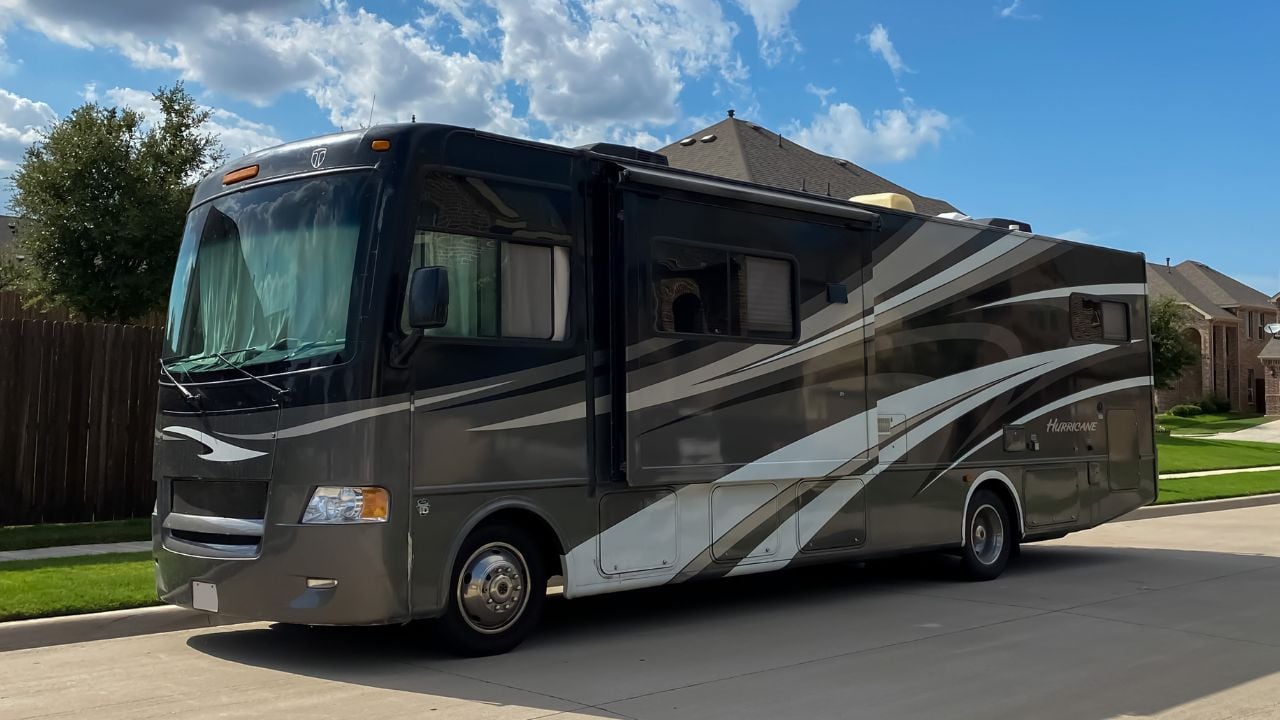
6 Things Texas Homeowners Can’t Legally Park in Their Own Driveway

San Antonio can fine a homeowner up to $2,000 for parking a 26-foot RV in their driveway.
That’s city code, not an HOA rule.
Cities across Texas have written their own versions of such rules, and many homeowners never know about them until a citation appears.
These are some of the things many Texas homeowners can’t legally park in their own driveways.
Note: This is general information, not legal advice. Parking and code-enforcement rules vary by city and are subject to change.
1. Dropping a Shipping Container in the Driveway
Texas homeowners who solve a parking shortage by dropping a steel shipping container in the driveway run into a completely separate set of rules.
Balcones Heights, a small city inside San Antonio’s footprint, only allows a residential cargo container while an active building permit is open for construction on the property, and only one at a time.
Once that permit expires or the work wraps up, the owner has to remove the container within 10 calendar days.
That’s ten days flat.
Leave it past that window, or place it where a passerby on the street can see it without a screening fence, and the city can remove it and bill the property owner for the cost.
2. Letting an Unregistered Car Sit
Texas homeowners who park a broken-down car in the driveway and figure they’ll deal with it eventually are running a clock they don’t know about.
State law calls that car “junked” once it’s inoperable and sitting on private property for more than 30 consecutive days, and a junked vehicle visible from the street counts as a public nuisance.
That’s thirty days.
That’s it.
Cities enforce the rule through code officers, not police, and the process usually starts with a written notice rather than a tow truck showing up unannounced.
Ignore that notice, though, and the car can be ordered removed.
What Makes a Car “Junked” in Texas
Texas homeowners don’t trigger the junked-vehicle law just by letting a car sit still.
The vehicle also has to be missing a license plate or carrying one that’s expired.
A car with a current registration sticker that simply won’t start doesn’t count as junked under this statute, even after months in the driveway.
Cities can still cite that car under a separate property-maintenance rule, just not this nuisance law.
3. Parking a Work Truck in the Driveway
Dallas draws a hard line on how much truck a residential driveway can legally hold.
City code makes it an offense to park a truck-tractor, semitrailer, bus, or truck rated above 1.5 tons on any residential property, and that includes the homeowner’s own driveway.
A landscaper’s flatbed, a concrete mixer, a fuel truck someone drives home from a job site: All of it qualifies.
The exception is loading and unloading.
There’s nothing more to it than that.
Swing by to drop off equipment, and the clock never starts.
Leave the truck parked overnight as a matter of convenience, though, and Dallas code enforcement can write the ticket.
Psst! How much do you know about Texas vehicle and property code? Take our quiz and see how many you can get right.
Quiz
Texas Driveway IQ
Answer these questions on Texas vehicle and property code trivia. We bet you can’t get them all right. Prove us wrong?
How far must a Texas driver park from a fire hydrant under state law?
4. Leaving a Large RV or Boat in the Driveway Too Long
Fort Worth homeowners get a little more room for a boat or recreational vehicle (RV) than they do for a work truck, but not unlimited room.
City code only applies this rule to a large RV, boat trailer, or converted bus longer than 26 feet. A standard camper or fishing boat isn't covered.
A vehicle in that size class can sit in the driveway for up to 72 hours in any seven-day stretch, and only for loading, cleaning, or maintenance.
Past that window, the owner has to move it.
The six-foot screening-fence exception only covers a side or rear yard, never the driveway or front yard.
There's no third option.
Leave it in the driveway past those 72 hours with no fence-eligible yard to move it to, and the vehicle itself becomes the violation, not just where it sits.
5. Parking an Oversized RV at All
San Antonio's driveway rules skip the time limit altogether once a vehicle crosses a certain size.
Once a recreational vehicle (RV), trailer, or boat runs longer than 24 feet, wider than eight feet, or taller than eight feet, the city calls it an oversized vehicle, and oversized vehicles can't park in front of a residential lot at all, driveway included.
The only exception is the minutes it takes to load or unload.
Fines start at $100 and rise as high as $2,000 per violation.
It's not a warning.
It's a $2,000 ticket.
6. Blocking the Sidewalk With Your Bumper
Texas state law bans stopping or parking a vehicle on a sidewalk. That rule doesn't stop at the edge of a homeowner's own property.
Pull a pickup far enough up a driveway that the front bumper crosses the public walkway, and the vehicle is technically parked on the sidewalk under Transportation Code Sec. 545.302.
The same section separately bans parking directly in front of a driveway, public or private, which covers a homeowner blocking their own neighbor's access as much as it covers a stranger blocking theirs.
HOA Rules Aren't the Same as Texas Law
Texas homeowners inside a homeowners association (HOA) often can't tell where the deed restrictions end and the actual city code begins.
An HOA's governing documents are a private contract enforceable through fines and property liens under Texas Property Code Chapter 209, not a criminal or civil ordinance a city or county prosecutes.
A community that bans any visible boat, regardless of the pavement underneath, is enforcing its own bylaws, not state or municipal law.
That's a contract, not a statute.
Meet every HOA rule to the letter, and a driveway can still violate a city ordinance the association never mentioned, like Fort Worth's unpaved-yard ban or San Antonio's oversized-vehicle rule.
The reverse happens too: A paved, code-compliant driveway can still draw an HOA fine for something the city never regulates at all, like paint color or a visible trailer hitch.
8 Property Tax Mistakes Costing Texas Homeowners Every Year

Pay a Texas property tax bill even one day late, and the state adds a 6% penalty before the next morning.
That penalty rises to 12% by July, with 1% interest piling on every month after with no cap.
8 Property Tax Mistakes Costing Texas Homeowners Every Year
9 Odd Texas Laws Most Americans Have Never Heard Of
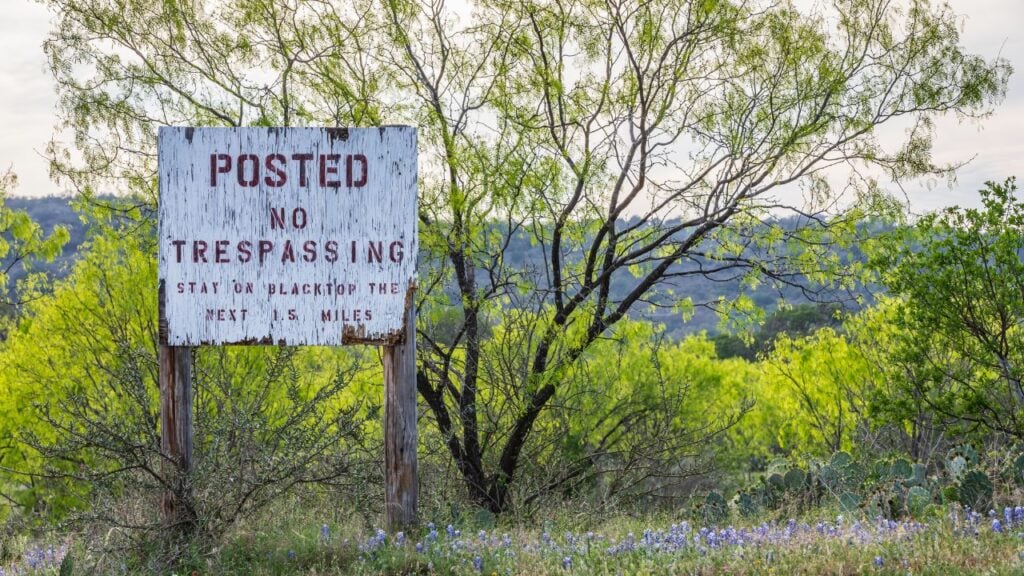
Texas law books hide more than parking rules.
Some protect everyday freedoms, and others cover situations many states never bothered to legislate at all.
