
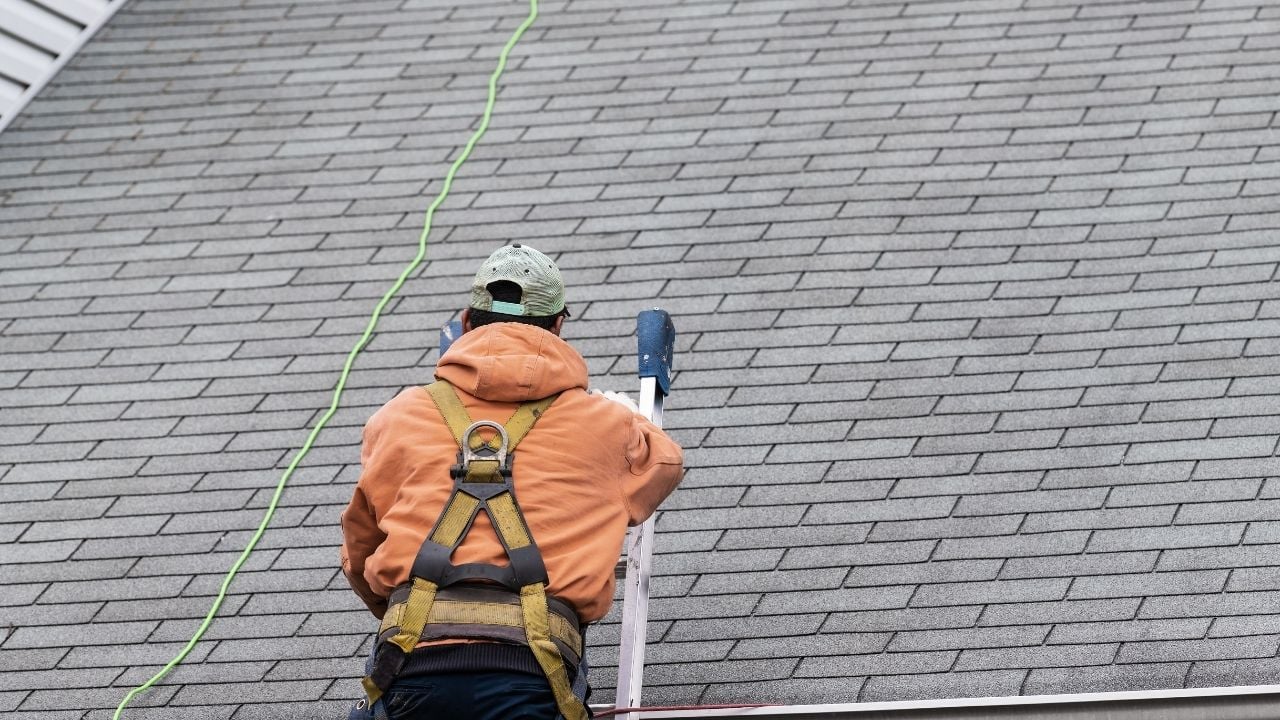
6 Things That Change for a Florida Homeowner Once Your Roof Hits 15 Years

A West Palm Beach news station reported in August that a Vero Beach homeowner watched her premium climb toward $9,000 after her roof hit 15 years, with no cheaper quote anywhere.
Her roof didn’t leak.
It just had a birthday, and Florida’s insurers have built their underwriting playbook around that date. Not all of it works against you, though.
These are the things that change for a Florida homeowner once your roof hits 15 years.
Note: This is general information, not insurance or legal advice. Coverage, terms and roofing rules are subject to change, so check the specifics with your insurer or agent.
1. Your Expiring Legal Shield
Florida Statute 627.7011 stops an insurer from refusing to write or renew a homeowner’s policy over roof age alone, as long as that roof stays under 15 years old.
That’s the whole shield.
Once a roof crosses that line, the insurer can act on age alone.
A nonrenewal notice can follow, or a demand for proof the roof still has years left in it.
Nothing about the shingles changes overnight.
The legal ground under the homeowner does.
That shift happens on the exact calendar day the roof turns 15, not on the next renewal date.
2. Paying for Your Proof
The same Florida law also hands homeowners a tool of their own.
A homeowner can pay for an independent inspection once the roof turns 15.
If that inspector certifies at least 5 years of life left, the insurer still can’t refuse to write or renew the policy over age alone.
The loophole cuts both ways.
A well-maintained 16-year-old roof can outrank a neglected 10-year-old roof, at least on paper.
The catch is timing.
A homeowner has to line up that inspection before a nonrenewal letter shows up, not after, so the report is already in hand when the insurer starts asking questions.
What “Remaining Useful Life” Means for Your Roof
Florida’s roof-age law hinges on one phrase: 5 years or more of remaining useful life.
The statute never spells out how an inspector reaches that number, only that the inspection has to show the roof has at least 5 years left.
The law allows several kinds of inspectors, including a licensed home inspector, a building code inspector, a roofing or general contractor, a professional engineer, or a licensed architect.
The insurer still has to approve that inspector before the report counts, so the final call sits with the insurance company, not the homeowner.
3. Harder-to-Find New Policies
Florida insurers built their own cutoff on top of that same 15-year mark.
Robert Norberg, who owns Arden Insurance Associates in Lantana, told a South Florida news station in August that most carriers now cap new asphalt-shingle-roof policies at 15 years.
That’s true even when the statute would still let them write a new policy.
Not a hard ban.
A well-documented roof can still find a taker.
The list of insurers willing to write it keeps getting shorter.
Shopping around gets harder exactly when a homeowner needs it most.
Switching carriers after a bad renewal notice isn’t as simple as it used to be.
4. Shrinking Full Roof Coverage
A Florida roof past 15 doesn’t always lose coverage outright.
Some insurers instead move the roof onto a scheduled endorsement, reportedly covering as little as 25% of its value while the homeowner self-insures the rest.
Full replacement turns into a shared bill.
A homeowner who assumes a full payout after storm damage can find out only a quarter of the repair is covered.
Read the declarations page.
That’s where a scheduled roof split shows up, not on the premium notice.
Many homeowners never open that page until a claim forces them to.
Psst! How insurance-ready is your Florida roof? Run through this checklist and see where you stand.
5. Your Roof-Priced Premium
A Florida homeowner’s premium starts carrying the roof’s age as its own line item past 15.
A West Palm Beach news station reported this August on a Vero Beach homeowner whose premium neared $9,000 once her roof hit that mark, with no cheaper quote available anywhere.
Ouch.
Security First Insurance’s president, Melissa Burt DeVriese, told the same reporters that swapping out an aging roof can save a homeowner thousands of dollars a year in premium.
That gap is the whole argument for reroofing early instead of waiting for a nonrenewal notice to force the decision.
6. The Roofing-Material Countdown Reset
A Florida homeowner replacing a roof at 15 also picks how long the next countdown lasts.
The 15-year cutoff applies mainly to one material, asphalt shingle.
That same Arden Insurance agent says tile roofs still find coverage out to roughly 25 to 30 years, and metal roofs out to about 40 years.
Same storms, different clock.
Reroofing at 15 with tile or metal buys decades of runway before this conversation starts again.
Picking metal the second time can push that next deadline out by roughly 25 years compared with asphalt.
The Four-Point Inspection, Beyond the Roof
Florida’s four-point inspection is a separate check from the roof-only inspection built into the 15-year law.
It documents the condition of four systems, the roof, the electrical panel, the plumbing, and the heating, ventilation and air conditioning system (HVAC).
Citizens Property Insurance, the state-backed insurer, requires it on homes older than 20 years, not on roofs older than 15.
The trigger is different.
A 12-year-old roof sitting on a 25-year-old house can still land a four-point inspection over the electrical panel or the water heater, even while the roof itself sails past the 15-year mark with no trouble at all.
Lawmakers’ 2026 Push to Go Further
This year, lawmakers tried to sharpen Florida’s 15-year roof rule instead of scrapping it.
House Bill 815 would have kept the 15-year, 5-year-remaining-life framework in place, but required insurers to treat steep-slope and low-slope roofs differently.
It also would have let a homeowner get a low-slope roof re-coated instead of replaced, if an inspector certified 5 more years of life that way.
Dead on arrival.
The bill died in the House Insurance and Banking Subcommittee on March 13, 2026, without ever reaching a full floor vote.
The 15-year statute already on the books, not the bill that stalled, is still the law governing every Florida roof today.
9 Florida Home Insurance Discounts Homeowners Are Leaving on the Table

Florida will put up to $10,000 toward storm-proofing a home, and asking for it is the part many homeowners skip.
A stack of smaller credits is probably already sitting on a homeowner’s policy too, unclaimed and unused.
9 Florida Home Insurance Discounts Homeowners Are Leaving on the Table
9 Things Florida Pet Owners Can Be Fined for That Most People Never Knew
A Tampa family loads the car for a weekend in Fort Lauderdale, leash and water bowl tossed in the back, without a glance at a county website first.
That’s the normal way to pack, and it’s also how a Florida pet owner ends up on the wrong side of a rule they never knew existed.
9 Things Florida Pet Owners Can Be Fined For That Most People Never Knew
