
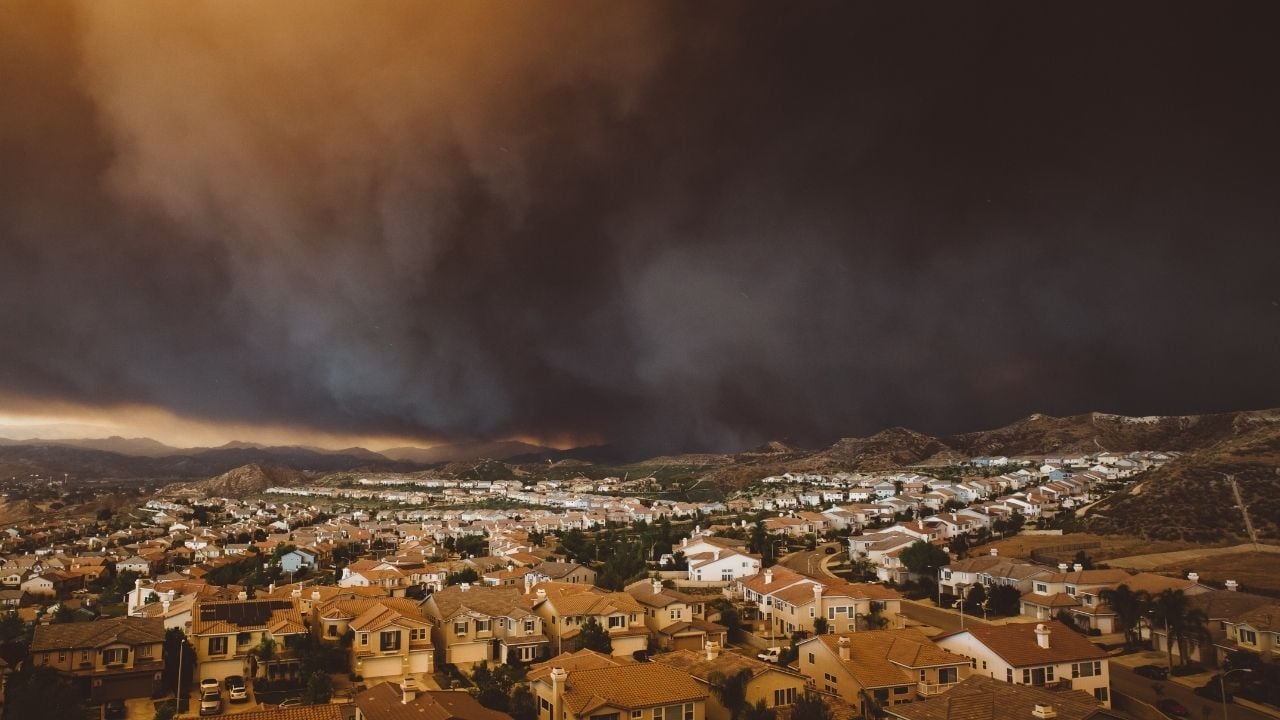
6 Wildfire Disclosures California Home Sellers Can’t Legally Skip

California’s Board of Forestry and Fire Protection signed off on a new statewide fire-safety rule for homes on August 19.
Sellers got a longer list that day.
But the disclosures that already carried legal weight are the ones that follow a sale, and plenty of sellers have never read them.
These are the wildfire disclosures California home sellers can’t legally skip.
Note: This is general information, not legal advice. Wildfire rules and severity maps are subject to change.
1. Fire Hazard Zone Box
California’s Natural Hazard Disclosure Statement makes the first fire question impossible to dodge.
The statutory form asks a seller to check a box declaring whether the home sits inside a Local Responsibility Area mapped as a Very High Fire Hazard Severity Zone.
Civil Code 1103.2 is what requires the seller to disclose it.
Cal Fire’s authority to map the zone in the first place comes from Public Resources Code 4202.
It isn’t optional.
A real estate agent who signs off on an incomplete Natural Hazard Disclosure Statement can face liability right alongside a seller who left the answer blank.
The zone status comes straight from Cal Fire’s maps, not from how safe the block happens to feel.
2. Wildland Fire Notice
California’s Natural Hazard Disclosure Statement carries a second wildfire box that covers different ground.
California law also requires a seller to disclose when the property sits inside a State Responsibility Area, the sprawling zone where Cal Fire, not a local department, handles wildfires first.
That box carries a separate maintenance duty, tied to Public Resources Code 4291, requiring the owner to keep defensible space cleared a full 100 feet out from the structure.
Location decides that.
Two neighbors on the same cul-de-sac can land on opposite sides of that line.
One discloses a wildland fire risk and a 100-foot clearing duty on paper.
The other doesn’t, even with the same view of the same ridgeline out back.
How Cal Fire Draws the Line
California ties a home’s fire hazard status to a formula, not neighborhood reputation.
Cal Fire’s scoring model runs fire history, available fuel, predicted flame length, blowing embers, terrain, and typical fire weather through a 30-to-50-year outlook.
That happens parcel by parcel, never by zip code.
A home can move from Moderate to Very High, or the reverse, the moment Cal Fire updates that model.
That’s exactly what happened across California in early 2025, when Local Responsibility Area maps rolled out county by county for the first time in years.
3. Fire Hardening Advisory
The Fire Hardening and Defensible Space Disclosure and Advisory targets a narrower group of sellers.
Homes built before 2010 sitting in a High or Very High zone require this separate form under Civil Code 1102.6f, on top of the Natural Hazard Disclosure Statement.
It asks about the parts of a house that catch embers, not the parts a buyer notices walking up the driveway.
Ember gaps count too.
Single-pane windows, untreated wood shingle roofing, uncovered gutters, and gaps around the eaves and vents each get a separate checkbox.
So does any landscaping growing within five feet of the walls.
As of July 2025, the form also has to list the low-cost retrofits on the state’s registry and note whether the seller ever completed a listed retrofit.
4. Defensible-Space Compliance Proof
Defensible-space compliance proof is the one document a seller in a High or Very High zone can’t hold back once it exists.
Civil Code 1102.19 is the 2019 law everyone shorthands to Assembly Bill 38 (AB 38).
It requires a seller in a High or Very High zone to prove the property meets the state’s brush-clearance standard or the local vegetation ordinance.
A seller who already holds a passed inspection report from a local fire agency has to hand it over.
That part isn’t optional.
The law only bends for sellers who don’t have that proof yet.
Buyer and seller can then sign a written agreement letting the buyer chase down the missing documentation within a year of closing.
That’s a workaround escrows use only when the report doesn’t already exist.
The disclosure duty itself never disappears, only who tracks the proof down does.
5. Fire-Damage Disclosure
The Transfer Disclosure Statement carries a distinct fire question, buried a few pages past the roof and the plumbing.
Every California seller marks yes or no on whether the structure suffered major damage from fire, on the statutory form set out in Civil Code 1102.6.
Timing doesn’t matter.
A garage fire from a decade ago still counts.
The form asks only whether the fire happened, not whether anyone repaired the damage well, or repaired it at all.
A seller who checks no while knowing otherwise is signing a false statement, not taking a shortcut.
6. Insurance Claims Question
A seller’s disclosure duty in California doesn’t stop at the two statutory forms.
State law has long required disclosing any fact that materially affects a home’s value, a duty Civil Code 1102.1 preserves rather than replaces.
In practice, sellers pin that duty down with the Seller Property Questionnaire, a form many California transactions use.
The questionnaire asks point blank about insurance claims affecting the property within the past five years.
Silence doesn’t excuse it.
An insurer who never flagged the address changes nothing.
A seller who knew about a paid fire claim and left that line blank can still face a lawsuit after closing.
That’s true whether or not the insurance company ever said a word.
Psst! How much do you know about California’s wildfire disclosure rules? Flip each card and see how many you get right.
What’s Coming Next for Sellers
California’s wildfire disclosure list keeps growing.
The state’s Board of Forestry and Fire Protection approved that fire-safety rule, called Zone Zero, on August 19, 2026.
Regulators call it Zone Zero, a five-foot buffer that clears woody plants and anything petroleum-based from right against the walls.
The rule isn’t in force yet.
It still needs a short review at the state Office of Administrative Law, expected to wrap by the end of September 2026.
New construction will have to meet the standard the moment the rule takes effect.
Existing homes get more time.
That time comes in phases, not as one flat deadline.
Owners in High and Very High zones get three years to clear combustibles and dead vegetation from that five-foot buffer.
They then have up to five years total to finish the rest, work like creating under-eave clearance and swapping out combustible gates.
Agents already expect Zone Zero paperwork to join the disclosure packet the way defensible-space proof did after AB 38.
San Diego’s fire department has put two-thirds of the city’s properties inside a Very High Fire Hazard Severity Zone under its 2025 map, more than 220,000 addresses in total.
Fire officials expect that count to grow every time Cal Fire redraws another county’s map, since a parcel can cross into a mapped zone overnight.
9 California Wildfire Insurance Rules Homeowners Learn Too Late
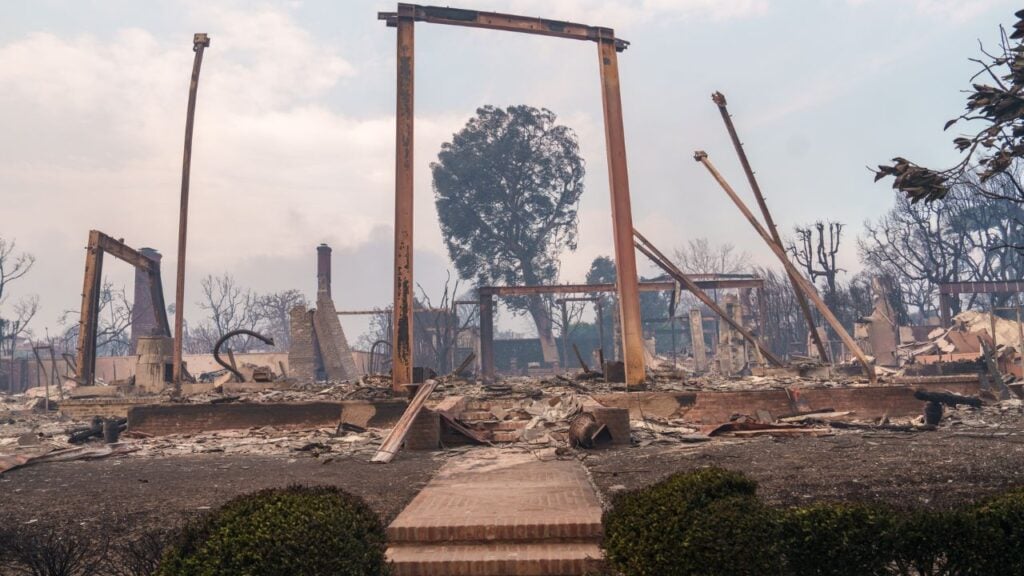
A homeowners policy in California doesn’t guarantee full wildfire protection, and many owners find that out mid-claim.
California’s Fair Access to Insurance Requirements (FAIR) Plan, the state’s insurer of last resort for high-risk homeowners, covers fire and very little else.
9 California Wildfire Insurance Rules Homeowners Learn Too Late
9 California Property Tax Loopholes Homeowners Don’t Know They Qualify For
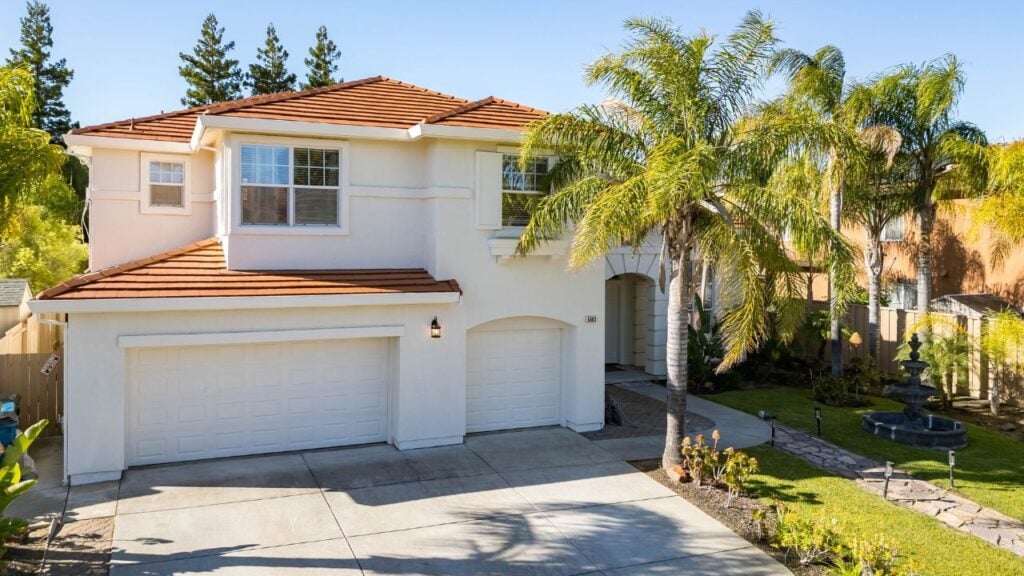
California lets a family pass down a home worth well over a million dollars without resetting the tax bill to today’s market value.
Only part of that value stays protected, guarded by a dollar limit few homeowners have ever heard of.
9 California Property Tax Loopholes Homeowners Don’t Know They Qualify For
