
7 Arguments Oregonians Keep Having With Their Washington Neighbors, Starting at the Gas Pump

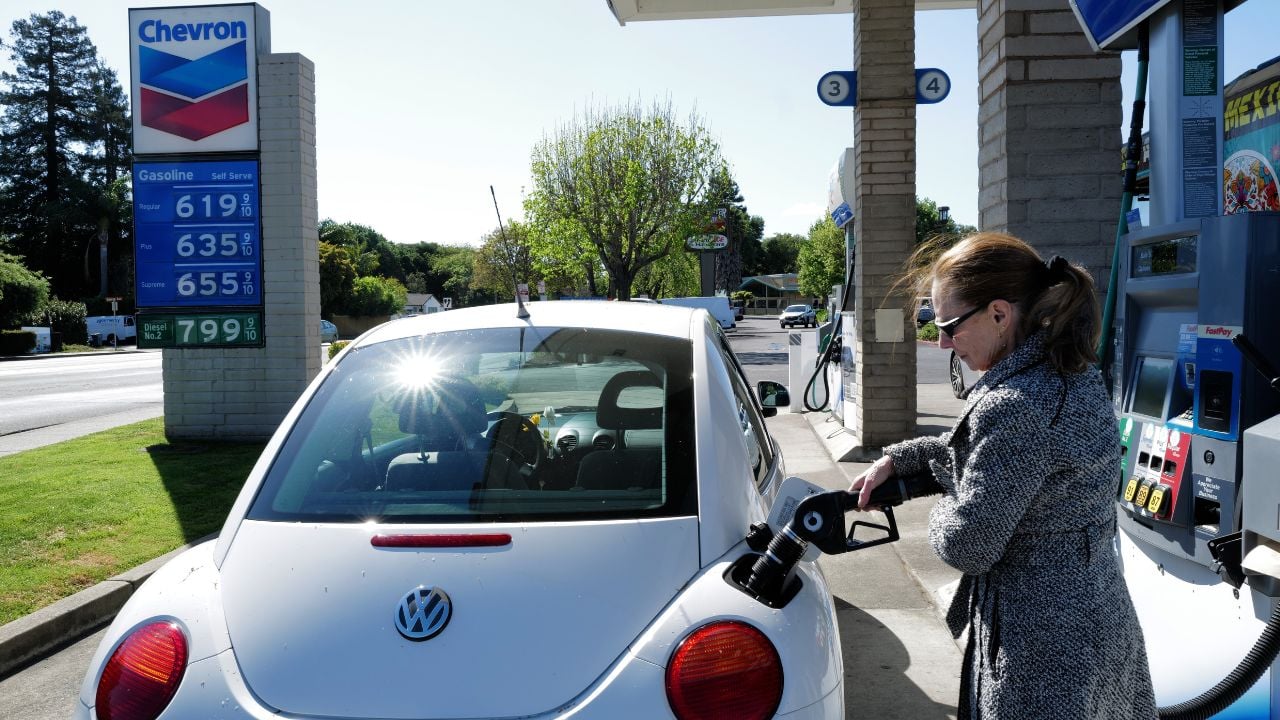
If you cross the Interstate Bridge between Portland and Vancouver, the drive is free for now.
How long that lasts is something Oregon and Washington drivers argue about.
These are the arguments Oregonians keep having with their Washington neighbors, starting at the gas pump.
Note: This is general information, not tax or legal advice. Tax rules and dollar amounts are subject to change.
1. Self-Serve Gas
Self-serve gas was blocked in Oregon starting in 1951.
Along with New Jersey, Oregon was one of just two states that kept many drivers from fueling up themselves.
Washington wasn’t the other one.
Many Washington drivers who crossed into Oregon were left frustrated and confused when someone ran up to tell them self-serve wasn’t allowed.
Under a 2023 law, 20 rural Oregon counties let you pump gas at any station at any time of day.
In the other 16 counties, including Multnomah and Lane, stations can offer self-serve at only some pumps, during hours an attendant is on duty, at the same price.
If you fill up in the Portland area, you may find self-serve pumps and attended pumps at the same station.
If you have a disability, a station with an attendant on duty must help you refuel.
2. Sales Tax
Oregon has no general sales tax, so a Washington resident can owe use tax on items bought in Oregon and used in Washington.
Washington’s use tax is the 6.5 percent state rate plus a local rate that varies by where you first use the items.
If you register a vehicle in Oregon that you bought from a Washington dealer, Oregon’s vehicle use tax can apply.
The rate is one-half of 1 percent of the retail price.
If you don’t file the return within 30 days of the purchase, a 20 percent penalty applies.
Washington sales tax listed on your sales documents can go on the return.
3. Bottle Deposits
Oregon’s bottle deposit is 10 cents a container, and you get it back when you return the empty.
As of 2026, Washington has no statewide bottle deposit program.
Washington lawmakers have introduced bills to start one.
In 2024, House Bill 2144 proposed a 10-cent deposit based on Oregon’s program.
It never reached a vote on the House floor.
A later bill, House Bill 1607, would set a 10-cent refund on covered containers.
It was introduced in 2025 and carried into 2026 without a House vote.
What Oregon’s 2019 Law Says About Out-of-State Cans
Oregon’s 2019 law makes it a violation to return 50 or more containers in one day that weren’t sold in Oregon.
The violation applies only when the return is made with intent to defraud.
The fine can be as much as $250.
4. Interstate Bridge Tolls
Oregon has a moratorium on any tolls other than those on the Interstate Bridge, the Washington State Standard reported in March 2026.
Washington already tolls several roads and bridges, including State Route 520 and the Tacoma Narrows Bridge.
The Washington State Department of Transportation would collect the Interstate Bridge tolls.
The Oregon and Washington transportation commissions will jointly set the toll rates.
If you commute across the bridge, early scenarios would put your toll at $1.55 to $4.70 per trip, though they aren’t final toll rates.
The earliest tolling is currently anticipated for 2028.
Until then, you cross the bridge without paying a toll.
The Interstate Bridge’s northbound span opened in 1917 and charged a 5-cent toll to cross.
The Interstate Bridge replacement has a likely cost of $14.4 billion in the program’s 2026 estimate, which runs from $13.5 billion to $15.2 billion.
Oregon and Washington have each committed about $1 billion.
Construction of the replacement bridge is currently anticipated to begin in 2028 and last six to seven years.
Psst! How much do you know about the Pacific Northwest? Take our quiz and see if you can ace it.
Quiz
Pacific Northwest IQ
Answer these questions on the Pacific Northwest’s mountains, lakes and landmarks. We bet you can’t get them all right. Prove us wrong?
How many major glaciers are on Washington’s Mount Rainier?
5. Ducks and Huskies
Through the 2025 game, the Washington Huskies lead the Oregon Ducks 63-50-5 in 118 football meetings.
Washington won three straight in 2022 and 2023.
Oregon won the next two, 49-21 in Eugene in 2024 and 26-14 at Husky Stadium in 2025.
If you watch with fans of both teams, many Oregon fans cite those wins, while many Washington fans cite the series lead.
The first meeting came on Dec. 1, 1900, in Eugene.
Oregon won 43-0.
6. Paychecks and Income Tax
If you live in Washington and work in Oregon, you may owe Oregon income tax on the wages for work you do inside Oregon.
You won't owe Oregon tax on wages for work you do at home in Washington.
Oregon may also tax some sick pay or vacation pay, depending on how much of your work is done in Oregon.
Washington doesn't currently have an individual income tax.
Beginning Jan. 1, 2028, a 9.9 percent tax will apply to income above $1 million, under a law Washington's governor signed on March 30, 2026.
Washington's minimum wage rose 2.8 percent for 2026, to $17.13 an hour.
Oregon's minimum wage rates run from July 1, 2026, through June 30, 2027.
They vary by region.
The Portland metro rate is $16.80, the standard rate is $15.55, and the non-urban rate is $14.55.
7. Salmon Gillnets
In January 2017, Oregon's Fish and Wildlife Commission opted out of a 2012 agreement to phase out gillnets for Columbia River salmon.
At the time, the decision was expected to leave each side of the river under different regulations.
National Fisherman reported that this hadn't been the case since the Columbia River Compact of 1918.
In March 2019, Washington's Fish and Wildlife Commission allowed gillnets in the fall salmon fishery because Oregon planned to allow them.
Washington fishery managers were to work with their Oregon counterparts on a joint long-term policy for shared waters.
A joint staff fact sheet dated Aug. 6, 2026, says Washington's policy allows any gear for commercial coho fishing, while Oregon doesn't allow gillnets.
Treaty gillnet fisheries are listed separately, with three openings between Aug. 17 and Sept. 5, 2026.
If you follow Columbia River salmon seasons, the fact sheet expects no gillnet fishery for coho on the Columbia's mainstem in 2026.
A fishery using tangle nets and other live-capture gear is planned instead.
9 Oregon Town Names Locals Pronounce Nothing Like They're Spelled
Read an Oregon road sign out loud, and a local may politely correct you.
Yachats sits on the central Oregon coast, and its spelling gives no hint of how it sounds.
9 Oregon Town Names Locals Pronounce Nothing Like They're Spelled
8 Rain Habits That Give Away a Lifelong Oregonian
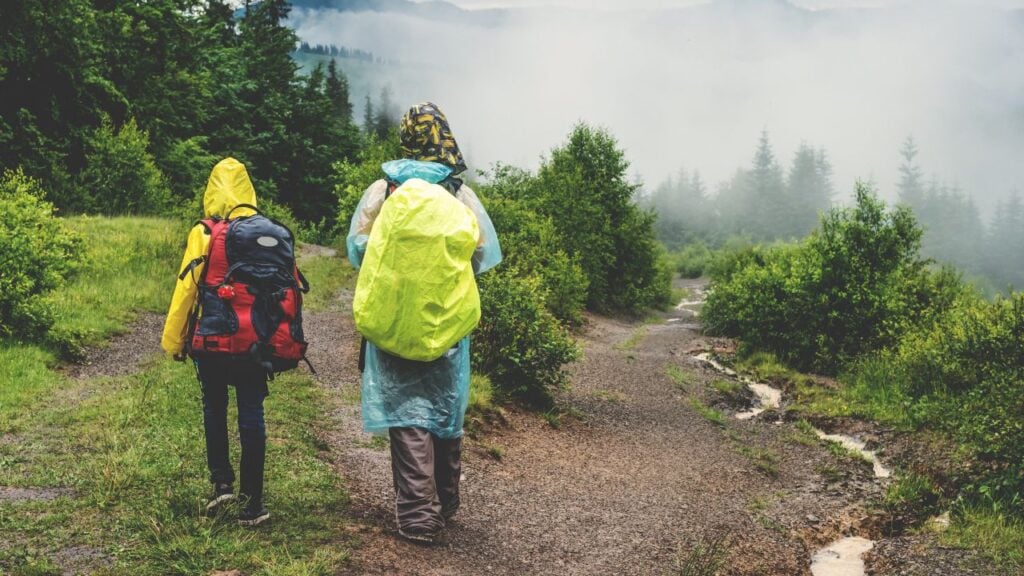
Many Oregonians have learned to live with rain, and it shows in small habits.
Some of those habits are easy to miss, even for the people who have them.
