
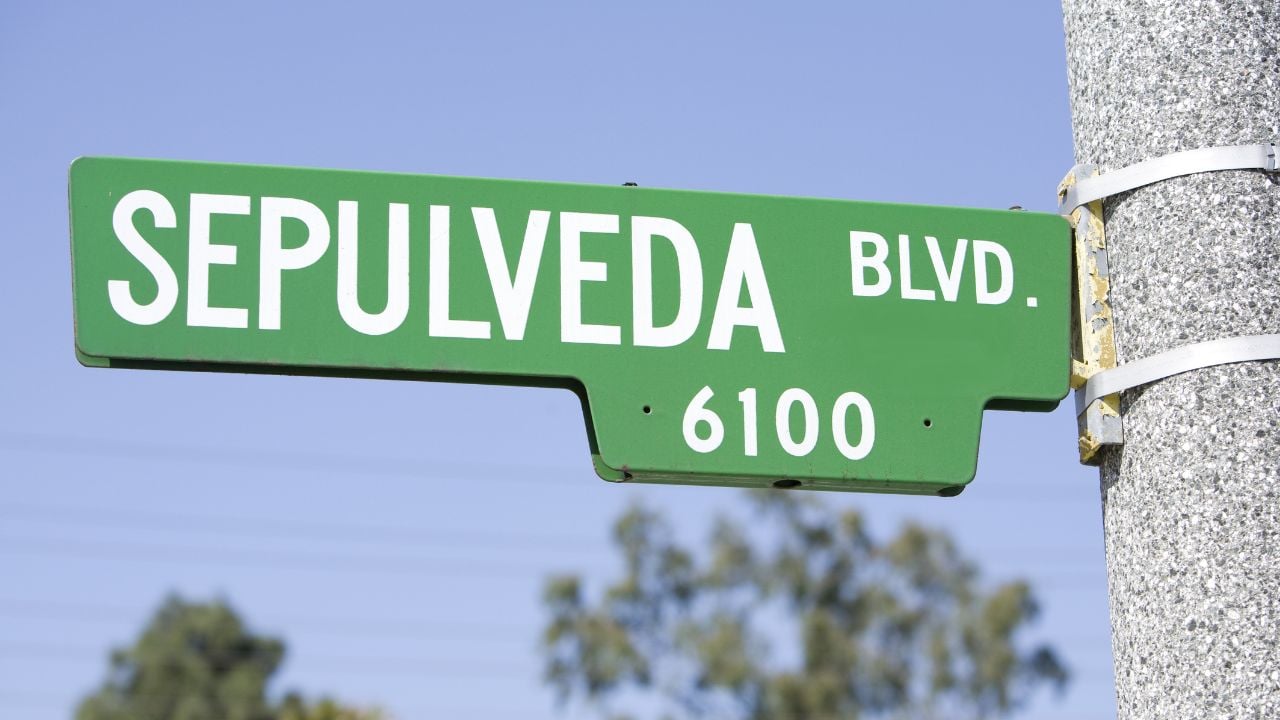
7 California Street Names Locals Don’t Pronounce the Correct Way, Let Alone Tourists

A phone’s turn-by-turn directions read Sepulveda Boulevard out loud in a flat robot voice. But it doesn’t land the way Los Angeles says it.
Neither does the app’s version of half the state’s other Spanish-rooted street names.
These are the California street names locals don’t say the correct way, let alone tourists.
1. Los Feliz Boulevard
Los Feliz Boulevard takes its name from the Spanish-era Féliz family, who once ranched this stretch of Los Angeles long before it became a boulevard.
Say the family name in Spanish, and it lands closer to “fay-LEES,” stress on the back half.
Say it the way Los Angeles says it, and it comes out FEE-liz, front-loaded.
Generations of Angelenos have said it that way.
That’s not a guess.
Historian D.J. Waldie traces the anglicized version to the wave of Midwestern transplants who reshaped Los Angeles in the late 1800s, according to LAist.
That history still leaves residents wondering whether they should switch to the Spanish original.
Old habits stick.
2. San Pedro Street
San Pedro Street’s name splits Los Angeles’s Fashion District into two camps, each certain the other says it wrong.
Pedro is said PAY-droh in Spanish.
Los Angeles has called it PEE-droh for generations.
That’s the version people on the block use.
Locals were already saying it that way by the time the city argued over its own name in 1934, according to a history archive.
The city never went back to fix it.
3. Sepulveda Boulevard
Sepulveda Boulevard carries the surname of the Sepúlveda family, who held ranchos across what’s now the Westside during the Spanish and Mexican eras.
Spelled out, the accent in Sepúlveda falls on the syllable “púl.”
Los Angeles drops that accent entirely and says seh-PUL-vih-duh, flat, no accent mark in sight.
Culver City historians say that version is what marks someone as a longtime local rather than a newcomer.
Newcomers land somewhere else entirely, closer to “sep-pull-VEE-duh.”
Neither one is Spanish.
4. Tujunga
Big Tujunga Canyon Road winds up into the mountains behind the northeast San Fernando Valley, carrying a name older than Spanish California.
The word started as Tuhuunga, a Tongva village name recorded long before Spanish missionaries ever reached the valley below.
UCLA researchers say that original word never carried a hard g. The sound trailed off the way “bang” does, with no hard consonant at the end.
Say Tujunga out loud today, on the road or anywhere else in Los Angeles, and the g hits hard, the way it does in “finger.”
The sound changed at some point along the way, but the spelling on the road signs never did.
5. Vallejo Street
San Francisco’s Vallejo Street shares its name with the North Bay city of Vallejo.
Both trace back to Mariano Guadalupe Vallejo, the Mexican-era general who founded Sonoma and later donated the land meant to become California’s state capital, according to Britannica.
The Spanish version turns the double L in his surname into a Y sound: “va-YEH-ho.”
A statewide roundup of mispronounced California place names documents the harder alternative many people use instead: va-LEH-ho, with the middle syllable landing closer to leg than yeh.
Both versions circulate up and down the state.
Only one of them keeps the Spanish sound intact.
6. Tulare Street
Tulare Street cuts through the middle of downtown Fresno, carrying the same name as the tule marshes that once covered the valley floor.
Spanish speakers say the word “too-LAH-reh.”
Fresno says “too-LAIR-ee” instead, the same anglicized shift a statewide news roundup documented for the city of the same name, one county over.
Same syllables.
Different ending entirely.
7. Micheltorena Street
Micheltorena Street carries one name, and Los Angeles keeps splitting it into two.
The street climbs through Silver Lake, honoring Manuel Micheltorena, one of the final Mexican governors to run California before American forces took control.
It’s one name.
Say it out loud around here and you’ll hear “Michael Torena,” a first name and a last name that don’t belong to anyone.
The mix-up is common enough that Los Angeles Magazine put it in its own local pronunciation guide to correct it.
There’s no Michael on that street sign.
Why Streets Read Spanish
California spent decades under Spanish and then Mexican rule before statehood in 1850.
The rancho families who held that land left their names on the streets that came after them.
Los Angeles alone carved dozens of streets out of old ranchos, handing Sepúlveda, Féliz, and Micheltorena’s names to new pavement without much thought for how English speakers would eventually say them.
Los Angeles even asked the U.S. Board on Geographic Names to settle how to say its own name in 1934, and the board’s anglicized ruling won out despite a furious protest from the Los Angeles Times.
The names stayed.
Who Decides the “Right” Way to Say a Street Name?
No government office in California holds the authority to set a street name’s official pronunciation.
The federal naming board that standardizes places only rules on spelling and location, and it stops there. It never decides how a name sounds out loud.
A pronunciation becomes standard the same way slang catches on. Enough people say it the same way long enough, and it sticks, whether or not it matches the word’s original sound.
The Los Feliz Divide
Los Feliz Boulevard doesn’t have a settled winner between its two pronunciations, even now.
The Los Angeles Times reporter who covered the divide in 2013 found a younger generation leaning back toward the Spanish pronunciation, while longtime Angelenos stuck with the version they grew up saying.
Neither side calls the other one incorrect, exactly.
One side calls it disrespectful. The other calls it pretentious.
No judge has ruled.
Psst! How much do you know about California’s other tricky place names? Take our quiz and see how many you can get right.
Quiz
California Street Name IQ
Answer these questions on how California says its own place names, not how the map spells them. We bet you can’t get them all right. Prove us wrong?
Which California place name is correctly said with four syllables, not three?
San Pedro Street's Quieter Divide
San Pedro Street shows a milder version of the Los Feliz divide, without the same level of public debate attached to it.
That same tension between old and new keeps showing up along the Fashion District's blocks, the way it does over on Los Feliz Boulevard.
Longtime shop owners on the block mostly keep saying it the way they always have.
Nobody's correcting them.
San Pedro Street's own signs carry no pronunciation guide, just the printed name over a Fashion District block number.
A driver circling the block for parking reads it exactly the way that corner has always read it, accent or no accent.
A piece of mail addressed to any of these streets reaches its door the same day, no matter how the sender says the name out loud.
Spelling is the only thing that has to match.
9 Things That Surprise People Who Move to California
California's electricity bill runs about 27 cents per kilowatt-hour, the second-priciest rate in the country.
New residents get caught off guard by that number on their first statement.
Not everything costs more once the moving boxes are unpacked, though, and some of the surprises work in a new Californian's favor.
9 Things That Surprise People Who Move to California
9 Things You Can't Legally Bring Into California From Another State
A family packing a moving van for the drive from Nevada to Sacramento rarely stops to think that not everything inside that truck is guaranteed to cross California's state line.
California's agricultural border stations run on legal authority many out-of-state drivers have never heard of, and border agents turn away enough items to catch longtime residents off guard too.
9 Things You Can't Legally Bring Into California From Another State
