
9 Things You Can’t Legally Bring Into California From Another State

A family packs a moving van to head from Nevada to Sacramento with everything they own.
Unbeknownst to them, not everything in that truck is guaranteed to make it across California’s state line.
California’s agricultural border stations run on legal authority many drivers have never heard of.
These are the things that don’t survive the crossing, and why California treats them as a legal problem.
Note: This is general information, not legal advice. Agricultural quarantine rules and penalties are subject to change, so confirm current requirements with the California Department of Food and Agriculture.
1. Citrus Fruit and Citrus Trees
California rejects citrus fruit and citrus trees from every other state, even a piece from a backyard tree.
The target is Huanglongbing, also called citrus greening, a disease with no cure that has already devastated groves in Florida and Texas.
One leaf is enough.
That’s all the Asian Citrus Psyllid, a sap-sucking insect, needs to spread citrus greening into a new grove.
Inspectors at California’s border stations pull citrus out of coolers and grocery bags without asking whether it’s headed for a fruit bowl.
California’s Border Stops Aren’t Optional
California runs 16 border protection stations on its major highways, and drivers can’t choose whether to stop.
State law makes it a misdemeanor to skip an open station or deliberately dodge one on a back road.
A California Highway Patrol officer can also order the same stop.
Ignoring it carries the same charge.
More than 20 million vehicles pass through every year.
Inspectors reject over 82,000 loads of plant material.
2. Firewood From Another State
Firewood from another state gets the same suspicion as fruit at California’s checkpoints.
There’s good reason for it.
Inspectors check every load for insects or disease at the border and reject any that shows either on the spot.
Beyond that visual check, several state and federal quarantines block firewood movement outright, including California’s own Chestnut Bark Disease and Oak Wilt Disease quarantine and federal quarantines tied to the emerald ash borer, the Asian longhorned beetle, the spongy moth, and the pine shoot beetle.
They’re bad hitchhikers.
The goldspotted oak borer alone has killed more than 200,000 oak trees across Southern California, and scientists believe it first spread on firewood someone hauled in from another area.
Buying a bundle at a gas station two states over doesn’t make it safe.
It just makes it untested.
3. Certain Exotic Pets
Certain exotic pets can’t cross into California at all, even though dogs and cats sail through with zero paperwork.
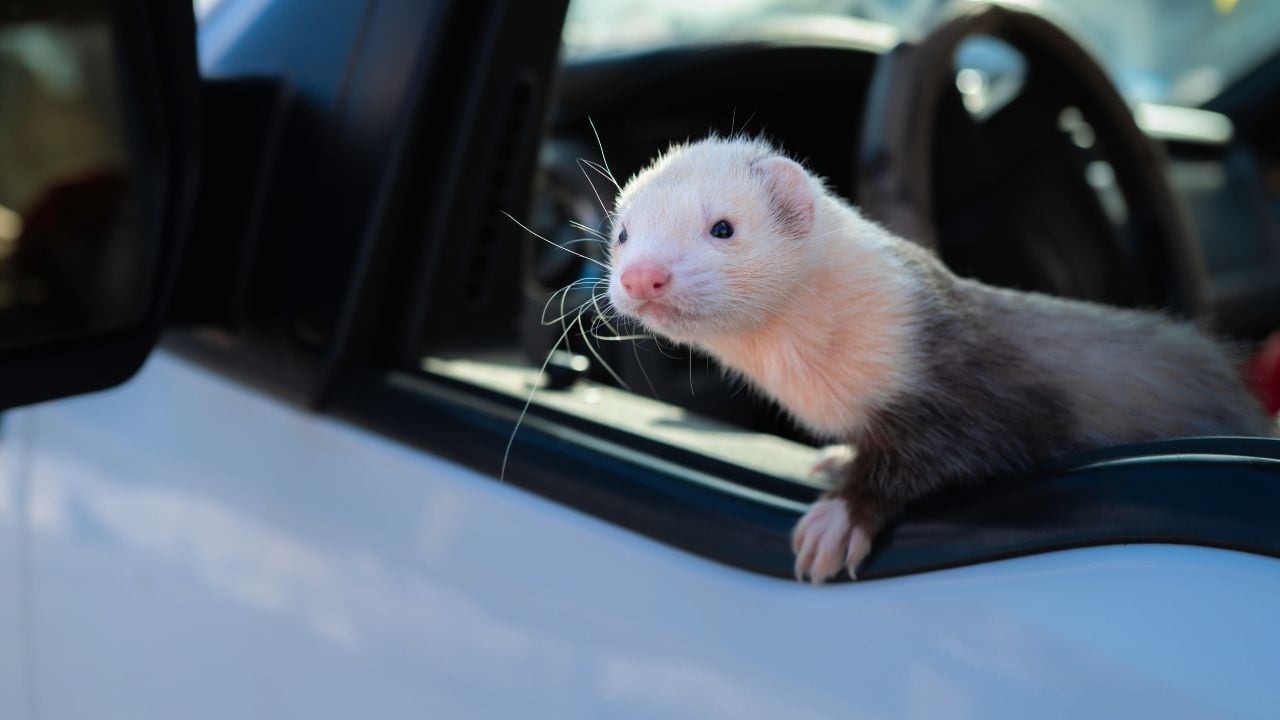
Ferrets, gerbils, hedgehogs, Monk parakeets (also called Quaker parrots), and sugar gliders are restricted species that inspectors commonly flag at the border, and the permit that covers them isn’t one an ordinary pet owner can get.
California Department of Fish and Wildlife’s Restricted Species Permit exists under Title 14 of the California Code of Regulations, but it’s issued only for research, public exhibition, education, or shelter purposes, not for keeping an animal as a household pet.
Ferrets don’t get a pass.
The rule exists to keep non-native animals from establishing themselves in the wild, not to punish pet owners, but for a traveler crossing the border with one of these animals as a pet, there’s no permit path that leads to a yes.
4. Loose Soil or Tools Caked in It
Loose soil is banned at California’s border, whether it’s sitting in a bucket, packed around a houseplant’s roots, or caked into the tread of a tire.
Dirt counts too.
California’s own pest-exclusion rules are behind it, not a federal import law.
The state’s Food and Agricultural Code gives CDFA inspectors authority to reject soil-bearing loads, and California’s Nematode Exterior Quarantine targets potting soil moving between states because a handful of it can carry pests, nematodes, and weed seeds no inspector can spot with the naked eye.
Inspectors check tires, boots, and equipment for caked soil the same way they check a bag of loose dirt.
A pest hiding in a clump of mud doesn’t care what container it’s riding in.
5. Boats Carrying Invasive Mussels
California’s border inspectors pull boats towed in from another state aside for a very different reason than a cooler of fruit.
Inspectors check watercraft, trailers, and live wells for quagga, zebra, and golden mussels, tiny invaders that clog water delivery systems, hydroelectric plants, and irrigation lines.
It’s not just fruit.
California’s Division of Boating and Waterways asks every boater to clean, drain, and dry their craft before it ever reaches a checkpoint, and a boat still wet from an infested lake can be turned away outright.
6. Honeybee Colonies With Pests or Contamination
Honeybee colonies crossing into California go through two separate inspections before anyone can call them cleared.
The first happens at the border station, and the second happens at the colonies’ destination county, with inspectors mainly hunting for red imported fire ants.
That’s two checks, not one.
Inspectors turn back colonies caked in excessive soil or debris for a pressure wash before allowing a second look, and the truck driver covers that cost.
Clean hives move on under a quarantine hold notice, still tracked until a county inspector signs off.
Psst! Think you know what’s myth and what’s fact at California’s border? Tap through these cards and find out.
7. Poultry or Hatching Eggs From an HPAI Zone
Poultry and hatching eggs from an active bird flu zone in another state need a permit before they’re allowed into California at all.
The disease behind the rule is highly pathogenic avian influenza (HPAI), and the California Department of Food and Agriculture (CDFA) requires an official movement permit for birds and products coming out of any out-of-state HPAI Control Area.
No permit means no pass.
CDFA quarantines any shipment that skips that step on arrival and can cite both the shipper and the receiver for the violation.
Backyard flocks aren’t exempt just because they’re small.
8. Livestock Without Health Papers
California border inspectors can hold up livestock right at the checkpoint when health or brand certificates are missing.
Border inspectors record the owner, origin, destination, species, and number of every animal that comes through, then forward that information to CDFA’s Animal Health Division for tracking.
The paperwork comes first.
Drivers hauling cattle, horses, or other livestock need those certificates in hand, not promised for later.
A rancher moving stock across state lines for the first time is often the one caught without them.
9. Outdoor Gear From a Spongy Moth Zone
Outdoor gear moved out of a spongy moth quarantine zone needs its own paperwork before it’s allowed into California.
RVs, campers, and patio furniture that sat outside in an infested area can carry the insect’s egg masses without anyone noticing.
The patio chairs count too.
Federal rules require a completed self-inspection checklist, a U.S. Department of Agriculture (USDA) Plant Protection and Quarantine (PPQ) Form 377, confirming the items are free of the pest before they cross into a non-quarantine state.
Skip that step between April and August, and the rules require sealing those items under a tarp or keeping them indoors until it’s done.
County agricultural inspectors can also ask for that checklist on the spot if a moving truck’s paperwork looks incomplete.
A signed copy has to travel with the load itself, not sit filed away back at the old house.
11 California Road Trip Stops Tourists Miss Because Nobody Tells Them

Many Route 66 road-trippers see exactly what the postcard rack sells: A diner, a fading sign, a quick photo, then back on the interstate.
History and roadside landmarks sit within a short detour of California’s busiest highways, and many drivers never learn they were there.
11 California Road Trip Stops Tourists Miss Because Nobody Tells Them
15 California Beach Habits That Baffle Visitors From the East Coast
Can you explain why a family stands on a California beach at midnight in August, waiting on fish?
Locals can, and they can also tell you why nobody lifts their feet walking into the water at Seal Beach.
15 California Beach Habits That Baffle Visitors From the East Coast
