
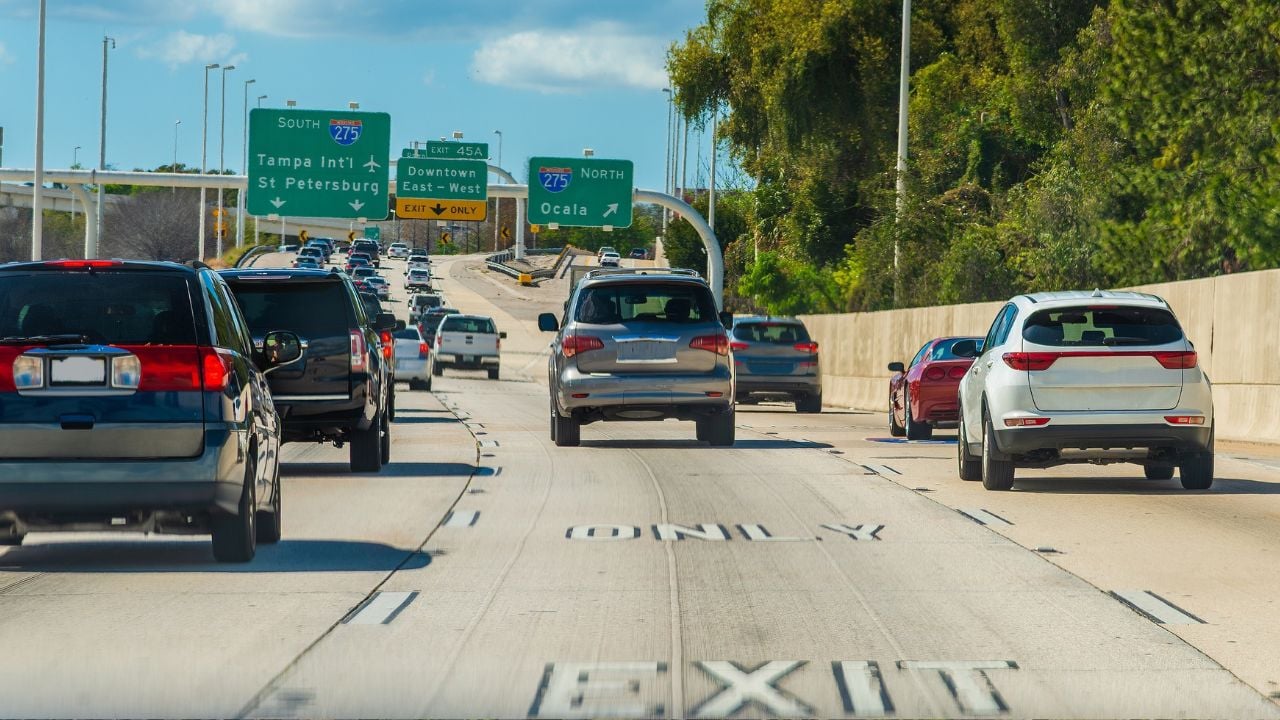
7 Florida Highways Locals Dread (and 3 They Actually Enjoy Driving)

Ask a Floridian for directions, and you’ll get a route plus a warning.
Take that exit, sure, but not at five o’clock, and never in the rain.
Florida’s road network runs from white-knuckle frightening to postcard pretty, sometimes within the same county.
These are the Florida highways locals dread, and the ones that make them glad they drive.
Interstate 4
No Florida highway scares locals quite like the 132 miles of Interstate 4 running from Tampa to Daytona Beach.
Studies have named it the deadliest interstate in the country, with more than one fatality per mile.
The Orlando core mixes tourists reading exit signs at the last second with commuters who drive it half-asleep.
Add an afternoon downpour, and six lanes slow to a crawl in seconds.
Floridians treat merging onto I-4 near the theme parks as a small act of courage.
U.S. 19
Drive U.S. 19 through Pinellas County, and you’ll understand why Floridians white-knuckle this one.
The Pinellas stretch logged 94 deaths across a recent three-year span, the deadliest count of any road in the state.
The problem is the design: Seven lanes of fast traffic threaded with driveways, bus stops, and people crossing on foot.
Most of those pedestrian deaths happen after dark, when the strip malls blur into headlights.
Locals from Clearwater to New Port Richey plan errands so they never have to cross U.S. 19 on foot.
Psst! How much do you know about Florida’s roads and geography? Take our quiz and see how many you can get right.
U.S. 192
Anyone headed to Disney from the Kissimmee side knows the churn of U.S. 192.
This 75-mile run through Osceola County ranks among the most dangerous highways in America.
Vacationers hunting for their hotel drift across lanes while locals try to get to work.
The tourist corridor packs in traffic lights, motels, and left turns at a pace that keeps drivers guessing.
Floridians who live near Kissimmee learn the side streets fast and use U.S. 192 only when they must.
Interstate 95
Interstate 95 carries Floridians up and down the entire Atlantic coast, and the South Florida stretch tests every one of them.
Through Miami-Dade and Broward, I-95 runs bumper to bumper at 80 miles an hour until it doesn’t.
A single fender-bender near the Dolphin Expressway can back traffic up for miles.
Drivers dart across four lanes to catch an exit, and everyone else brakes hard behind them.
Floridians who commute on I-95 treat the left lane and the exit ramp as two different worlds.
Howard Frankland Bridge
Tampa Bay commuters have a name for the worst part of their day, and it’s the Howard Frankland Bridge.
This span carries Interstate 275 across Old Tampa Bay and moves around 139,000 vehicles a day.
Morning traffic heading toward Tampa and evening traffic heading back have long ranked among the state’s worst bottlenecks.
A years-long rebuild added a new southbound span, and Floridians spent that whole stretch inching past orange barrels.
Crossing the Howard Frankland at rush hour still means picking your lane early and praying nobody stops short.
Palmetto Expressway
Miami drivers save a particular groan for State Road 826, the Palmetto Expressway.
Parts of the Palmetto carry more than 250,000 vehicles a day near Miami International Airport.
The interchange with the Dolphin Expressway funnels commuters, airport traffic, and trucks into the same knot.
Rush hour turns the whole southern half into a parking lot, morning and evening both.
Floridians in Hialeah and Doral time their lives around when the Palmetto Expressway loosens up.
Florida’s Turnpike
Florida’s Turnpike gets you across the state quickly, and it charges you for every mile of the favor.
Running the mainline end to end costs a two-axle driver about $17 with SunPass, and more without one.
Skip the transponder, and the Toll-By-Plate invoice shows up later with an extra fee stacked on top.
The road runs smooth and fast, so the dread here isn’t the driving.
It’s watching the toll gantries tick by and doing the math on what the trip just cost you.
Where Floridians Enjoy the Drive
Now for the Florida roads that turn a commute into the best part of the day.
Overseas Highway
No Florida drive rewards you like the Overseas Highway, the run of U.S. 1 that carries you out to Key West.
The road covers 113 miles and crosses 42 bridges, hopping from island to island over open water.
Henry Flagler’s railroad laid the path, a hurricane wrecked it in 1935, and the state turned the remains into a highway.
The Seven Mile Bridge alone puts the Atlantic on one side and the Gulf on the other.
Floridians count down the green mile markers to zero and never once check the clock.
A1A
State Road A1A hugs the Atlantic so closely that Floridians roll the windows down and let the salt air in.
The stretch between Flagler Beach and Jacksonville Beach earned All-American Road status in 2021.
The two-lane road threads a narrow barrier island, ocean on one side and the Intracoastal on the other.
Old fishing piers, low dunes, and towns like Ormond Beach slow the whole trip to a wander.
Floridians take A1A when they want the drive to last longer, not end sooner.
Tamiami Trail
The Tamiami Trail carries Floridians across the bottom of the state on U.S. 41, straight through the Everglades.
The name mashes together Tampa and Miami, and the road opened in 1928 after 13 years of digging through the swamp.
Where Alligator Alley races across on four fenced lanes, the Tamiami Trail slows down to two.
Alligators sun themselves along the canal, and herons stalk the shallows a few feet from your bumper.
Shark Valley sits right off the Tamiami Trail, and the observation tower there looks out over miles of sawgrass.
Floridians who take the Tamiami Trail over the interstate trade twenty minutes for a slow stretch through the Everglades.
10 Florida Town Names Out-of-Staters Always Mispronounce

Nothing outs a Florida newcomer faster than reading a road sign out loud.
Florida’s map is a minefield of Native American syllables, Spanish words, and developer inventions that locals hear you botch instantly.
10 Florida Town Names Out-of-Staters Always Mispronounce
10 Florida Small Towns That Feel Frozen in the 1950s
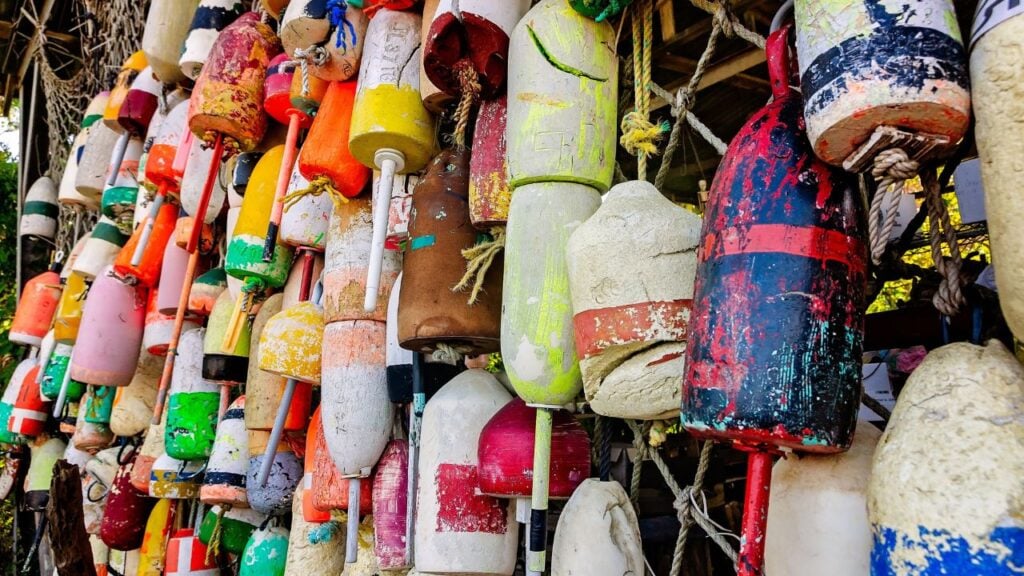
The Florida your grandparents described is still out there, tucked between theme parks and toll roads.
The parking spaces still sit at an angle, and coffee still comes in heavy mugs in towns that skipped the last 70 years.
