
7 Kansas Myths Kansans Are Tired of Correcting

The Chiefs and the Royals don’t play in Kansas. Their stadiums are in Missouri.
Kansans have corrected that one for years, along with other stories that don’t hold up.
Here are the Kansas myths locals are tired of correcting.
1. Flatter Than a Pancake
If you think Kansas is the flattest state, that’s a myth.
A 2014 ranking by two University of Kansas geographers put Kansas seventh.
Florida took first.
Its highest point is only 345 feet above sea level.
The pancake comparison traces to a tongue-in-cheek 2003 study in the Annals of Improbable Research, which found Kansas flatter than a pancake.
If you’re heading west across the state, one of the ranking’s authors says the first two-thirds are hilly and the last third is flat, the High Plains.
2. Kansas City Confusion
The Kansas City myth says the Chiefs and Royals play in Kansas.
After the Chiefs won the Super Bowl in February 2020, a government technology news site reported that a congratulatory message had placed the team in Kansas.
If you’re planning a trip, know that Kansas City, Missouri, and Kansas City, Kansas, are separate cities with separate governments.
Arrowhead Stadium and Kauffman Stadium, where you’d catch the Chiefs and Royals, are both in Kansas City, Missouri.
Sporting Kansas City plays on the Kansas side, in Wyandotte County.
Kansas City, Missouri, was incorporated in 1853, and the present-day Kansas City, Kansas, was formed in 1886.
That could change: ABC15 reported in December 2025 that the Chiefs are planning a domed stadium in Wyandotte County.
Officials expect it to open in time for the 2031 season.
How Big Each Kansas City Is
Kansas City, Kansas, had 156,607 residents in the 2020 Census, compared with 508,090 in Kansas City, Missouri.
That makes the Missouri city more than three times larger.
3. Baum’s Kansas Roots
The idea that Oz author Frank Baum was a Kansas native is a myth, according to a Washburn University reference page.
He never lived in Kansas and spent only one or two days there.
His visit came in the winter of 1882, when his play The Maid of Arran toured the United States with stops in Lawrence and Olathe.
He never returned.
If you assume the Oz stories started in Kansas, the Kansas Historical Society says Baum told them to his young sons in Chicago.
The Kansas in the story was based on his experiences living in South Dakota in the 1880s.
Much of the Kansas stereotype you may know is due to the 1939 movie, and yearly showings on network television began in 1956.
4. Tornado Alley
Tornado Alley can leave you picturing a state overrun with twisters, and that’s the myth worth testing.
It’s just a nickname for an area of relatively high tornado occurrence, not a clearly defined area.
The National Weather Service in Wichita puts Kansas at an average of 81 tornadoes a year from 1994 through 2023, second only to Texas at 135.
Adjusted for land area, Kansas averages 10 tornadoes per 10,000 square miles a year from 2004 through 2023, tied for third with Iowa and Illinois.
From 1950 through 2023, tornadoes rated F3 or EF3 and stronger made up around 5% of Kansas tornadoes but caused roughly 87% of the state’s tornado deaths.
So when you hear the nickname, the strong ones are the exception.
From 2020 through 2023, Kansas saw one of its quietest periods for strong-violent tornadoes on record.
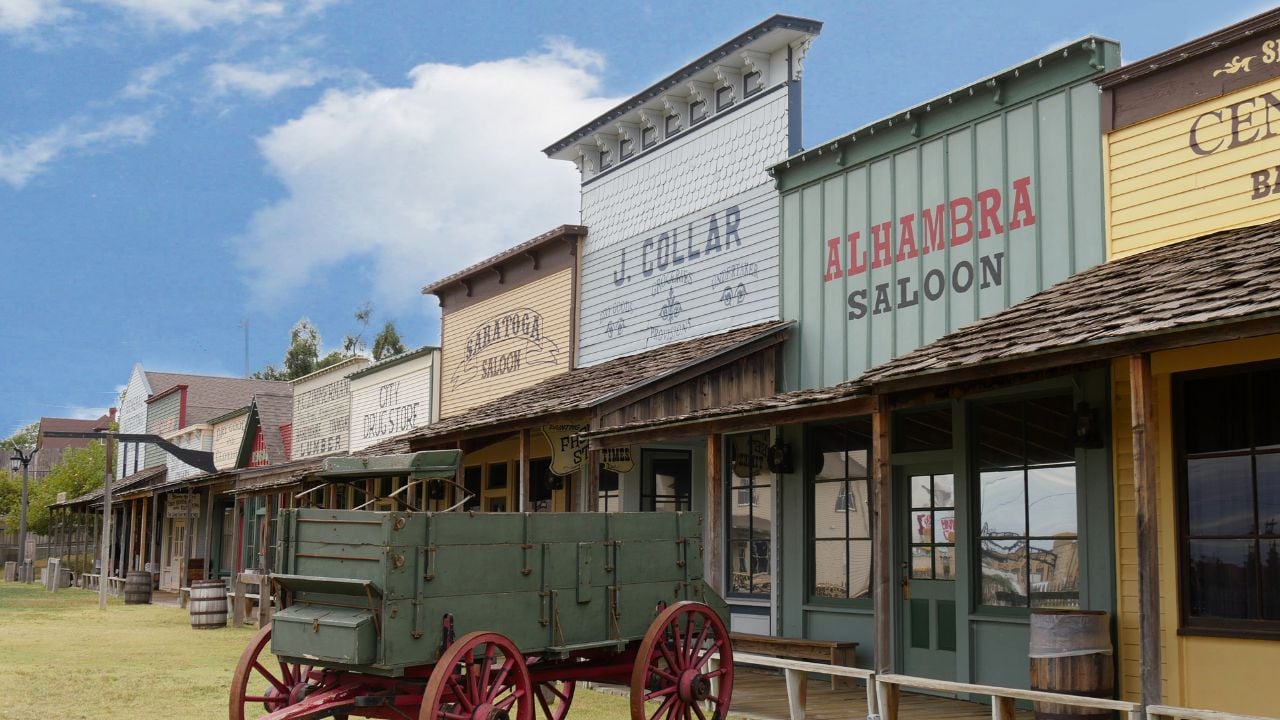
5. Dodge City Gunfights
Dodge City’s reputation for constant gunfights is a myth that historians Robert Dykstra and Jo Ann Manfra check against the record in Smithsonian Magazine.
They documented 18 men dead from gunshot wounds in a single year, July 1872 to July 1873, when the town lacked judicial and law-enforcement structures.
From August 1873 through 1875, apparently no violent deaths occurred.
From early 1876 through 1886, the known body count averaged fewer than two violent deaths a year.
The counts cover gunshot deaths for that first year and violent deaths afterward, so the figures aren’t quite the same measure.
If you picture a shootout every day, even the documented 18 deaths in the worst year come to far fewer than one a day.
Your picture may owe something to the screen.
Hollywood had discovered the old frontier town as early as 1914, and Gunsmoke ran on television from 1955 to 1975.
Psst! How much do you know about Kansas history? Take our quiz and see if you can ace it.
Quiz
Kansas Know-How Quiz
Answer these questions on Kansas history, famous Kansans, and state symbols. We bet you can’t get them all right. Prove us wrong?
Before the Capitol was finished, a covered wooden bridge linking the two wings of the Kansas State Capitol picked up which drafty nickname?
6. Overpass Shelter
Park under a highway overpass when a tornado nears, says the myth, and you'll be safe.
A National Weather Association talk by Dan Miller and colleagues says the most important factor behind that belief apparently stems from the widespread distribution of a video.
It was shot under a Kansas Turnpike overpass on April 26, 1991.
The authors call the tornado relatively weak, with an official F1 rating, though they argue the video suggests it was stronger.
The bridge's construction is unique, and the clip is deceiving.
The National Weather Service in Wichita says seeking shelter under an overpass puts you at greater risk of being killed or seriously injured by flying debris.
An overpass may be one of the worst places to seek shelter from a tornado.
7. Ike's Birthplace
Some people count President Eisenhower among Kansans by birth, and that's a myth.
The National Park Service says he was born in Denison, Texas, on October 14, 1890.
A 2019 Marfa Public Radio episode about his Texas birth called him the Kansas president in its title.
His family moved to the small town of Abilene, Kansas.
He grew up there, and if you visit Abilene, you'll find his presidential library.
Martin Mack Teasley, a former director at the Eisenhower Library, wrote a book about Eisenhower fact and fiction.
6 Regional Restaurant Chains Kansans Defend to Out-of-Staters

Have you ever tried ordering a Spangles steakburger outside Kansas?
Kansas has built a whole run of restaurant chains like it, places that stayed close to home.
6 Regional Restaurant Chains Kansans Defend to Out-of-Staters
