
7 Mississippi Food and Drink Origin Stories That Aren’t What People Think

Well-known Mississippi foods and drinks come with an origin story attached.
But many of those stories turn out to be wrong.
These are the Mississippi food and drink origin stories that aren’t what most people think.
1. Coca-Cola’s First Bottle
Coca-Cola built its whole reputation on Atlanta, so many people assume the drink’s famous glass bottle started there instead of Mississippi.
It didn’t.
Joseph Biedenharn ran a candy store and soda fountain on Washington Street in Vicksburg.
In 1894, he started filling glass bottles with Coca-Cola himself.
He hauled the bottles out to rural customers who never made it into town for a fountain drink.
Biedenharn’s little operation became Coca-Cola’s first bottler, years before the company built a bottling network.
He mailed a dozen bottles to company president Asa Candler as proof it would work.
Candler wrote back approving of it, according to the Biedenharn Coca-Cola Museum.
Invented in Atlanta, Bottled in Mississippi
Coca-Cola the recipe has nothing to do with Mississippi at all.
Atlanta pharmacist John Pemberton mixed the first batch in 1886, eight years before Biedenharn filled a single bottle in Vicksburg.
Biedenharn’s brothers and sister copied his idea once it worked, opening more Coca-Cola bottling plants across Mississippi, Texas, Arkansas, and Louisiana within a few years.
2. Barq’s Biloxi Birth
People mistake Barq’s root beer for a Louisiana brand more often than not, mostly because its founder grew up in New Orleans.
That’s not quite right.
Edward Barq spent his winters working Louisiana sugar plantations.
His summers were a different story.
Barq bottled artesian water and mixed soda flavors on the side in Biloxi, and the Biloxi Artesian Bottling Works put out his first batch of root beer in 1898.
The company didn’t sell outside Mississippi at all at first.
National distribution didn’t start until 1906, eight years after that first Biloxi bottle.
Barq’s stuck with its Mississippi roots even after growing into a regional favorite, expanding into 12-ounce bottles in the 1930s before many other sodas tried it.
3. Slugburger’s Nickel Name
Does a Mississippi slugburger have a slug in it?
Many first-time visitors ask exactly that, and the name alone has talked more than one out of ordering it.
Ground beef got scarce and expensive during the Great Depression, so cooks in Corinth started stretching it with cornmeal, flour, or bread.
The thin patties got deep-fried until the outside turned crisp.
The sandwiches sold for a nickel apiece.
A nickel went by the slang name “slug” back then, and the name stuck to the sandwich instead of the coin.
Not one actual slug, snail, or bug has ever gone into a slugburger, no matter what the name suggests.
Corinth’s Slugburger Festival leans into the mix-up anyway, its logo built around a grinning green snail.
The mascot gives it away.
Diners around town still fry up their versions using the same cheap-meat trick that started it all.
4. Comeback Sauce’s Jackson Roots
Comeback sauce shows up on Mississippi tables the way ranch shows up everywhere else, which makes it easy to assume the recipe is just as old and just as anonymous.
Restaurant history in Jackson tells a tighter story.
Jackson’s Greek immigrant restaurant families get the credit.
The tangy mayonnaise-and-chili-sauce blend traces to either the Mayflower Café in the late 1930s or a Dennery family restaurant in the early 1940s.
Even food historians can’t settle which restaurant made the first batch.
Both restaurants were Greek-owned.
What isn’t in dispute is the decade.
Comeback sauce is a product of one Jackson restaurant scene in the late 1930s and early 1940s, not a recipe families already had going before anyone opened a restaurant.
Dozens of other local restaurants built their versions once the recipe got loose.
Psst! How much do you know about Mississippi’s food legends? Read each claim and see how many you call right.
5. Mississippi’s Hot Tamale Trail
Mississippi Delta hot tamales confuse many visitors who assume tamales belong strictly to Texas or the Southwest.
The Delta has been making its version for more than a century.
Historians believe Mexican farmworkers, probably from Texas, brought tamale-making into the region around the turn of the 20th century.
They worked alongside Black sharecroppers during cotton harvest season, according to the Mississippi Encyclopedia.
The recipe changed hands.
It changed shape too, one Delta kitchen at a time.
Delta cooks swapped in plain cornmeal instead of masa harina.
They tied the bundles with twine instead of corn husks and served them with saltine crackers instead of a fork.
The Southern Foodways Alliance now tracks dozens of tamale spots across the region on what it calls the Hot Tamale Trail.
6. Big Apple Inn’s “Ear”
Big Apple Inn, a Jackson, Mississippi fixture, has offered just two sandwiches for decades, a smoked sausage sandwich called a smoke and a sandwich simply called an ear.
First-time visitors tend to guess the ear is a recent stunt, the kind of pig-ear dish a chef invents today to make a statement.
Juan Mora, a Mexican immigrant, opened the diner in 1939 after years of selling tamales from a street stand.
A local butcher started giving him pig ears for free, the parts fancier customers wouldn’t buy.
Mora simmered them and piled them on a slider bun with mustard sauce, hot sauce, and slaw, the same toppings that went on his smoked sausage “smoke” sandwich.
Habit did the rest.
The price stayed low too, cheap enough to build a following long before anyone called this kind of cooking “nose-to-tail.”
Mora’s great-grandson runs the counter today, selling both sandwiches off the same recipes nearly nine decades later.
7. The Catfish Boom
Mississippi’s farm-raised catfish industry looks, from a distance, like a slow-grown Southern tradition, the kind of thing that spread across the region the way wild catfish fishing always has.
Commercial catfish farming in Mississippi is barely 60 years old.
It took hold in the late 1960s, when Delta farmers facing sagging cotton prices started flooding old cotton acreage into fish ponds instead.
The math worked fast.
Belzoni became ground zero for the whole industry.
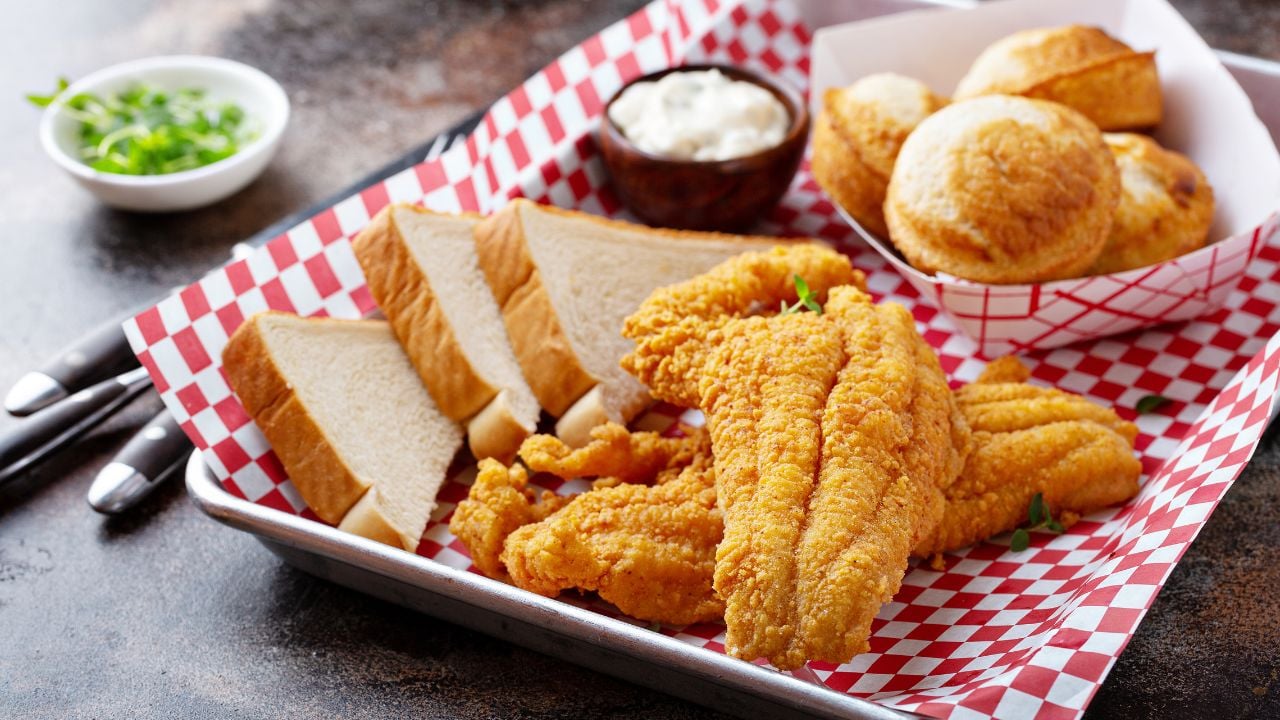
The Humphreys County town has called itself the Catfish Capital of the World since 1976, when it started throwing an annual festival to prove it.
Processing plants and farm cooperatives followed the fish there, turning a Delta experiment into a business that put small towns across the region on the map.
19 Ways Mississippi Front Porches Have Transformed in the Past Century

Mississippi’s front porches used to run the whole neighborhood’s evening, packed with rocking chairs, gossip, and neighbors who never needed an invitation.
A hundred years changed almost everything about that porch, right down to what’s sitting on it today.
19 Ways Mississippi Front Porches Have Transformed in the Past Century
10 School Lunch Items From the 1980s That Are Totally Nostalgic for Mississippians Today

Mississippi lunchboxes in the 1980s doubled as a fashion statement, and the snacks inside mattered almost as much as the cartoon on the front.
A few of those crinkly-wrapped classics still show up on nostalgic Mississippi shopping lists today.
10 School Lunch Items From the 1980s That Are Totally Nostalgic for Mississippians Today
