
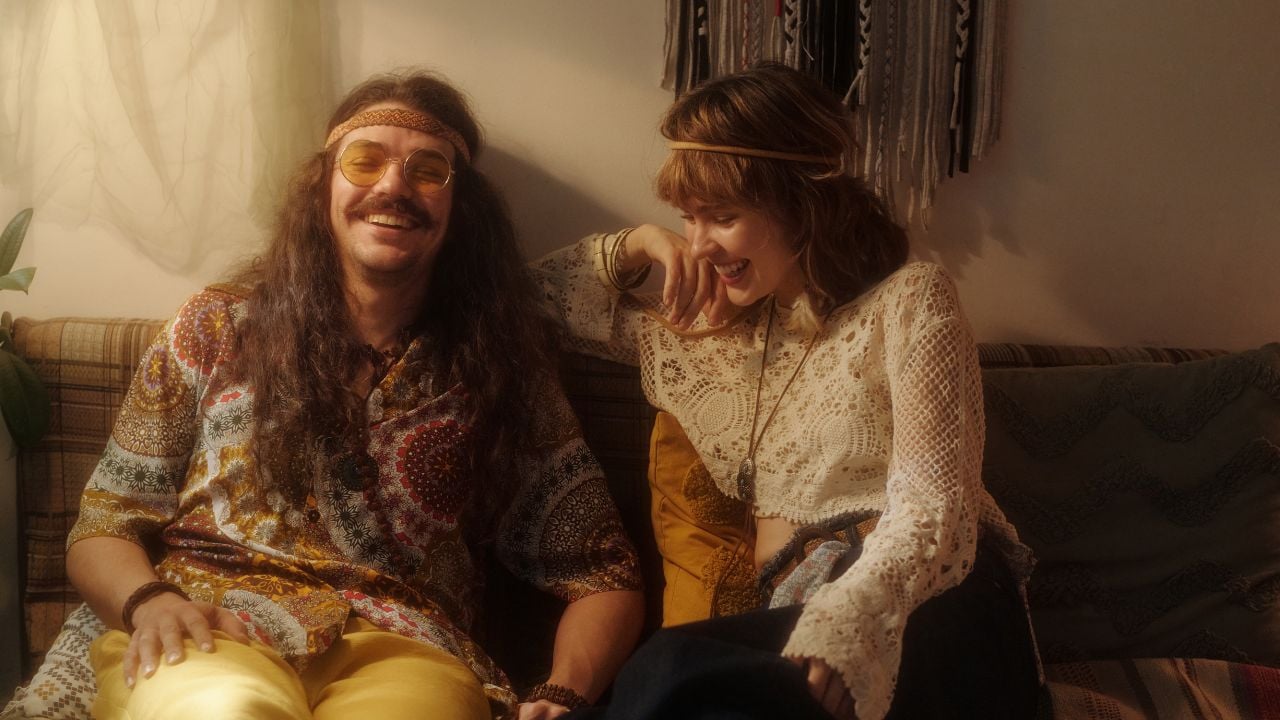
14 Words Virginians Used in the 1960s That Make No Sense Today

Every generation has words that sound normal at the time and strange a few decades later.
Virginians who grew up in the 1960s may still let one slip now and then.
Here’s a look at the slang that faded from everyday talk.
1. Rat Fink
If you called somebody a rat fink in the 1960s, you meant an unpleasant person, with overtones of an informer.
Green’s Dictionary of Slang cites an American 1963 letter that uses the word.
Merriam-Webster dates the word to 1964, but Green’s finds it earlier, in the San Bernardino Sun in 1959.
2. Hootenanny
A hootenanny is a gathering where folk singers perform, often with the audience joining in.
Green’s cites an American 1964 play that uses the word for a party.
Merriam-Webster dates the word to 1929, when it was a dialect word for a gadget.
Green’s cites a 1929 use in American Speech for a gadget whose name you can’t immediately recall.
3. Boss
If you called something boss in 1960s slang, you meant it was excellent.
Green’s cites American uses from 1963 and 1968.
The earliest example of that sense is from 1862, nearly a century before the decade began.
4. Out of Sight
Out of sight had two meanings in 1960s slang.
One meant excellent, with a 1966 American use in Green’s.
The other meant extraordinary, especially in a bad or insane way.
A 1965 American use shows that meaning.
Merriam-Webster dates the adjective to 1876.
You’d need the rest of the sentence to tell the two meanings apart.
5. Wheels
If you asked about somebody’s wheels in 1960s slang, you meant their car.
Green’s cites American uses from 1959 and 1963.
Merriam-Webster labels wheels, meaning a car, as slang.
A 1957 Morning Call shows short-order cooks also used wheels for waffles.
6. Threads
In 1960s slang, your threads were your clothes.
Green’s cites a 1963 use of the singular form and a 1965 use of threads in Newsweek.
The word is American in origin.
7. Daddy-O
You could call a man daddy-o in the 1960s because it was a term of address between men.
Green’s cites an American 1964 letter that opens with the word.
The earliest example dates to about 1935, nearly three decades before that letter.
Psst! How much do you know about Virginia history? Take our quiz and see if you can ace it.
Quiz
Virginia 1960s Trivia
Answer eight questions on Virginia history and culture from the 1960s. We bet you can’t get them all right. Prove us wrong?
Where did the slogan “Virginia Is for Lovers” first appear in 1969?
8. Pad
In 1960s slang, a pad was your home or apartment.
Green's cites a 1960 use in the Baltimore Sun.
An earlier American use, from 1949, also means a home.
9. Hodad
You were a hodad in 1960s slang if you hung around surfers without surfing.
Green's cites Esquire using the word in 1965.
Merriam-Webster defines a hodad as a nonsurfer who frequents surfing beaches and pretends to be a surfer.
An Australian slang dictionary from 1967 also defines it as a layabout.
10. Wig Out
If you wigged out in 1960s slang, you lost control or had a breakdown.
Green's cites a 1967 use in The Essential Lenny Bruce.
The San Francisco Chronicle had printed the phrase in 1959.
Merriam-Webster labels wig out as US slang.
11. Bag
Bag meant your taste, your attitude or your way of life in 1960s slang.
Green's dates that sense to an American 1960 use.
The word picked up that meaning in the 1960s, after earlier use for containers of bootleg liquor and narcotics.
A 1967 British source, Oz, uses the word too.
12. Love-In
In 1967, you could go to a love-in, a gathering where people expressed loving feelings toward one another.
Green's finds its earliest example in an August 1967 issue of Time.
Merriam-Webster also dates the word to 1967.
A 1971 Harper's Magazine citation lists love-ins alongside be-ins and concerts.
13. Teenybopper
If you were a young girl devoted to rock music in the 1960s, you could be called a teenybopper.
Green's finds its earliest use in the Harvard Crimson in 1965.
Merriam-Webster dates the word a year earlier, to 1964.
Current Slang defined it in 1966 as a high school student who adheres to fads.
14. Bread
Your money was bread in 1960s slang.
Green's cites an American 1966 use of the word for money.
The money sense goes back to 1938, long before the decade began.
Jack Kerouac's On the Road is cited for the word in 1951.
Words That Stayed in Print
You can find several of these words in print long after the 1960s.
Wheels for a car turns up in Green's as late as 2023.
Merriam-Webster lists boss, meaning excellent, as slang.
Green's cites threads for clothes in 2021 sources from both the United States and the United Kingdom.
Bread as slang for money has a 2023 citation.
Pad for a home appears in a 2021 American source.
A 2017 Guardian article uses bag to mean a person's taste.
9 Things Virginians Say That Place Them East or West of the Blue Ridge

Virginians don't all say one word the same way.
Some Virginians give away which side of the Blue Ridge they grew up on by how they say it.
9 Things Virginians Say That Place Them East or West of the Blue Ridge
9 Things Virginians Can't Legally Do to a Neighbor's Tree
A neighbor's tree can start an argument long before anybody picks up a saw.
A few of the things you can't do to a neighbor's tree may surprise you.
