
7 Ohio Vehicle Inspection Mistakes That Cost Drivers Time and Money

Ohio State Highway Patrol troopers, not a mechanic or the BMV, sign off on every salvage-titled car in the state.
That’s just one of three separate inspection systems Ohio runs, each with its own paperwork, its own clock, and its own fee.
These are the inspection mistakes that cost drivers time and money.
Note: This is general information, not legal advice. Inspection, registration, and fee rules are subject to change, so confirm the current requirements with the Ohio Bureau of Motor Vehicles.
1. Ignoring an E-Check Suspension Notice
Ohio requires an emissions test called E-Check for any vehicle registered in one of its seven Northeast Ohio counties.
Miss your testing window on a multi-year registration, and the Ohio Bureau of Motor Vehicles (BMV) mails a 20-day notice before it suspends your plates.
Twenty days disappear fast.
Let it lapse, and Ohio confiscates your plates along with suspending the registration.
Driving on a suspended registration in Ohio is a minor misdemeanor, capped at a $150 fine plus court costs.
That’s a steep price for a letter that sat unopened on the counter.
2. Paying $18 to Retest Instead of Fixing the Problem
Ohio gives established E-Check county residents one free passing test every 365 days, plus up to three free retests if a car fails.
Swap in a fresh air filter, or just hope the sensor clears itself, and a fourth failed attempt starts costing $18 a try.
That adds up.
A driver who chases the wrong fix instead of the failed component listed on the printout can burn through two or three of those $18 tests before fixing what’s broken.
The Ohio Environmental Protection Agency (Ohio EPA) licenses repair shops for E-Check work, and a certified technician reads that printout the same way every time.
Ohio’s $18 Fee Isn’t Only a Retest Penalty
New Ohio residents moving into one of the seven E-Check counties have more than one path to that first test: Get a VIN verification inspection first and present the certificate for a free test, or skip that step and pay $18 for a voucher instead.
A driver who buys a used car in one of those counties without a valid E-Check certificate from the seller still has to get it tested before registering.
Whether that test is free depends on the car’s own 365-day testing history, not a flat fee.
3. Skipping the Out-of-State VIN Inspection Before Titling
Ohio law requires a physical inspection before the state will issue a title for any used car last registered in another state.
A deputy registrar, a licensed dealer, or a clerk of courts checks the make, model, mileage, and vehicle identification number (VIN) against the paperwork.
Skip that step, and the clerk rejects the title application at the counter.
The visit fails.
That means no plates, no registration, and a second trip back to whichever office handles Ohio titles.
The clerk of courts even charges a set $1.50 processing fee for that inspection certificate, a detail many first-time filers never see coming until they’re standing at the counter.
4. Missing Ohio’s Bigger 2026 Repair-Waiver Number
Ohio drivers who keep failing the same E-Check test often assume last year’s $300 repair threshold still buys them a waiver.
Not anymore.
Ohio EPA issues that waiver only after a driver spends enough on emissions repairs without the car ever passing, instead of holding the registration hostage forever.
That minimum repair spending jumped from $300 to $450, effective January 1, 2026, after regulators reclassified the Cleveland area as a “Serious” non-attainment zone for ozone.
A driver working off last year’s number walks in $150 short.
That stings.
The shop’s paid invoices are what count toward that total, not an estimate, so keep every receipt from the first failed test forward.
Psst! How ready is your car for whatever inspection Ohio requires? Run through this checklist and see where you stand.
5. Assuming a Newer Car Is Permanently E-Check Exempt
Ohio exempts a new gas or diesel car from E-Check for its first six model years, seven for a non-plug-in hybrid.
House Bill 54 stretched that window in 2025, up from just four years before it.
Drivers settle into skipping the line.
The exemption isn’t forever.
The car ages past that window, a renewal notice arrives with a testing requirement attached, and a driver who assumed the exemption was permanent misses it.
Miss it, and the same 20-day suspension clock from earlier starts running.
6. Letting a Salvage Inspection Appointment Slip
Ohio requires a Highway Patrol inspection before it will issue a title for any salvage or rebuilt vehicle.
Troopers verify that every part on the car belongs there.
They check the paperwork trail behind it too, all booked through an online system called the Vehicle Inspection Gateway.
Show up late, and the trooper reschedules the appointment.
It’s back in line.
That car sits untitled and off the road until the next open slot, which can run days out depending on the post.
7. Confusing the Salvage Inspection’s Purpose With a Safety Check
Ohio State Highway Patrol troopers inspect a rebuilt car for exactly two things: Who owns the parts, and whether the paperwork lines up.
The inspection stops there.
They never look at brakes, suspension, or airbags.
Owners who assume a passed inspection means a mechanically sound car skip the repairs a shop would normally catch.
That assumption follows the car to its next owner, too.
Many Ohio insurers charge more to cover a rebuilt-title vehicle, and some decline to write comprehensive or collision coverage on one at all.
A car that proves its parts weren’t stolen isn’t the same as a car that proves it’s safe to drive.
Ohio Never Built One Statewide Inspection Line
Ohio’s legislature never gave the Ohio EPA authority to run E-Check outside Cuyahoga, Lake, Geauga, Lorain, Medina, Portage, and Summit counties, so the other 81 counties have no periodic safety or emissions check for an ordinary car at all.
It’s deliberate.
Commercial trucks and buses play by a completely different rulebook.
Ohio State Highway Patrol troopers run separate commercial vehicle inspections under national Commercial Vehicle Safety Alliance standards, in all 88 counties, along freight corridors like I-75, I-71, and I-80.
A used-car buyer never runs into that system unless they’re driving something over 10,000 pounds.
The States With the Worst Drivers, Ranked. Here’s Where Ohio Falls
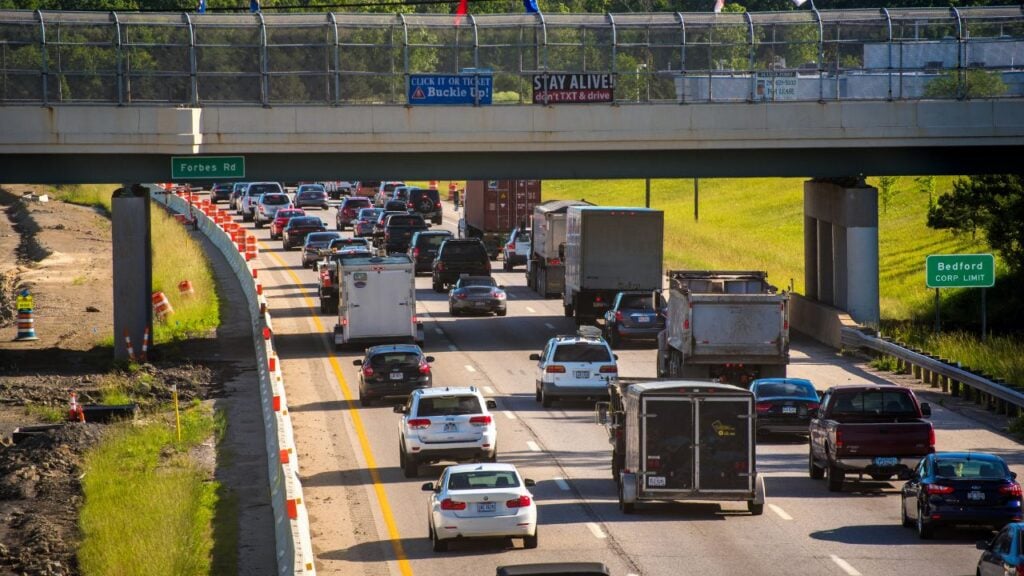
A new nationwide study skips past who dies in Ohio crashes and grades something else instead: How the state’s drivers behave behind the wheel.
Ohio recorded 1,125 traffic deaths last year, the fourth straight year that number has dropped, yet the new ranking still finds plenty to critique.
The States With the Worst Drivers, Ranked. Here’s Where Ohio Falls
9 Kroger Mistakes Ohio Shoppers Make Every Week

A Kroger Plus card scan at the register feels like the whole discount, and that’s usually the first mistake Ohio shoppers make.
These are the Kroger habits costing Ohio households money every single week.
