
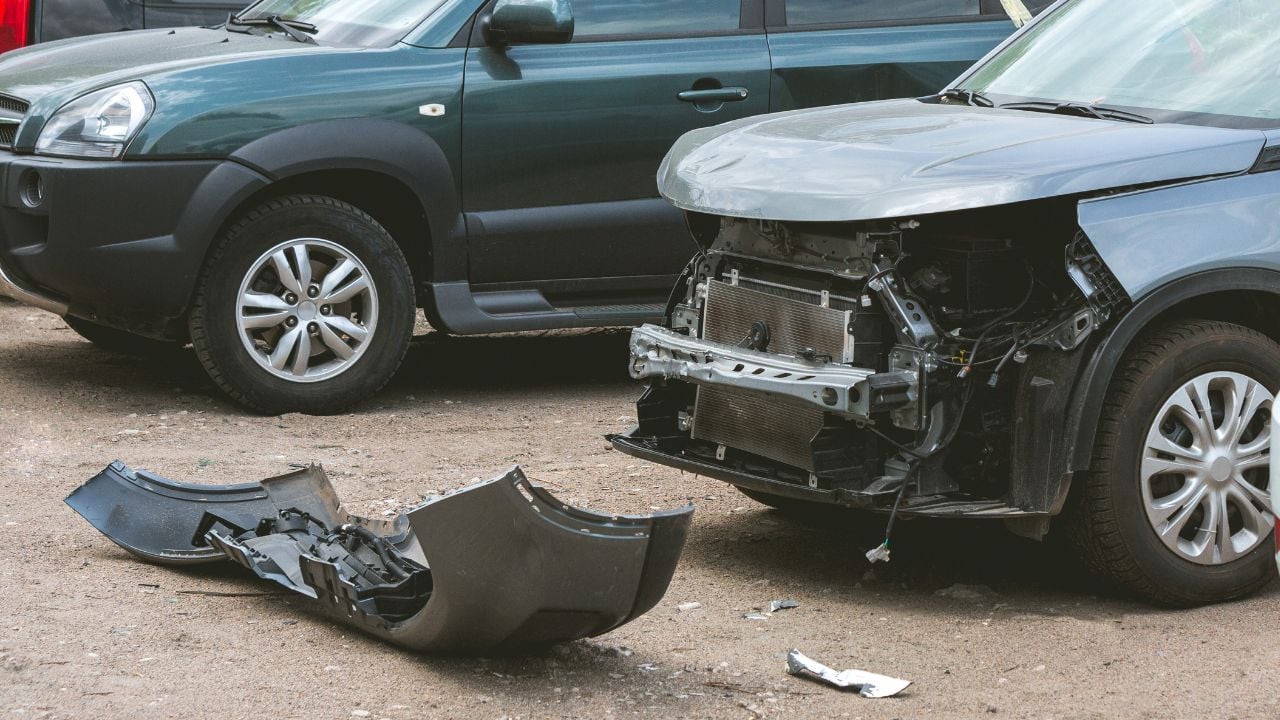
7 Precautions Ohioans Should Take After a Fender Bender in a Store Parking Lot

A parking lot is the only place where a driver moving at walking speed can still ruin your afternoon.
On Black Friday, there are more bumpers than usual in every store lot, and they’re all hunting for the same open space.
But what you do in the first few minutes after the crunch matters more than the dent.
Here are the precautions Ohioans should take after a fender bender in a store parking lot.
Note: This is general information, not legal or insurance advice. Traffic and insurance rules are subject to change.
1. Stopping for Even a Scratch
You might assume a crash in a store lot is a looser matter than a crash on a street.
Ohio’s duty-to-stop law says otherwise, since it covers crashes on any public or private property other than a public road or highway.
That means you have to stop at the scene when a crash hurts someone or damages property, and the law sets no minimum dollar amount for the damage.
That rules out slipping away from a crowded Black Friday lot.
Driving off is a first-degree misdemeanor.
A conviction brings a mandatory license suspension, and the judge can’t suspend any of the first six months of it.
2. Swapping Information
Once you’ve stopped in a parking lot, the same law spells out what you owe the other driver.
If the other driver or anyone else asks, you have to give your name and address, plus the owner’s name and address if you’re driving someone else’s car.
You have to give the vehicle’s registration number and show your driver’s license if you have it on you.
So keep your license within reach, since a store lot is a bad place to start digging through a bag for it.
3. Notes for Parked Cars
If you clip an empty parked car in a store lot, the duty-to-stop law tells you to leave a note in a conspicuous place on that car.
That note has to carry your name and address, your vehicle’s registration number and the owner’s name and address if you’re driving someone else’s car.
The law says to attach it securely, so tuck it under a wiper blade or tape it down.
If you skip the note, you’ve broken the same law as a driver who speeds off.
Psst! How much do you know about Ohio’s rules of the road? Take our quiz and see how many you can get right.
Quiz
Ohio Road Rules IQ
Answer these questions on Ohio’s rules of the road. We bet you can’t get them all right. Prove us wrong?
Ohio’s move-over law tells drivers to change lanes or slow down near a stopped vehicle with flashing lights. Which of these vehicles is on the list?
4. 24-Hour Police Report
If you didn't hand over your information at the scene of a parking lot crash, Ohio's duty-to-stop law gives you 24 hours to give it to the police.
The report goes to the city or village police department where the crash happened, or to the county sheriff if the parking lot is outside city or village limits.
So if the other car pulls away before you can swap details, the 24 hours are yours to track.
5. Building a Paper Trail
A parking lot crash won't leave the same paper trail a street crash does.
On a public road, police who investigate a crash have to send the state a report when it hurts or kills someone or causes more than $1,000 in damage.
A parking lot doesn't get that treatment because Ohio's crash-report rule leaves private property out of its definition of a motor vehicle accident.
That leaves you to build the record yourself, so photograph both cars, the plates and the other driver's insurance card.
Then call your insurer, since Ohio's Department of Insurance tells policyholders in its auto guide to promptly report any accident to their agent or company.
6. Proof of Insurance
The duty-to-stop law that covers store lots asks a driver convicted of driving off for proof of insurance.
A court may order a driver who can't show it to pay up to $5,000 for the crash's economic losses.
A current card in your glove box can head off that bill.
Ohio's Bureau of Motor Vehicles (BMV) says a driver who can't show proof of insurance at the time of an accident gets a non-compliance suspension.
For a first offense, that suspension stays until you carry a certificate of insurance, known as an SR-22, for a year and pay a reinstatement fee.
7. Uninsured Driver Report
If the other driver in a parking lot crash turns out to have no insurance, Ohio law allows you six months to tell the BMV.
Anyone involved in the accident can file a written report alleging a driver or owner was uninsured.
The BMV then mails the other driver a notice, and that driver has 30 days to send proof of coverage.
So if the other driver wouldn't show you an insurance card, this is your next move.
Ohio's uninsured-driver reporting law doesn't say the accident has to happen on a public road, so a lot crash may qualify.
The accident does have to hurt someone or cause more than $400 in damage, though.
Splitting the Blame
With no state crash report after a parking lot crash, the photos from your paper trail can matter most when both drivers share the blame.
You can still collect from the other driver as long as your share of the blame isn't greater than the combined blame of everyone else involved.
The court then cuts what you collect by your percentage of the blame.
Say you're 20% at fault for a crash that causes $3,000 in damage to your car.
That 20% costs you $600.
The Court Route
When the drivers and their insurers can't agree, even a parking lot crash can end up in court.
Ohio law allows you two years to file a lawsuit over an injury or damage to personal property, such as a car.
If your repair bill is small, a small claims court may be your route.
Ohio's small claims courts take cases up to $6,000.
8 Rules About a Neighbor's Tree That Ohio Homeowners Get Wrong

Would a branch over your driveway turn into a standoff with your neighbor?
These are the tree rules that many Ohio homeowners get wrong, and the disputes they can cause.
8 Rules About a Neighbor's Tree That Ohio Homeowners Get Wrong
9 Lines an Ohio Landlord Can't Legally Cross With a Renter in 2026

A lease can feel like a take-it-or-leave-it deal when rent already takes a big bite of your paycheck.
How many of the terms in yours would hold up if you ever questioned them?
9 Lines an Ohio Landlord Can't Legally Cross With a Renter in 2026
