
7 Reasons Florida Retirees Are Packing Up And Heading North

For decades, the transplant arrow pointed one way. Retirees packed their car, aimed it at Florida, and never looked back.
That arrow is starting to flip.
Florida is still a magnet for retirees, but the famous migration has cracked.
Net domestic migration to the state fell from 311,000 in 2022 to just 22,500 in 2025, a 93 percent drop that knocked Florida from the number one destination all the way down to number eight.
Many longtime residents are leaving Florida during their golden years.
Here’s what’s pushing them out.
Home Insurance
Florida has the highest home insurance premiums in the country, running roughly three times the national average.
Years of hurricanes, lawsuits, and insurers fleeing the state sent rates through the roof.
In a 2024 survey, 70 percent of Florida homeowners said their costs had jumped, or their coverage had changed, and about one in five Floridians now skips insurance altogether because they can’t afford it.
In some coastal pockets, annual premiums now top $10,000, more than a few retirees pay for a year of groceries.
There’s a sliver of good news.
Reforms have slowed the increases, and a few carriers are even trimming rates for 2026.
But “slightly less brutal” is cold comfort when you’re on a fixed income and your premium still dwarfs what the kids pay up north.
The Hurricanes Never Let Up
Three of the costliest storms in Florida’s history hit in just three years.
Hurricane Ian flattened Southwest Florida in 2022 with nearly $115 billion in damage. Then Helene and Milton struck back to back in 2024, adding more than $100 billion between them.
For retirees, the cost goes beyond money.
There are the evacuation routes, the boarded-up windows, the months of repairs, and the dread that creeps in every June when the season opens.
The numbers tell the rest.
Between 2024 and 2025, Pinellas County lost about 12,000 residents, the steepest drop of any county in the nation except Los Angeles, with the storms a big reason why.
At some point, the beautiful view stops being worth the white knuckles.
The Condo Assessment Shock
This one hit Florida’s retirees square in the wallet.
After the 2021 Surfside collapse killed 98 people, the state passed a law requiring older condo buildings to inspect their structures and fully fund their repair reserves.
The safety logic is sound. The bills are staggering.
Monthly condo fees jumped by $500 to $1,000 in many buildings, and one-time special assessments have run from tens of thousands of dollars to well over $100,000 per unit.
For an 80-year-old living on Social Security, a surprise six-figure repair bill is a catastrophe.
Some owners have had to sell their condos or go back to work just to cover it.
The market noticed.
The median Florida condo sale price fell about 6 percent in a single year, as buyers backed away from older buildings with murky finances and the threat of the next big bill.
A 2025 law softened the blow a little.
For many, the damage was already done.
Property Taxes Keep Climbing
No state income tax was always Florida’s big selling point.
But property tax bills are good at erasing the savings.
As home values exploded during the boom, so did the assessments behind Floridians’ tax bills.
In Tampa and Jacksonville, the typical property tax payment jumped nearly 60 percent between 2019 and 2025.
Miami’s climbed about 48 percent.
As one Redfin economist put it, the rising tax bill is the last straw for some buyers, who realize the income-tax savings get swallowed whole.
That increase is roughly double the national pace over the same stretch.
Florida voters approved a modest homestead break in 2024 to take a little sting out of it.
Still, when your tax bill keeps climbing while your income stays flat, the pull of a cheaper state starts to grow.
The Summers Are Brutal and Getting Worse
Everyone expects Florida to be hot. Lately, it’s been something else entirely.
The summer of 2023 was the hottest ever recorded in Florida, with July and August each setting all-time state temperature records.
Ocean water off South Florida hit a hot-tub-like 101 degrees.
It hasn’t cooled off much since. Four of the hottest years on record have all landed in the past five, and forecasters now routinely warn of heat-index readings near 110 degrees.
The heat does more than ruin a round of golf.
Overnight lows that hang in the 80s mean the body never fully cools down, which is dangerous for older adults.
When the porch is too hot to sit on for half the year, paradise loses some of its shine.
Paradise Got Crowded
The very boom that made Florida irresistible also packed it to the gills.
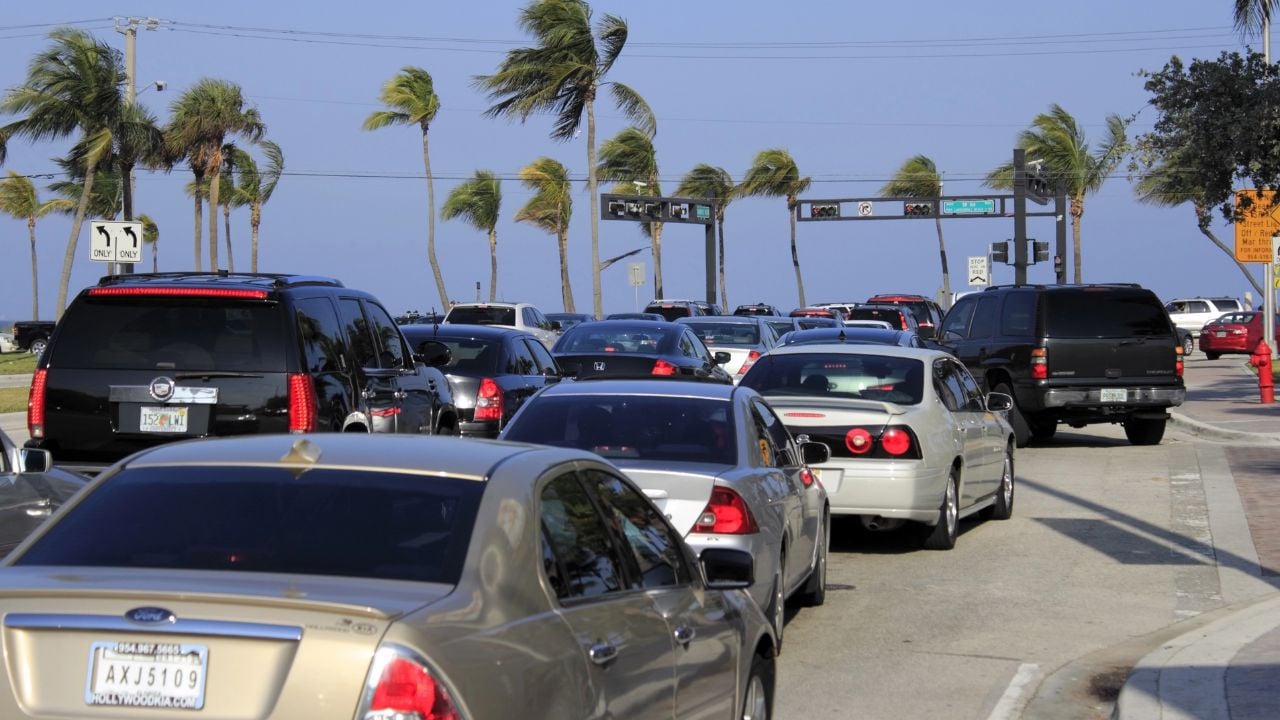
The state now holds nearly 23.5 million people, up by millions in just a few years, and you feel every one of them on I-95 at rush hour.
The sleepy beach towns and easy drives that drew retirees in the first place have given way to traffic jams, construction cranes, packed restaurants, and barrier islands stacked with new high-rises.
For folks who remember a sleepier Florida, the trade feels lopsided.
More crowds, more concrete, and less of the charm they signed up for.
Sometimes the place you fell in love with changes so much it stops feeling like home.
Cashing Out Finally Pays Off
Here’s the reason that turns a complaint into a moving van.
Florida home prices climbed about 60 percent over five years, which means longtime owners are sitting on a mountain of equity.
Sell that appreciated Florida house, move to Tennessee, Georgia, or the Carolinas, and you can often buy a comparable home, pocket the difference, and slash your insurance and tax bills in one move.
Add in the pull of grandkids who live up north, and for a lot of retirees, the decision makes itself.
The house that once tied them to Florida becomes the very thing that frees them to leave.
For a generation that came south chasing affordability, the irony is hard to miss.
The cheaper, easier life they once found in Florida is now waiting somewhere else.
Where They’re Landing Instead
So where does a Florida retiree go?
Mostly north and a little inland, to states that offer warm-ish weather without the hurricane-and-insurance headache.
The Carolinas top the list.
South Carolina was the nation’s fastest-growing state in 2025, and North Carolina wasn’t far behind, both soaking up transplants drawn by mild winters, lower costs, and mountains within driving distance.
Georgia and Tennessee pull plenty of movers too, offering Southern warmth, no estate tax, and home prices that feel like a relief after Florida’s.
Texas, Idaho, and Utah round out the list of states now outdrawing the old retirement king.
Even Alabama outgained Florida in net domestic migration last year, a sentence that would have sounded impossible a decade ago.
The Sunshine State isn’t emptying out.
But for a growing number of retirees, the grass, and the math, looks greener a few states north.
6 Florida Towns Where $2,071 a Month Is Enough to Retire Well

Everyone says you can’t retire on Social Security by itself anymore, with the average Social Security retirement check coming to $2,071 a month in 2026.
That’s not entirely true in Florida.
Here’s where the math still works in the Sunshine State.
6 Florida Towns Where $2,071 a Month Is Enough to Retire Well
11 Florida Programs for Seniors That Almost Nobody Signs Up For

Many Floridians assume senior benefits start and end with Medicare and Social Security.
But the state runs a second layer of help, and a startling amount of it sits untouched.
11 Florida Programs for Seniors That Almost Nobody Signs Up For
