
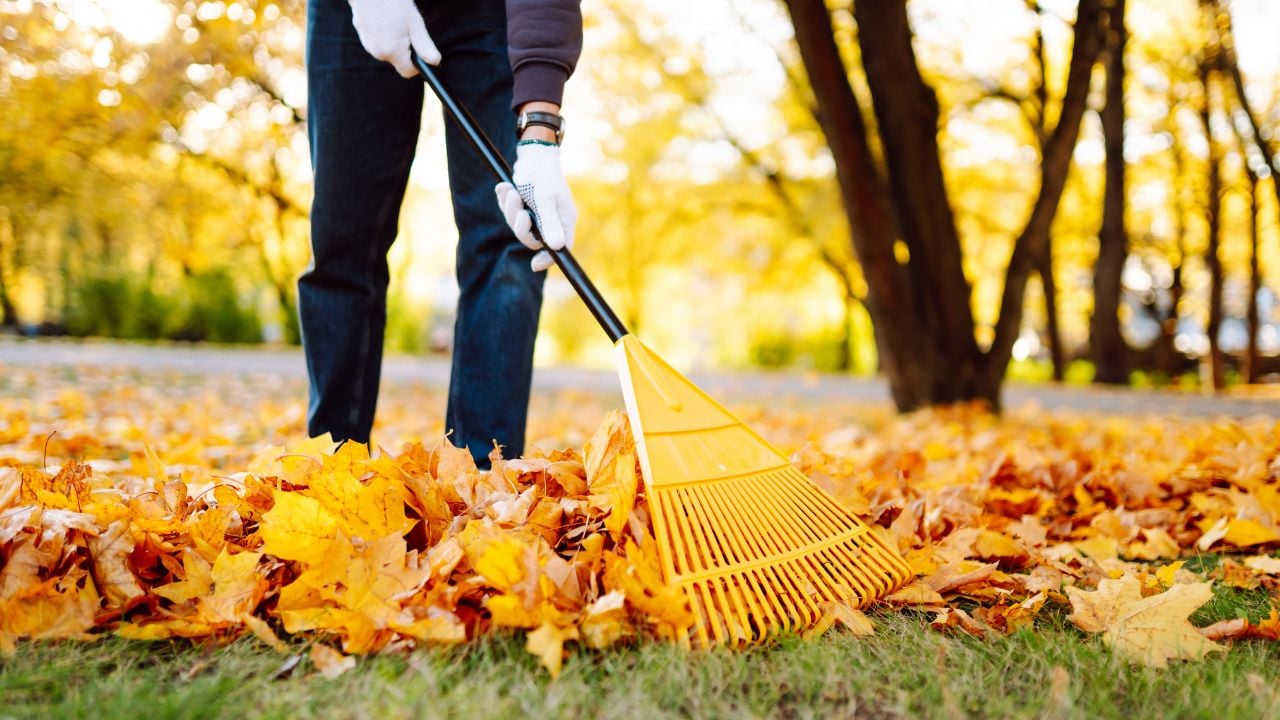
7 Rules About Fallen Leaves That Illinois Homeowners Get Wrong

The leaves are coming down faster than you can rake them.
What Illinois homeowners can do with that pile depends on the county, the town and even the bag you use.
Here’s how to handle this year’s leaves without breaking the rules.
Note: This is general information, not legal advice. Burning, pickup and dumping rules differ by community and are subject to change, so confirm the current requirements with your village, city or county.
1. Burning Line at 400,000 Residents
Illinois lets you burn fallen leaves on the property that produced them, except in any county with more than 400,000 residents.
Cook County is past that line, with 5,275,541 people in the 2020 census.
Below it, state law also lets you burn leaves at a site your local government supervises.
But the Illinois Environmental Protection Agency says local ordinances may be more restrictive than state law, so your county or village can still say no.
Many homeowners know the state rule and miss the local one.
What Counts as Landscape Waste
Fallen leaves count as landscape waste, along with grass, weeds, brush, branches and other yard trimmings, according to the Illinois EPA.
If you live in or within a mile of a town with 1,000 or more people, it is illegal to burn anything except landscape waste.
Commercial waste, food and its packaging, furniture, construction debris and tires can never be burned.
2. Lake County’s Year-Round Leaf Burn Prohibition
Lake County’s open-burning ordinance, effective June 1, 2022, prohibits burning leaves and grass in unincorporated areas at all times.
The county is also over the state’s 400,000-resident limit on burning fallen leaves, with 714,342 people in the 2020 census.
Sticks, branches and tree limbs follow a different calendar, November 1 through March 31.
Because the county lists leaves as non-woody yard waste, that window doesn’t cover the leaves in your yard.
If you spot suspected burning in an unincorporated area, call the Lake County Open Burning Hotline at 847-377-2136, while the burning is happening.
3. McHenry County’s Weekend Burn Window
McHenry County had 310,229 people in the 2020 census, so it falls below the state’s 400,000-resident limit on burning fallen leaves.
Its open-burning ordinance still limits supervised burning of dry landscape waste to Saturdays and Sundays in April, May, October and November, from dawn to dusk.
The weekend of October 24 and 25 falls in the October window.
Your pile needs 100 feet of space from a house and 50 feet from sheds, garages or other outbuildings.
If wind speeds exceed 10 mph, the county prohibits burning.
Recreational fires can’t include leaves, grass or shrubbery clippings, either.
The pile itself can hold only landscape waste from your property.
4. Leaves in the Street
Palatine tells you to rake fallen leaves into the street, about 12 inches from the curb, for pickup.
Put them out no earlier than 4 p.m. the day before your scheduled collection and no later than 7 a.m. that day.
The village won’t pick up leaves raked just over the curb edge or left on the parkway, since leaf machines can damage it.
One Chicago alderman’s office tells residents the opposite: It’s illegal to rake, blow or move leaves into city streets.
Leaves in the street can clog sewer drains and slow street sweeping.
5. Yard Waste Bag Rules
In South Elgin, fallen leaves belong in standard brown kraft yard waste bags or in containers clearly marked yard waste.
The village also collects small bushes, brush and branch clippings if you bind them with string or twine in bundles no longer than four feet.
Chicago’s yard waste program covers leaves, grass clippings, branches, brush and garden waste.
Chicago asks you to leave yard waste in the alley or at the curb, bagged separately from your garbage and your recycling.
Psst! How ready is your yard for fall cleanup? Run through this checklist and see where you stand.
6. Landfill Ban Since 1990
Fallen leaves count as landscape waste, and the Illinois EPA says landscape waste has been banned from landfills since July 1, 1990.
The list of alternatives starts with leaving leaves on your lawn as a nutrient and mulching them for lawn and garden use.
You can also take them to a permitted compost facility, join a community landscape waste collection or build an on-site household compost bin.
7. Forest Preserve Dumping Ban
Does a pile of fallen leaves in a forest preserve count as dumping?
The Forest Preserves of Cook County say you shouldn’t dump leaves, yard clippings, fallen branches or any yard waste in the preserves.
If you dump leaves there, you can be fined up to $500, with additional charges if removal costs more.
The Forest Preserve District of DuPage County sets fines of $250 to $500 under General Use Regulation Ordinance 20-076.
Grass clippings and leaves are among the debris visitors can’t dump.
A person whose dumping damages district property also owes full restitution.
Princeton and Centralia Burn Calendars
Princeton and Centralia each publish a burning calendar for dry leaves, and the two don’t match.
Princeton’s open-burning ordinance lists April 1 to May 1 and October 1 to November 30 as windows for landscape waste, from 7 a.m. to 5 p.m.
No burning is permitted on Mondays or Fridays.
The fire chief can restrict burning days further when weather or other conditions turn unsafe.
Your fire has to stay at least 25 feet from any structure or vehicle.
Centralia works by weekend instead, permitting open burning of landscape waste on each weekend in September, October and November except the Halloween parade weekend.
On those weekends, burning runs from 6 a.m. to 6 p.m. on Saturday and Sunday.
The city’s definition of landscape waste covers dry leaves and excludes wet leaves and grass clippings.
Large accumulations of landscape waste in Centralia need a permit, which costs $100.
If you burn outside Centralia’s schedule, a first violation brings a written warning.
Later violations are issued an ordinance violation ticket, and a person whose illegal fire the city responds to may owe a $200 cost recovery fee.
6 Reasons Illinoisans Keep Crossing Into Missouri and Not Going Back

Many Illinoisans live close enough to cross into Missouri for the day.
If you live near the border, you may have a favorite side.
6 Reasons Illinoisans Keep Crossing Into Missouri and Not Going Back
9 Router Settings That Leave an Illinois Home Exposed

Some of the cyber crime that hits Illinois residents starts at home.
These are the router settings that leave an Illinois home exposed.
