
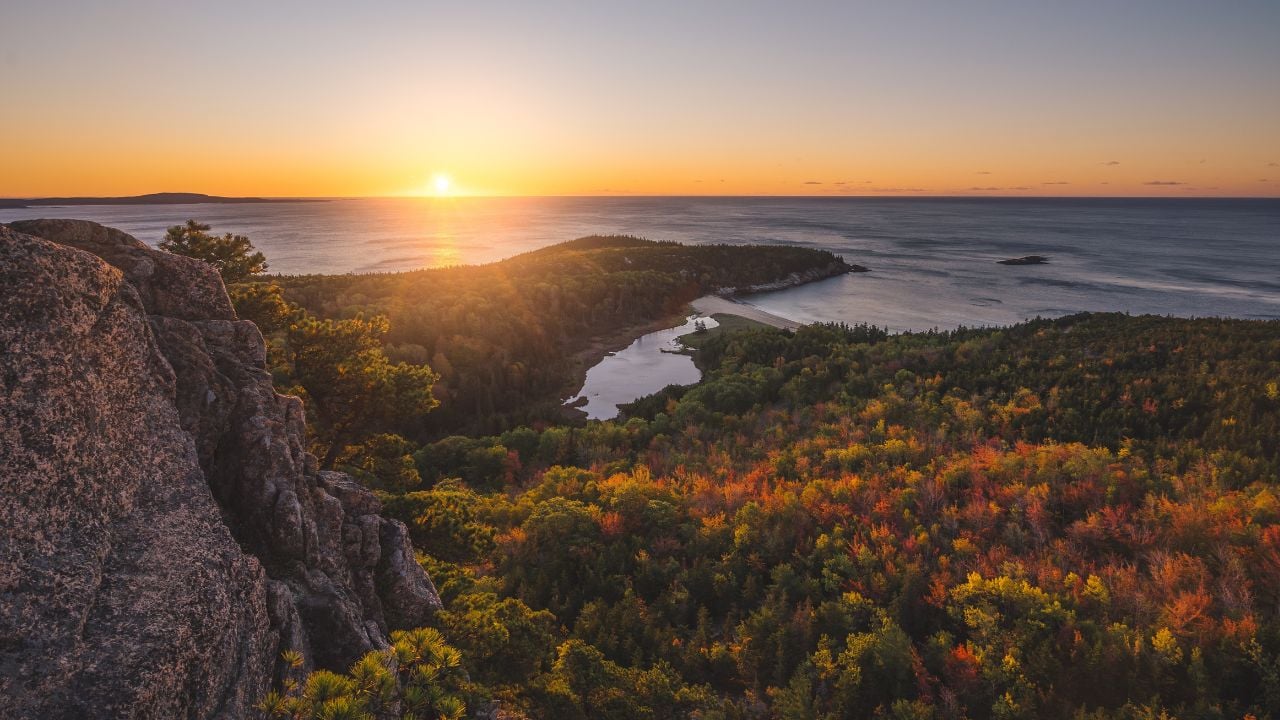
7 Signs Fall Has Taken Over a Coastal Maine Town

If you’ve only visited coastal Maine in the summer, you’ve met the town at its busiest.
Come back in the fall, and you’ll feel like you’re getting to know it all over again.
These are the signs fall has taken over a coastal Maine town, in roughly the order they arrive.
1. The Leaves Peak Later Than the Rest of Maine
Fall color moves from the interior toward the coast as the season goes on, so a coastal town’s hills hold their green well after inland Maine has already turned.
The coast runs late.
Maine’s Department of Agriculture, Conservation and Forestry puts peak color along the coast at mid-October through the end of the month, weeks behind the state’s northern and inland counties.
Visitors chasing the brightest color on a coastal trip often arrive too early, expecting the same timing they saw on a foliage map for the mountains.
Interior Maine Turns Nearly a Month Earlier
The same shades that peak around Maine’s mountain and lakes regions in late September don’t reach the coast for another three to four weeks.
That lag is why a coastal Maine town can still look like summer on the state’s official foliage map while the interior is already past peak.
2. The Windjammers Stop Sailing for the Year
Coastal Maine’s windjammer fleet runs its schooners out of harbors like Camden and Rockland from June through early October.
Then the sails come down.
Once that season ends, the tall ships that fill the harbor all summer disappear from the water until the following June.
The mooring field looks noticeably emptier within days, and the harborside benches that were full of ticket-holders in August sit empty along with it.
3. The Lobster Boats Follow Their Catch Into Deeper Water
Lobsters move into deeper, warmer water offshore as the coast cools in the fall, and the boats follow them out.
The fleet follows the water.
Much of the state’s lobster fishery runs from late June into late December, so a coastal town keeps seeing working boats through the fall even as the pleasure boats thin out.
The trap buoys that dot the harbor in summer start clustering farther offshore, tracking the same colder water the lobsters moved into.
The docks that once had a line of tourists watching the catch come in thin out along with them.
What is left mostly belongs to the working boats and the seagulls that trail them, waiting for whatever comes up in the traps.
4. Seasonal Shops and Restaurants Start Going Dark
Many of the shops and restaurants that carry a coastal town through summer are seasonal by design, built to run on tourist traffic.
The window signs change first.
Once the Columbus Day weekend crowd clears out, a lot of those storefronts cut their hours or close for the season.
A Main Street that was packed in July can look half-shuttered by November, with handwritten see you next spring signs taped inside more than one window.
Psst! How well do you know a Maine town’s fall routine? Take the quiz and find out.
Quiz
How Well Do You Know a Maine Town in the Fall?
See how many of these coastal fall signs you can call correctly.
By what point does fall foliage typically peak along Maine’s coast?
5. The Harbor Empties Out as Boats Come Ashore
A small coastal harbor packed with pleasure boats all summer starts clearing out as owners pull boats and moorings ahead of winter ice.
The water opens back up.
By late fall, a harbor that once needed a mooring waitlist can sit nearly empty. Boatyards around the coast fill up instead, with hulls propped on stands for winter storage where summer slips used to be.
6. Acadia Closes Its Loop Road to Cars
On the Maine coast, Acadia National Park closes the Park Loop Road to motor vehicles for the season, typically around December 1, unless early winter weather forces the closure sooner. Acadia posts the exact date on its own website each year, since an early snow can move it up.
Cars lose the loop first.
After that, the road stays open to cyclists and walkers, and a drive that thousands of leaf peepers took by car all fall becomes a much quieter walk.
7. The Coast Quiets Down to Its Year-Round Pace
A coastal town runs through this whole list before winter sets in for good.
A longtime local could probably tell a visitor which week of October it is just by looking around at the harbor and the storefronts, no calendar required.
By the time the leaves drop, the boats are out, and the shops are shuttered, the transformation is complete.
A coastal town then settles back into the pace it keeps the other eight months of the year.
Year-round pace returns.
The crowds are the last thing to go, and the first thing the town notices missing once they do.
Storefront parking opens up, the harbor goes still, and the same streets that took ten minutes to cross in August clear in under two. Year-round residents, the same people who stayed through every windjammer season and every lobster boat's last run, get their town back until spring brings the whole cycle around again.
