
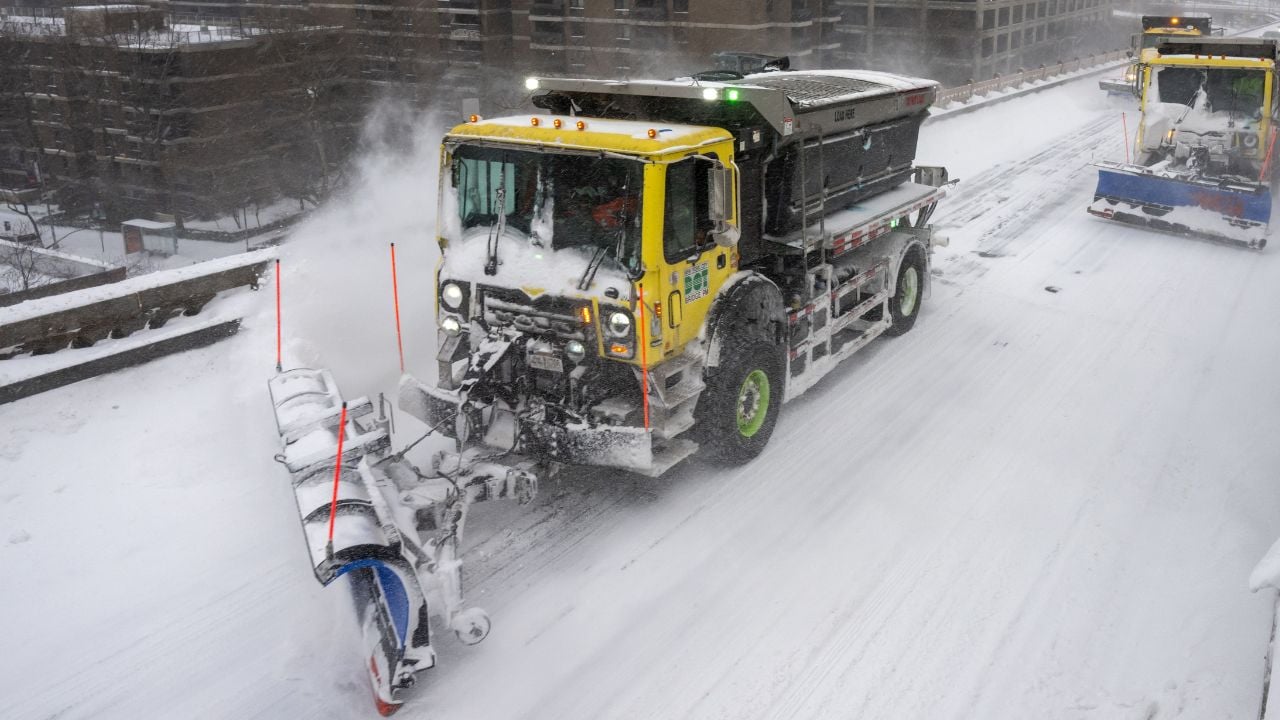
7 Snow Removal Rules That Catch New Yorkers Off Guard Every Winter

New York City’s Department of Sanitation logged more than 4,000 sidewalk-shoveling violations after a single storm this January.
Every city in the state gives you a different amount of time to clear that sidewalk.
These are the snow removal rules that catch New Yorkers off guard every winter.
Note: This is general information, not legal advice. Snow removal rules and fines vary by city and are subject to change.
1. Buffalo’s Early Shovel Deadline
Buffalo homeowners get a tighter shovel window than many people expect.
The city’s code sets the residential deadline at 9 a.m. the morning after snow falls, while commercial and licensed properties get a full 24 hours once the snow stops, under Buffalo’s Code of Ordinances, Chapter 413.
Nine a.m. comes fast after an overnight storm.
If a property owner misses it, Buffalo can fine them up to $100, with the city’s Department of Public Works handling only a short list of designated commercial strips.
Buffalo’s enforcement numbers explain why getting cited can feel like bad luck: The city fielded 2,200 sidewalk-snow complaints through its 311 system between the 2020-21 and 2024-25 winters, yet inspectors issued just 669 violations.
Renters aren’t off the hook.
Buffalo puts the legal duty on the property owner by default, and a lease can shift it to a tenant only when the lease itself says so.
2. Rochester’s Uncapped Cleanup Bill
Rochester, in western New York, funds a municipal sidewalk plow through a charge on every resident’s property tax bill, based on the home’s street frontage.
The coverage is thinner.
Rochester’s commissioner of environmental services describes the municipal plow as extra help layered on top of each owner’s duty, not a replacement for it.
That extra service kicks in only once snow tops 4 inches.
Below that threshold, the city’s code lets the Commissioner of Environmental Services send a crew to clear a sidewalk once snow or ice has sat there for 12 hours.
The city then bills the property owner for the full cost of that work, plus a 10% surcharge, with no maximum written into the code.
An owner who assumes the tax-funded plow already has them covered can be startled to learn the individual clock is still running underneath it.
An owner who doesn’t pay watches the bill turn into a claim the city can file and collect the same way it collects an unpaid tax.
3. New York City’s Four-Hour Clock
New York City gives property owners just four hours to clear a sidewalk once snow stops falling, and the overnight hours between 9 p.m. and 7 a.m. don’t count against that clock.
It’s the whole window.
Administrative Code 16-123 backs a fine that starts at $10 to $150 for a first violation and rises to $250 to $350 for a third one in the same year.
New York City’s Department of Sanitation issued more than 4,000 violations after a single January storm this year.
4. Albany’s Escalating Fine Ladder
Albany runs a clear, escalating fine ladder for an uncleared sidewalk.
City code gives property owners 24 hours after a snowfall ends to clear their walk.
The fine rises from $100 for a first violation to $200 for a second and $300 for every one after that in the same calendar year.
Albany can also send a crew and bill the owner a minimum of $75 for the job, added straight to the property tax bill if it goes unpaid.
The ladder isn’t theoretical.
A local review of Albany’s enforcement data found the city issued 342 violations between October 2014 and May 2017, across three winters.
One of those winters, 2015-16, saw zero recorded violations amid unusually light snow.
The other two added up to more than $64,000 in fines and cleanup costs billed back to property owners.
Psst! How snow-removal-ready is your New York property? Run through this checklist and see where you stand.
5. Syracuse’s Lake-Effect Loophole
Syracuse gives property owners until 6 p.m. the evening after a snow event to clear their sidewalk, according to the city’s posted winter sidewalk rule.
Syracuse’s problem is deciding when a snowfall ends.
Lake-effect bands can drop snow on and off for days without one clean break.
That’s where confusion starts.
A landlord guide published by renpro.org notes that Syracuse code enforcement officers have some discretion over timing, generally treating the clock as starting after the last measurable accumulation.
First-time fines run $100 for a property owner, or $150 for a commercial snow-removal contractor.
6. New York City’s Liability Split
New York City decides who pays for a slip-and-fall with a rule that catches many shovelers off guard.
Where the sidewalk sits decides who’s liable.
Administrative Code 7-210 shifts civil liability for a sidewalk injury from the city to the property owner next door.
Owner-occupied one-, two-, or three-family homes are the exception.
The city remains legally responsible for an injury claim at those addresses, even though the homeowner still has to shovel under the four-hour rule above or face that separate fine.
Landlords, corner lots, and multi-family buildings don’t get that break.
Those owners answer for a fall on their sidewalk the same way they’d answer for a fall inside their building.
The same code section reaches beyond injury claims and into real estate deals.
New York City’s Department of Transportation can repair a defective sidewalk itself and bill the owner, and an unpaid bill converts into a lien against the property after 90 days.
Real estate expediters in the city report sellers routinely learning about one of these liens for the first time when a title report surfaces it days before closing.
That surprise costs money.
New York City’s Two Separate Bills
New York City can charge a property owner twice over for the same missed shovel.
The sanitation summons, up to $350 under Administrative Code 16-123, goes to the city, and it lands whether or not anyone got hurt.
A slip-and-fall claim under Administrative Code 7-210 is separate money, paid to the injured person, and it only reaches the owners the residential exception doesn’t cover.
7. New York’s Obstructed-View Trap
New York drivers often believe a statewide law bans driving with a car buried in snow.
That law doesn’t exist.
State lawmakers have tried and failed to pass one for years.
The latest attempt, Senate Bill S1591, still sits unenacted in the Senate Transportation Committee.
New Jersey and Connecticut already have laws like the one New York keeps failing to pass, according to CBS New York.
New York does have a rule that reaches a snow-covered car, just not the one many drivers expect.
Vehicle and Traffic Law 1213 bars driving when anything obstructs a driver’s view of the road ahead.
New York traffic-ticket attorneys who track winter citations say officers apply that obstructed-view law to a windshield or rear window still caked in snow.
That citation can carry a fine of up to $150, plus a mandatory state surcharge and points on a license.
Getting pulled over under a law with a different name is still getting pulled over.
State troopers and local police can stop a driver on I-90 or the Thruway the moment snow blocks a windshield or rear window, not only after a crash.
A chunk that breaks loose and cracks a windshield two cars back can turn that stop into a reckless driving charge under Vehicle and Traffic Law 1212.
Fines for reckless driving run $100 to $300 for a first offense and rise to $1,125 for a repeat one.
7 Things New York Pet Owners Can Be Fined For
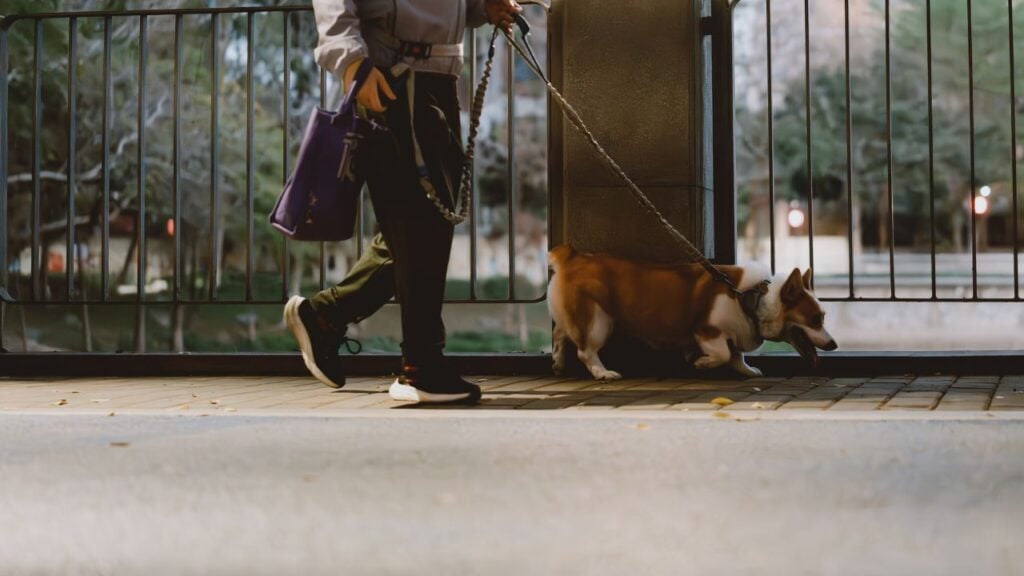
A lapsed dog license in New York sounds like a paperwork problem, not a legal one.
If you miss the renewal three times in five years, a judge can add jail time on top of the fine.
7 Things New York Pet Owners Can Be Fined For
8 New York City Trash Rules That Sound Fake but Aren’t
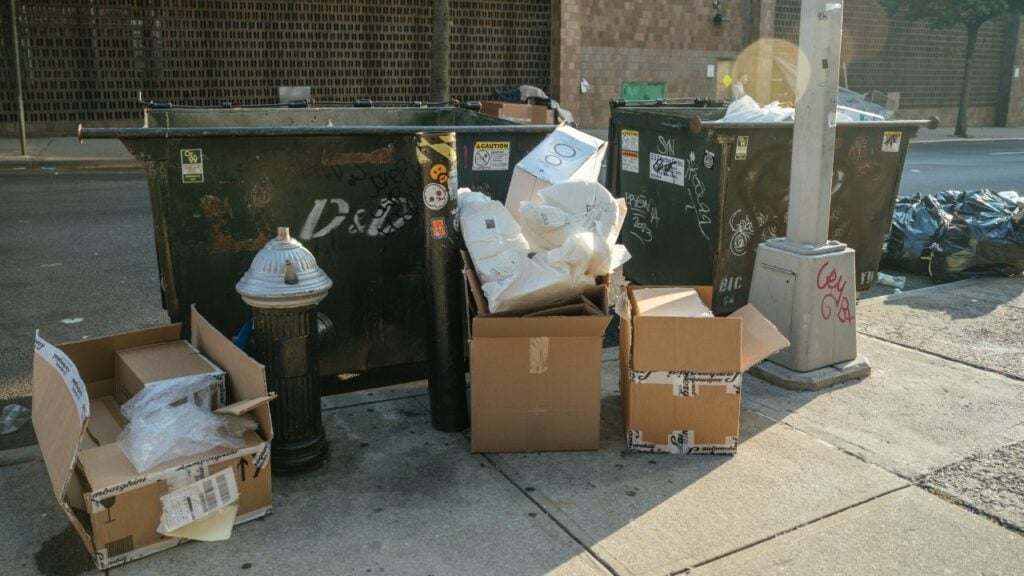
New York City sells an official trash can, and buying the wrong type can cost a building money in fines.
It’s rat-resistant by design and mandatory for certain buildings, one of eight New York City sanitation rules that sound made up until the Department of Sanitation’s website confirms them.
