
7 Things a Florida HOA Can’t Stop You From Doing in Your Own Yard

Roughly 9.5 million Floridians live under a homeowners association, close to half the state’s population.
That gives a board say over your paint colors, mailbox styles, and which way your garage door faces.
It doesn’t get the final word on everything, though.
Florida law protects a growing list of things a homeowner’s yard can hold no matter what your HOA board wants.
Note: This is general information, not legal advice. Association rules vary by community and are subject to change, so check your own governing documents.
1. Backyard Clotheslines
Florida’s renewable-energy law protects an old-school backyard clothesline, not just rooftop solar panels.
The statute names clotheslines right alongside solar collectors as renewable-resource devices an HOA can’t ban.
It’s written into the statute itself, not a workaround homeowners found.
An HOA rule banning a visible clothesline is a rule the association can’t enforce.
2. Native, Drought-Tolerant Landscaping
Florida-Friendly Landscaping is the legal term that protects a homeowner’s native plants and mulch beds from an HOA that wants a wall-to-wall lawn.
The rule traces back to a water-conservation statute defining drought-tolerant landscaping, and a companion law bars HOA governing documents from prohibiting it.
Rock beds, mulch, native shrubs, and drip irrigation all qualify.
That part isn’t up for debate.
An HOA can complain about the look.
It can’t force the grass back in.
Florida-Friendly Doesn’t Mean No Rules
Florida’s landscaping law doesn’t hand a homeowner a blank check on design.
An HOA’s architectural board can still require a review before the beds go in, set reasonable size and edging standards, and ask that the yard look intentional rather than overgrown.
What crosses the line is refusing the whole idea and demanding an all-turf lawn instead, since the law blocks requiring grass to the exclusion of drought-tolerant alternatives.
3. Artificial Turf Out of View
Artificial turf gets a pass from Florida HOAs too, as long as it stays out of the part of the yard nobody driving by can see.
A 2023 law, expanded in 2024, bars an HOA from restricting turf installed out of view from the street, an adjacent lot, a shared common area, or a community golf course.
A side yard hidden by a fence qualifies.
Not the front lawn.
The line is measured from the property’s own frontage, not from what the board thinks looks tidy.
4. Backyard Vegetable Gardens
A vegetable garden earns the same protection in Florida, though many homeowners have the rule backward.
Florida passed a separate 2019 law barring cities and counties from regulating a homeowner’s vegetable garden, and many people assume it covers HOAs too.
It doesn’t.
That 2019 law never mentions homeowners associations at all.
The protection that reaches an HOA is the same 2023 storage law covering artificial turf, which keeps a vegetable garden safe as long as it sits out of view from the street or a neighboring lot.
Plant it in the side yard behind a fence, and the association has no say.
Plant it in the front bed, and the old rules still apply.
Psst! How much power does your Florida HOA have over your yard? Run through this checklist and see where you stand.
5. Storing a Boat or RV
Florida homeowners can also keep a boat or a recreational vehicle (RV) on the property, as long as it stays out of sight.
The same 2023 storage law that protects artificial turf and backyard vegetable gardens covers a boat and an RV too, measured once again from the street, a neighbor’s lot, or a shared common area.
Tuck it behind a privacy fence or around the side of the house, and the HOA can’t touch it.
The driveway doesn’t get the same pass, though.
Leave it parked there in plain sight, and the association’s rules still apply like normal.
This fight shows up in HOA meetings across Florida, mostly settled by where the fence line falls.
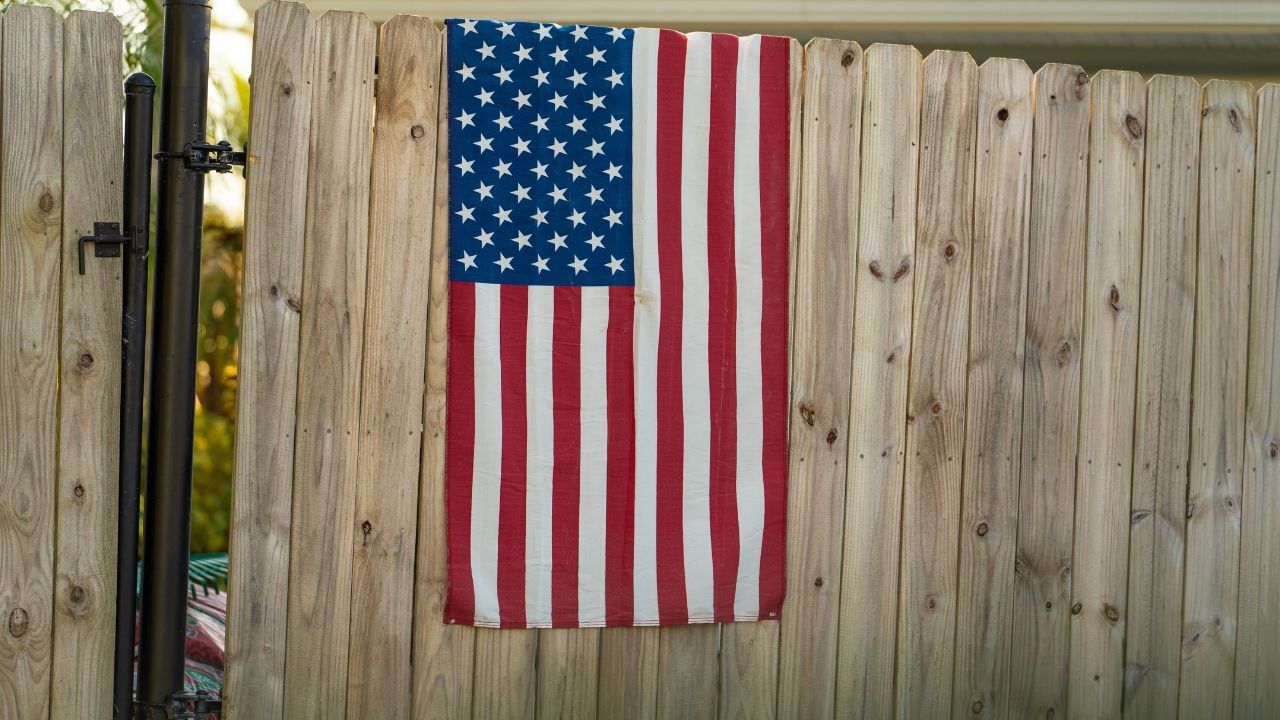
6. Flagpoles and Flags
Florida gives every homeowner the right to put up a freestanding flagpole as tall as 20 feet, no HOA sign-off required.
The flag law lets that pole fly one United States flag, sized up to four and a half by six feet, plus one more permitted flag of equal size or smaller.
The approved list covers the state flag, each branch of the military, a flag honoring prisoners of war and troops missing in action (POW-MIA), and flags honoring police, firefighters, paramedics, and other first responders.
An HOA can still enforce building codes and setback rules around where the pole goes.
No permission needed.
It can’t refuse the pole, and it can’t refuse the flag.
7. Backup Generators
Florida also keeps an HOA from blocking a homeowner’s backup generator once it meets code.
A 2024 update to the architectural-control law forces every association to adopt written hurricane-protection specifications covering exterior equipment like a fixed backup generator and its fuel storage tank, then bars the board from denying an application that follows them.
The board can still dictate the color, the screening, and exactly where on the property the unit sits.
It just can’t say no to the generator itself.
Rooftop Solar Panels
Florida homeowners associations used to be the biggest obstacle standing between a rooftop and a solar array.
Not anymore.
State law now bars any deed restriction, covenant, or HOA rule from prohibiting solar collectors outright, the same statute covered above.
An association can still pick the roof location, as long as the spot keeps the panels facing south or within 45 degrees of it.
What it can’t do is deny the application, and a homeowner who wins a court fight over it can collect attorney’s fees from the association.
Limits on Your HOA’s Fines
Florida caps how hard an HOA can hit a homeowner’s wallet, even for a violation the association is fully entitled to enforce.
With roughly 9.5 million Floridians living under one HOA or another, fine disputes are common enough that lawmakers rewrote the rules in 2024.
A fine now tops out at $100 a day and $1,000 total per violation, unless the community’s own governing documents allow more.
That’s the ceiling.
Before any fine sticks, the board has to give 14 days’ written notice and let the homeowner argue the case to an independent committee, not the board.
Two violations can’t be fined at all.
Trash cans left at the curb within 24 hours of pickup are one violation an HOA can’t touch.
Holiday lights left up too long are the other violation, as long as the HOA hasn’t already given a week’s written notice to take them down.
A fine under $1,000 in total can’t turn into a lien against the home, so the smaller violations that never reach that ceiling stay a bill, not a mark on the title.
Florida’s fine law also hands attorney’s fees to whichever side wins a court fight over an unpaid fine, so a board that loses can end up covering the homeowner’s legal bill along with its own.
9 Florida Insurance Discounts Homeowners Qualify For and Never Ask About
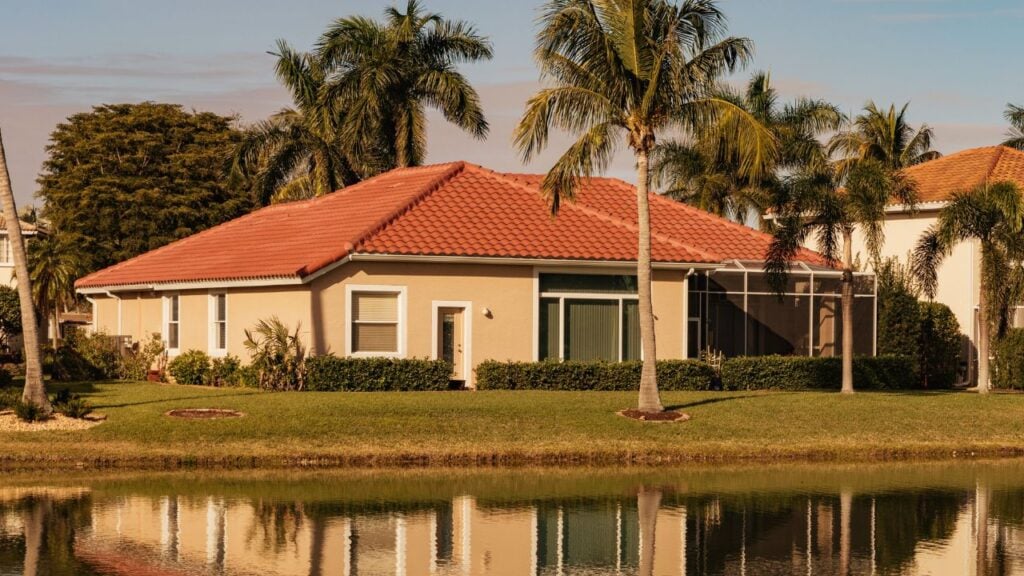
A homeowner in Cape Coral replaces the roof, adds a full set of shutters, and installs a water sensor by the water heater.
Then they never call their insurance agent about any of it, and the discounts sit unclaimed year after year.
9 Florida Insurance Discounts Homeowners Qualify For and Never Ask About
10 Florida Wildlife Rules People Break Just by “Being Friendly”
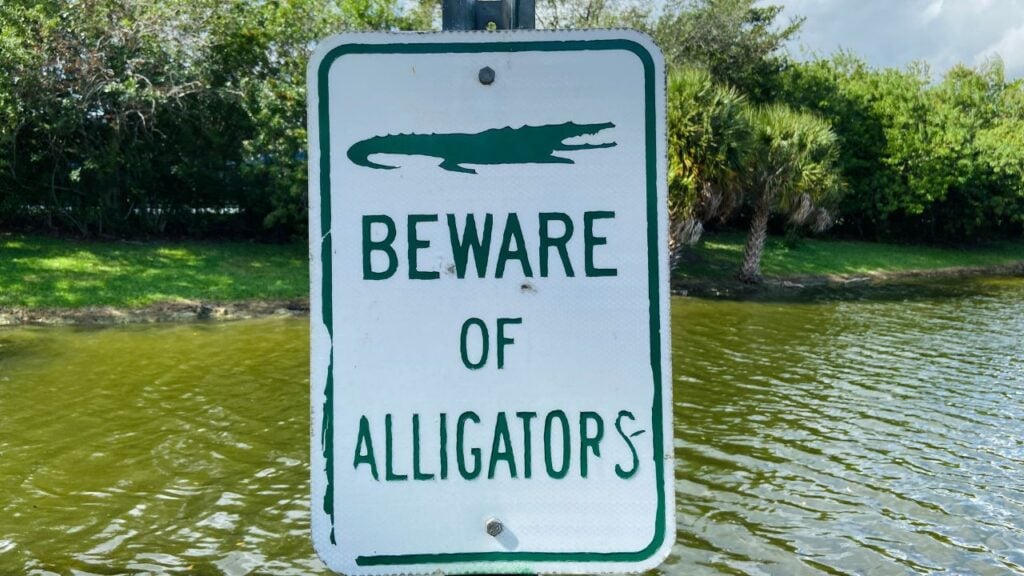
A stomped-on sea turtle nest in Miami Beach turned into a felony charge for a tourist in 2019.
The bond alone ran $5,000, and the nest wasn’t even the only Florida wildlife rule visitors break without realizing it.
10 Florida Wildlife Rules People Break Just by “Being Friendly”

What about motorcycle?
Why they refuse to let me bring in my motorcycle to park in my garage?