
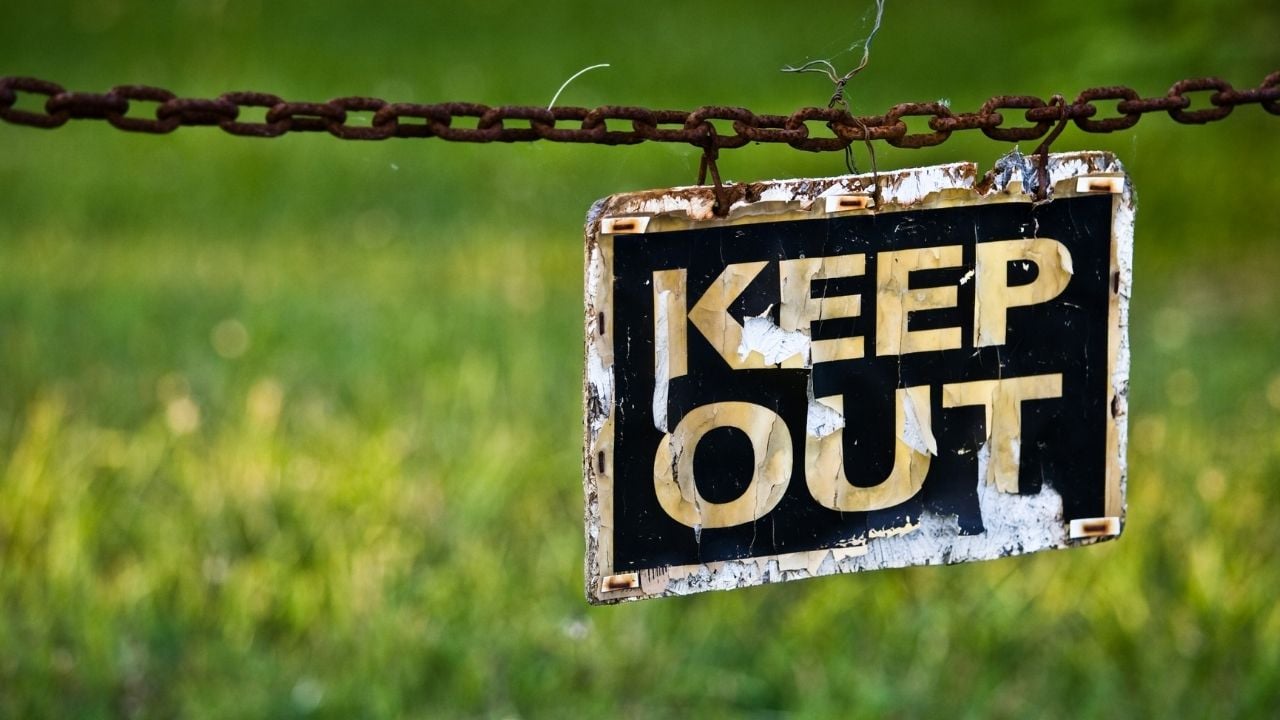
7 Things California Homeowners Can’t Legally Do to Someone Trespassing on Their Land

If someone you don’t know is cutting across your yard, your first instinct may be to handle it yourself.
California law often draws the line sooner than homeowners expect.
Here’s where it stops you before a tense moment turns into a legal problem.
Note: This is general information, not legal advice. California’s trespassing and self-defense laws are subject to change.
1. Deadly Force Line
California homeowners can’t use deadly force against someone just for trespassing.
The line is drawn around fear, not footprints.
Deadly force only holds up in court when the property owner reasonably believed the trespasser posed a threat of death or serious injury to someone.
Jurors weigh whether that belief was reasonable given everything the homeowner could see and hear in the moment.
Whether the danger turned out to be true after the fact doesn’t factor into that question at all.
Presence alone isn’t enough.
California’s Castle Doctrine covers an intruder who has entered the home, not someone standing out in the yard, and the state judges the two situations by different rules.
2. Booby Traps
California treats an automatic trap the same as a person pulling the trigger.
Rigging a hidden device to shoot an intruder is illegal, even in an empty house, and the case that settled it is the one from the intro.
It was a .22 pistol.
A mechanical trap can’t weigh a situation the way a person standing there could, so the law treats it as excessive force by default.
3. Scare Tactics With a Gun
Waving a firearm just to spook a trespasser off the lawn can be a separate crime.
Brandishing a weapon is a misdemeanor unless the person threatens death or serious injury to someone.
Up to a year.
The charge can escalate to a felony if the gun was loaded and the person on the other end happened to be an on-duty police officer.
A conviction can also carry a fine as high as $1,000 and put a homeowner’s gun rights at risk.
What “Reasonable Force” Weighs
California courts don’t measure reasonable force with a fixed rule.
They ask what a reasonable person would have believed necessary at that exact moment, given how the trespasser was acting and whether they refused to leave.
A homeowner’s response can escalate if the trespasser resists, but it has to rise and fall with the actual threat, not jump straight to the worst-case response.
4. Citizen’s Arrest Limits
A property owner can physically detain a trespasser in some situations, but the force used still has limits.
Penal Code 837 only allows a citizen’s arrest for a misdemeanor committed in front of the property owner, or a felony the owner has good reason to believe happened.
The roles can flip fast.
A citizen’s arrest that turns rough can expose the homeowner to assault or battery charges, on top of civil liability for the injury.
5. Holding Someone Too Long
Locking a trespasser in a room or a truck bed until police arrive sounds simple.
It isn’t always legal.
Any detention has to stay within a reasonable time and a reasonable manner, the same standard that limits how long a store can hold a suspected shoplifter.
Go past that, and a homeowner can face a false imprisonment charge instead of the trespasser facing anything at all.
A misdemeanor version tops out at a year in county jail and a $1,000 fine.
Add violence, menace, or fraud to how the detention happened, and it becomes a felony carrying up to three years, or four if the person held was elderly.
6. Skipping the Warning
California law expects a homeowner to ask a trespasser to leave before force enters the picture at all.
No warning, no clean case.
Jury instructions on ejecting a trespasser only justify force once the person has refused to leave or plainly won’t leave on their own.
A posted sign from years back doesn’t cover that moment.
The rule, numbered 3475 in the state’s official jury instructions, expects a request made at the time, not a general notice posted long before anyone showed up.
7. Damaging Their Belongings
Trespassing doesn’t cancel out a trespasser’s property rights.
Smashing a phone, keying a car, or tossing someone’s bag over the fence can turn a homeowner into the defendant.
The math flips fast.
Deliberately damaging a trespasser’s belongings can carry vandalism charges and civil liability, regardless of why that person was on the property in the first place.
Under $400 in damage still tops out at a year in jail and a $1,000 fine.
Cross that $400 line, and prosecutors can charge it as a felony instead, with fines running as high as $10,000.
Psst! See how many of these California trespasser myths you’d have gotten right.
The Sign Requirement
California trespassing law leans on the property itself, not just on what a trespasser knew.
Open, uncultivated land only counts as legally posted if signs go up at least every third of a mile along the boundary, plus at every road and trail leading in.
No signs, no case.
Three signs to the mile works out to one roughly every third of a mile, on every side of the property, not just the side facing the road.
Skip the postings on open land, and even a repeat trespasser can walk away on a first-offense fine of $75.
Cultivated or fenced land skips the sign rule, since a locked gate or a planted field already counts as clear notice under the same code section.
Process servers, licensed surveyors, and union organizers get a carve-out from all of it, sign or no sign.
10 Wellness Claims Californians Should Question Before Trying

Goop paid $145,000 in 2018 to settle a case over jade eggs marketed as a way to balance hormones.
The settlement stopped the ads, but the claim itself never went away.
10 Wellness Claims Californians Should Question Before Trying
4 Restaurant Behaviors California Employees Wish Diners Would Stop

A resold table at Funke in Beverly Hills once listed for $125 on a site built for flipping restaurant reservations.
The restaurant never saw a dollar of it, and California’s legislature banned the practice by a unanimous vote in late August.
4 Restaurant Behaviors California Employees Wish Diners Would Stop
