
7 Things From an Arizona Grandparent’s House Worth More Than You’d Guess

A 19th-century pair of Levi’s pulled from a Nevada mine sold at auction for more than $87,000 in 2022.
On jeans made before 1971, a capital E on the red tab is what separates a $10 pair from a five-figure one.
These are the things from an Arizona grandparent’s house worth more than you’d guess.
Note: This is general information, not tax or financial advice. Tax rules and dollar amounts are subject to change, so confirm the current figures with the Arizona Department of Revenue.
1. Sleeping Beauty Turquoise Jewelry
Sleeping Beauty turquoise takes its name from a mountain near Globe, Arizona, and the mine on that mountain shut down for good in 2012.
Nothing new has come out of the ground since.
Dealers reported the leftover rough rising 300 to 500 percent in price within a year or two of the closure, a jump National Jeweler reported in 2016.
The price never dropped.
Every stone on the market today, whatever setting it’s in, is over a decade old.
It’s now sold as old stock, since a fresh supply is no longer possible.
If your grandparent bought a ring or a squash blossom necklace set with Sleeping Beauty turquoise decades ago, they own something the mine can’t replace.
The lighter, more uniform sky-blue color is the tell, since it’s what made Sleeping Beauty stone so prized before the mine closed.
2. Vintage Levi’s Denim
Levi’s jeans made before 1971 carry a small capital “E” on the red tab instead of a lowercase one.
That detail alone can separate a $10 pair from a five-figure one.
The $87,000 mine pair sits at the extreme end of that range.
You don’t have to look far for a buyer, either.
Buffalo Exchange, the secondhand-clothing chain that buys used denim off the rack, opened its first store in a 400-square-foot Tucson storefront in 1974.
Ordinary Big E pairs still trade for good money.
A few years ago, one thrifted $10 denim jacket resold on eBay for $380.
Fading, fraying, and a broken belt loop don’t hurt your vintage pair the way they’d hurt a new one.
A torn knee can even help authenticate the era.
3. Vinyl Records
Vinyl records pulled in $1.04 billion in U.S. sales in 2025, according to the Recording Industry Association of America (RIAA).
It hasn’t slowed down.
That’s the format’s 19th straight year of growth, and the first time it’s cleared $1 billion since 1983.
Your grandparent’s record collection isn’t just sentimental clutter anymore.
Original pressings, promo copies, and anything still sealed in shrink wrap draw serious bids on marketplaces like Discogs and eBay.
Zia Records, the independent chain with stores across Phoenix and Tucson, buys used vinyl straight off its Pre-Owned Vinyl shelves.
So you don’t have to guess what a nearby dealer would pay for a stack pulled out of an Arizona garage.
A single rare pressing can outsell an entire box of common records.
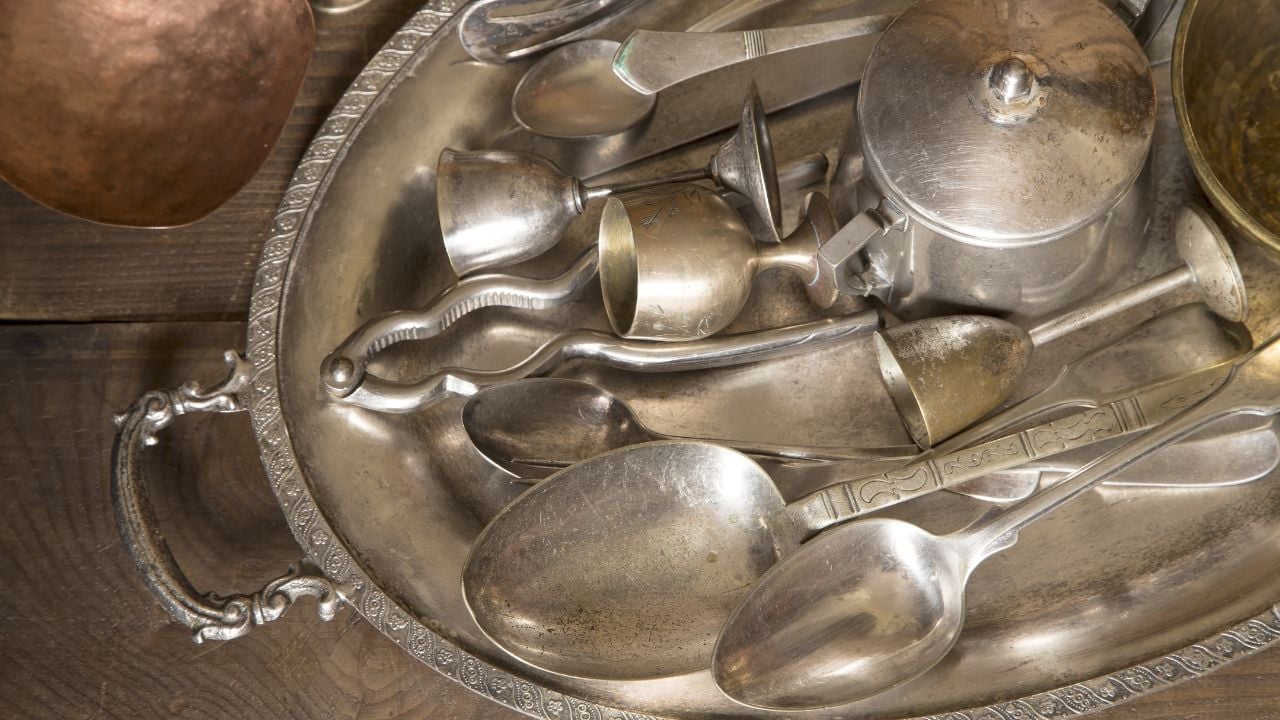
4. Sterling Silverware
Sterling silverware carries two kinds of value, and many sellers only think about one of them.
Silver gained 142 percent in 2025 alone and was trading above $65 an ounce as of early September 2026.
A full 12-piece sterling set can hold several ounces of raw silver, worth hundreds of dollars in melt before you even look at the pattern.
Melt is only the floor.
A named maker or a discontinued pattern from Gorham, Towle, or International Silver can push your set well past its scrap value with the right buyer.
A Phoenix auction house like J. Levine Auction & Appraisal offers a free appraisal on estate collectibles.
The appraisal weighs a set against market research and past auction results instead of guessing what it might bring.
Skip the polish before you get it appraised, since a heavy cleaning can strip detail a buyer would otherwise pay extra for.
5. Pre-1965 Silver Coins
Dimes, quarters, and half dollars minted before 1965 are 90 percent silver, unlike anything made after that year.
A coffee can of loose change from your grandparent’s junk drawer can hide dozens of them without anyone noticing.
At today’s silver price, just above $65 an ounce, $1 in face value works out to roughly $47 in melt value alone.
That’s just the melt price.
A rare date or mint mark can add even more on top of it.
Arizona doesn’t count the gain either.
A 2017 state law excludes capital gains from exchanging one kind of legal tender for another from Arizona’s income tax.
Cashing in a stash of pre-1965 coins for their silver content isn’t state taxable income in Arizona, though federal rules still apply.
Phoenix’s Republic Monetary Exchange lists Pre-1965 Silver U.S. Coins by name among what it buys.
So you don’t have to guess what a local dealer would offer before you drive across town.
A coin-counting machine at the bank pays only face value, not the silver underneath.
An Arizona Grandparent’s Roll of Old Dimes
Your grandparent’s coffee can might hold a standard bank roll of pre-1965 dimes, $5 in face value, 50 coins.
The silver in that roll is worth close to $234 at current prices, more than 46 times the $5 printed on the wrapper.
A roll of pre-1965 quarters works out the same way.
$10 in face value turns into roughly $468 in silver, and that gap only grows if silver keeps rising.
6. Cast Iron Skillets
Cast iron skillets from before 1957 count as vintage, and the brand stamped on the handle decides much of the price.
A Griswold spider-logo skillet sold at auction for $10,000 in August 2024.
That’s the exception.
The typical Griswold piece doesn’t come close.
A Wagner Ware #13 skillet sold for $949 in November 2024, and a more typical Griswold #14 with a front-pour spout brought $3,249 the next month.
Arizona’s largest swap meet, Mesa Market Place in Mesa, lists Kitchen Ware among its 600-plus vendor stalls.
A plain skillet like that can turn up there for a few dollars before anyone flips it over to check the handle.
Check the underside for Griswold, Wagner, or Lodge, since a piece carrying none of the three names still isn’t automatically worthless.
7. Vintage Pyrex
Pyrex mixing bowls and casserole dishes from the 1950s and 1960s can sell for far more than the set they came in ever cost.
A small blue Butterprint bowl, an unproduced size with fewer than 10 known to exist, sold on eBay for $2,100.
A “Lucky in Love” casserole dish once brought in more than $4,000.
Worlds apart in value.
A plain primary-color mixing bowl from the same era might fetch a few dollars at a yard sale instead.
The design pressed into the glass is what separates the two.
Caring Transitions of Mesa North, an estate-liquidation company that works the Phoenix area, handles exactly this kind of downsizing sale.
The company lists your grandmother’s Pyrex by name when a discontinued print turns up in one of its Arizona sales.
A discontinued print in good condition can turn heads from collectors who’ve been hunting it for years.
The Downsizing Boom
Arizona’s share of residents 65 and older sits at 20.6 percent, per the U.S. Census Bureau’s latest estimate.
That’s above the national average.
Communities built around retirees, from Sun City to Green Valley, keep a steady supply of full households moving into smaller ones.
Every move produces a garage, a closet, and a jewelry box that has to go somewhere.
Tucson’s annual gem and mineral show, among the largest such shows in the world, draws dealers hunting exactly this kind of material every February.
Vendors at the show reported record prices for precious metals in 2026.
Many vendors said the run-up was already limiting what they could afford to buy and sell.
How These Seven Compare
Psst! Sort this table by starting value or filter it to find the category worth checking first.
Getting It Appraised
An Arizona estate sale company usually prices for a fast weekend, not top dollar, so anything on this list deserves a second look before it lands on a folding table.
A local coin shop will test your silver for free.
Ask before it sells.
A jeweler who specializes in Southwestern turquoise can tell Sleeping Beauty stone from a newer mine at a glance, something a general appraiser often can’t.
For records, cookware, and Pyrex, a quick photo search on a site like eBay’s sold listings shows what a nearly identical piece closed for.
That’s the number to trust, not what a seller hopes to get.
9 Arizona Foods and Drinks Visitors Order Wrong Every Time

A burrito tumbling into a deep fryer at a Tucson cafe in 1922 is supposed to have given Arizona the chimichanga, curse word and all.
Almost every visitor manages to order one by name, and almost none order it the way locals do.
9 Arizona Foods and Drinks Visitors Order Wrong Every Time
9 Arizona Day Trips That Are Miserable Until the Heat Breaks
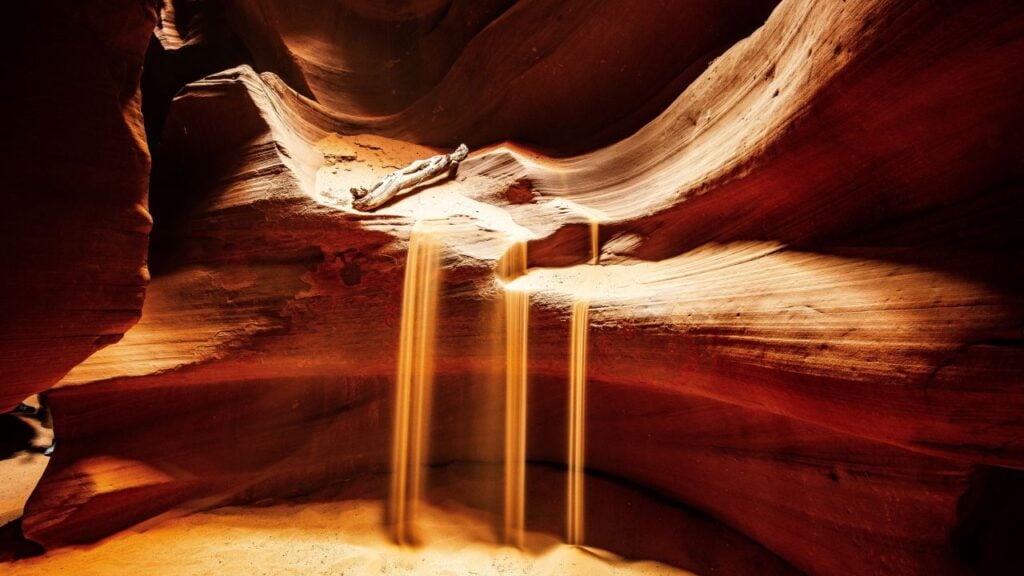
The National Park Service tells hikers to stay off the Grand Canyon’s inner trails between 10 a.m. and 4 p.m. in summer, when the canyon floor can run 30 degrees hotter than the rim.
That gap has cost hikers their lives, and it’s turned several of Arizona’s best day trips into a wait-it-out game.
9 Arizona Day Trips That Are Miserable Until the Heat Breaks
