

7 Things New Jersey Requires Before a House Can Be Sold

Accepting an offer on your house can feel like the finish line.
But for New Jersey sellers, there’s often a checklist still to go, and some items can hold up a closing.
Here’s what the state requires before your house can change hands.
Note: This is general information, not legal advice. Requirements, forms and fees are subject to change, and inspection rules vary by town.
1. Fire Safety Certificate
New Jersey’s Uniform Fire Code makes you obtain a fire safety compliance certificate before you sell a one- or two-family house.
The agency that enforces the fire code issues it.
The governing body over your local enforcing agency sets the fee that covers the inspection and the certificate.
Where the state’s Division of Fire Safety is the enforcing agency, the Commissioner of Community Affairs sets it.
A law approved on February 3, 2025, took the portable fire extinguisher out of the state statute behind the certificate.
Sayreville’s fire prevention office, for example, lists smoke alarms on every level of your house and in every separate sleeping area on its resale inspection page.
2. Signed Disclosure Statement
Listing your house with a brokerage means you have to give it a property condition disclosure statement that’s filled in and signed.
A law that took effect on August 1, 2024, includes that requirement.
The state’s disclosure form says the seller alone is the source of all information on it, so every answer rests with you.
Its questions cover underground storage tanks, radon testing and lead piping.
The form has a line where your buyer acknowledges receiving it before signing a contract of sale.
3. Flood Risk Disclosure
Before New Jersey’s flood risk disclosure law, you had no obligation to tell a buyer about your house’s flood history, the Department of Community Affairs says.
That changed with P.L.2023, c.93, which adds a Flood Risk section to the disclosure statement for your house.
You have to answer it before the buyer becomes obligated under any contract for the purchase.
It asks whether your house is in a Federal Emergency Management Agency Special Flood Hazard Area or a Moderate Risk Flood Hazard Area.
You also answer whether you’ve filed a flood damage insurance claim and whether the house has had flood damage or water seepage.
The disclosure also has to tell your buyer that flood risks are increasing statewide and point to a Department of Environmental Protection website where the buyer can review them.
The state has required sellers to use the updated form since March 20, 2024.
Psst! How much do you know about selling a house? Take our quiz and see if you can ace it.
Quiz
Home Sale IQ
Answer these questions on the paperwork behind a house sale. We bet you can’t get them all right. Prove us wrong?
How long does the attorney review period last on a New Jersey home sale contract that a broker prepared?
4. Private Well Water Testing
Selling a house on a private well adds a water test, which state law makes a condition of the sale.
Closing can't happen until you and the buyer have both received and reviewed the results.
At closing, you both certify in writing that you did.
The state's required list has total coliform bacteria, nitrate, lead and arsenic, among others.
Certain counties add mercury or uranium.
5. Seller's Realty Transfer Fee
State law bars a county from recording the deed to your house without a statement of the true price.
That price drives the realty transfer fee (RTF), which you pay the county recording officer when the deed is offered for recording.
The fee is based on the price recited in the deed or, in certain instances, the assessed valuation.
On a sale over $350,000, the rate rises by price bracket, from $2.90 for every $500 of the first $150,000 to $6.05 for every $500 above $1,000,000.
If your deed claims an exemption from the fee, state law has you append an affidavit stating the basis.
The Division of Taxation's Form RTF-1, an Affidavit of Consideration for Use by Seller, is the form for claiming an exemption.
Graduated Percent Fee on House Sales Over $1,000,000
New Jersey's graduated percent fee adds a percentage of the whole price to your house sale when it tops $1,000,000.
The rate starts at 1% for prices up to $2,000,000 and reaches 3.5% above $3,500,000.
For transfers on or after July 10, 2025, the seller pays it.
You attach Form RTF-1EE to every deed for a sale over $1,000,000.
6. State Tax Forms for the Deed
Your house deed has to arrive at the county clerk with a completed and signed GIT/REP form, the Division of Taxation's Gross Income Tax paperwork for a sale.
You fill it out if you're the person signing the deed for the sale.
If you live in New Jersey, you must complete and sign the GIT/REP-3 to record the deed.
The Sussex County Clerk's office calls it the most often used form of the group.
7. Nonresident Seller Tax Payment
If you live outside New Jersey, selling your house means sending an estimated Gross Income Tax payment to the county clerk with the deed, unless an exemption applies.
The payment is your gain multiplied by the highest Gross Income Tax rate, which the Division of Taxation lists at 10.75%.
It can't be less than 2% of the price stated in the deed.
A house you used exclusively as your principal residence can qualify for an exemption, but only if the entire gain qualifies for the federal exclusion.
You complete the GIT/REP-3 instead if you meet one of the seller's assurances listed on it.
Municipal Resale Inspections
Some towns add a resale inspection to your house sale, and those come from local rules rather than the state rules above.
Cherry Hill requires a Certificate of Continued Occupancy before a single-family house is resold.
The township's Property Maintenance Officer does the inspection, and the fee is $100.
The items checked include sidewalks, driveways, fences, trees and the discharge of sump pumps.
Northvale's ordinance bars the sale of residential property without a certificate of continued occupancy, and the fee for a sale is $50.
In Northvale, you apply at least 21 business days before the certificate will be required.
Reduced State Transfer Fee Rates
Your house sale can fall under a reduced realty transfer fee table if you qualify as a senior citizen, blind or disabled, or you're selling low and moderate income housing.
On a sale of $350,000 or less, that table starts at $0.50 for every $500 of the first $150,000.
The general rate on that same first $150,000 is $2.00 for every $500.
Federal Lead Paint Disclosure
When you sell a house built before 1978, federal law adds a lead paint disclosure, the Environmental Protection Agency says.
You have to disclose what you know about lead-based paint and lead-based paint hazards in the house.
You also give buyers the agency's pamphlet, Protect Your Family From Lead in Your Home, and give them a Lead Warning Statement, either attached to the contract or written into it.
Buyers then get a 10-day period to inspect for lead-based paint or lead-based paint hazards.
You and the buyer can agree in writing to lengthen or shorten that 10-day period.
If you don't give buyers the proper information, you may be subject to penalties.
6 Pinelands Rules That Make New Jersey Land Worth Less Than It Looks
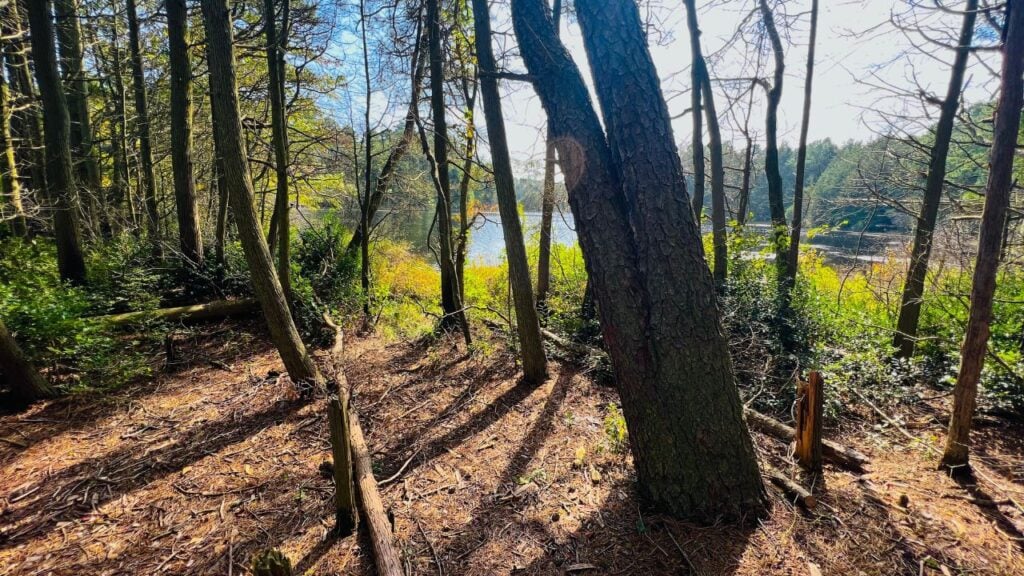
Do you know what Pinelands rules mean for a lot you're eyeing?
You'd want to find out before you buy.
6 Pinelands Rules That Make New Jersey Land Worth Less Than It Looks
9 Things New Jersey Locksmiths Wish Homeowners Knew

Do you know what to ask before someone starts working on your lock?
Here's what the people who open your door for a living wish you'd ask first.
