
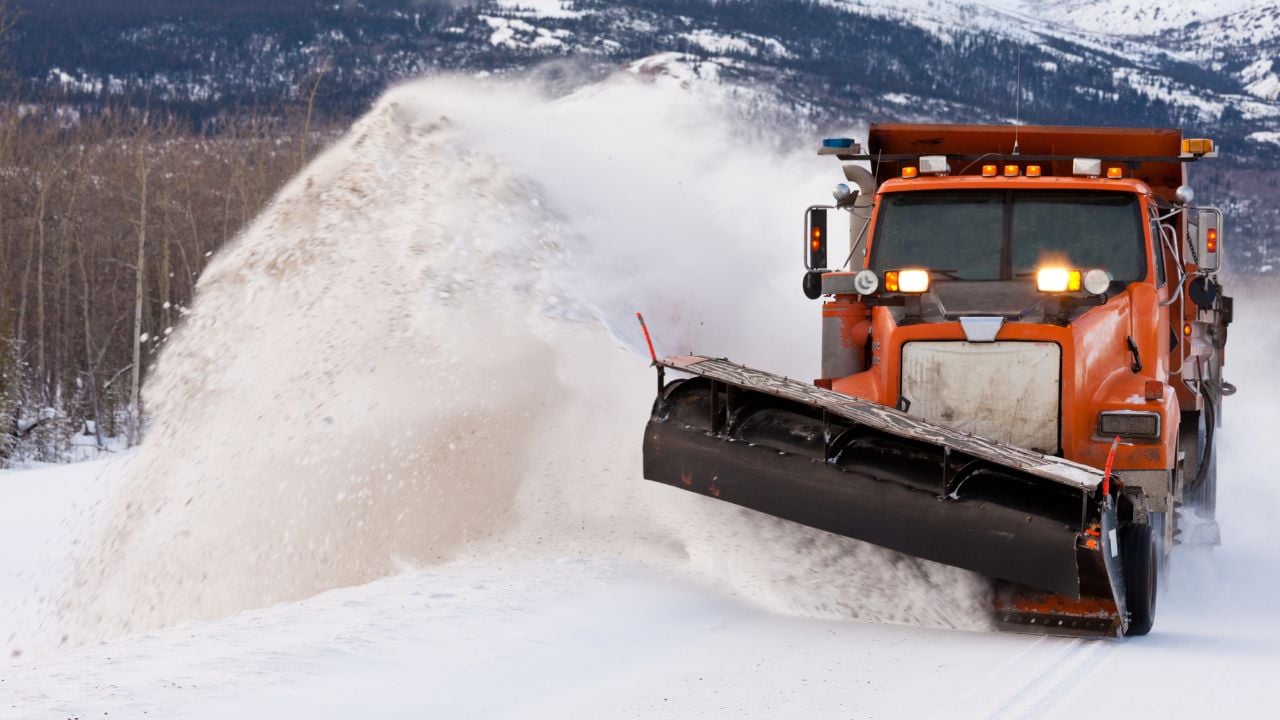
7 Things Oregon Snowplow Drivers Wish Commuters Knew Before the First Storm

Snow on the road is stressful enough without a giant plow filling your windshield.
Oregonians who drive in winter can make the crews’ jobs easier and keep themselves safer in the process.
Here’s what snowplow drivers want commuters to know.
Note: This is general information, not legal advice. Winter driving rules are subject to change, so confirm the current requirements with the Oregon Department of Transportation.
1. Passing on the Right
Passing a snowplow on the right is illegal in Oregon, according to ODOT.
Many snowplows have wing plows that stick out more than 8 feet from the right front edge of the truck.
Those wings and the swirling snow make visibility tough for the plow driver.
The road ahead of a plow also hasn’t been plowed as recently as the road where you’re sitting.
Plow drivers get off the road regularly to let traffic pass, so you don’t have to squeeze past.
Wait for the pullout.
2. Following Distance
How close is too close to a snowplow?
ODOT’s guidance says to stay at least three car lengths behind a snowplow.
If conditions are bad enough to need a plow, the safest place for you is well behind it.
Snow a plow pushes or blows off the road can contain rocks and other debris, so extra distance helps your car too.
Give them space.
3. Plowing Priorities
ODOT sorts highways into five levels of service, which is why a snowplow reaches some roads long before others.
The order depends on safety, the amount of traffic a highway carries and the effect on commerce and industry.
ODOT plows highways tagged for high-volume priority service first.
Medium and low volume highways follow as soon as possible.
If your road sits low on that list, you may wait longer for a plow.
The goal is to keep roads passable, not clear of every patch of ice and snow.
Passable isn’t spotless.
ODOT says a one-day storm may take approximately 600 truckloads of sand and 150 loads of de-icer.
Psst! How much do you know about Oregon winter driving? Take our quiz and see if you can ace it.
Quiz
Oregon Winter Driving IQ
Answer these questions on chains, tires and road conditions in Oregon. We bet you can’t get them all right. Prove us wrong?
ODOT says not to drive faster than how many miles per hour while using chains?
4. Anti-Icer Before the Storm
Snowplows clear what a storm leaves behind, but ODOT also treats highways before it arrives.
It spreads magnesium chloride and solid salt as an anti-icer to help keep ice and snow from bonding to the road.
After a storm, those same materials work as a deicer that helps break the bond between ice and pavement.
ODOT says the chemicals improve road conditions, reduce crashes and cut the use of sand.
If you leave early the morning a storm is due, your commute may already include treated pavement.
Prep starts early.
5. Chain Signs
Even behind a snowplow, a posted chain sign decides what your car needs.
When a sign requires it, Oregon law says you must have chains or traction tires in or on your vehicle, and they have to be the right size.
Drivers who ignore the signs face a Class C traffic infraction.
Practice installing your chains at home when the weather is fair.
When you do need them on the road, pull over to a safe and level area, not in a travel lane, to mount or remove them.
Your driveway works.
Studded tires follow a calendar too, and ODOT says you can use studded tires in Oregon from November 1 through March 31.
When an All-Wheel-Drive Car May Skip Chains
If you drive a four-wheel or all-wheel drive passenger vehicle, Oregon's chain rules exempt it only when every statement on TripCheck's list is true.
Your vehicle's unloaded weight is 6,500 pounds or less.
Your vehicle sends power to both the front and rear wheels.
You carry chains, and every wheel wears a mud and snow, all-weather radial or traction tire.
You aren't towing a vehicle or a trailer.
You aren't driving in a way, or in conditions, that make the vehicle lose traction.
6. Barricades and Plow Crews
ODOT's winter safety tips, reprinted by a local news outlet in January 2022, say that where there are snowplows, road workers are nearby.
Never drive around barricades, which are there to keep everyone safe.
There were 10 crashes across Oregon since Christmas Day in which drivers struck an ODOT plow.
Plows are working for you, so let them.
Your commute can wait.
7. TripCheck Before You Go
Before you follow a snowplow anywhere, ODOT says to check road conditions on your route at TripCheck.com or 511.
ODOT says TripCheck shows images from more than 1,000 cameras in Oregon, southern Washington, northern Nevada, western Idaho and northern California.
Its maps update as conditions change, showing road conditions, color-coded traffic speeds on many roads, weather, construction and incidents.
It also posts highway closure information, including for I-84 and I-5.
You can check the camera nearest your commute before you leave.
Look first.
Psst! Can you tell which winter driving claims hold up? Tap each card and see how many you get right.
Chain Checks on I-84
Along with its snowplows, ODOT scheduled a chain inspection on Interstate 84 eastbound at milepost 217, east of Pendleton, for November 7, 2024.
Drivers without the correct equipment would be sent back to the Exit 216 interchange.
The plan also included reduced speeds of 55 mph on the approach and signs directing trucks and other towing vehicles to the right lane.
ODOT said it experiences several extended freeway closures during winter because vehicles don't chain up when required.
If you tow a trailer, chain signs can require chains on your vehicle even when it's rated 10,000 pounds or less.
That includes you.
Plow Crews in Severe Weather
ODOT's snowplow crews switch to 12-hour shifts for round-the-clock coverage in severe weather, according to the department's November 2025 winter release.
Drivers are also asked to increase their following distance and to pass only when it's safe.
In a 2019 report from I-5 near Ashland, one local news station described three ODOT plows working together.
The first carried de-icer, the second salt and the third sand.
Each truck has a job.
An ODOT maintenance specialist said the crew averages between 25 and 30 miles per hour, or as fast as its slowest truck can go.
A full loop of that route takes roughly 20 minutes before the trucks refill.
9 Reasons Oregonians Are Leaving the State They Grew Up In

Being born in Oregon used to come with an unwritten promise that you'd probably stay for good.
That promise is breaking, and the reasons are worth a look.
9 Reasons Oregonians Are Leaving the State They Grew Up In
9 Things Washington Ferry Workers Notice About Drivers Every Day
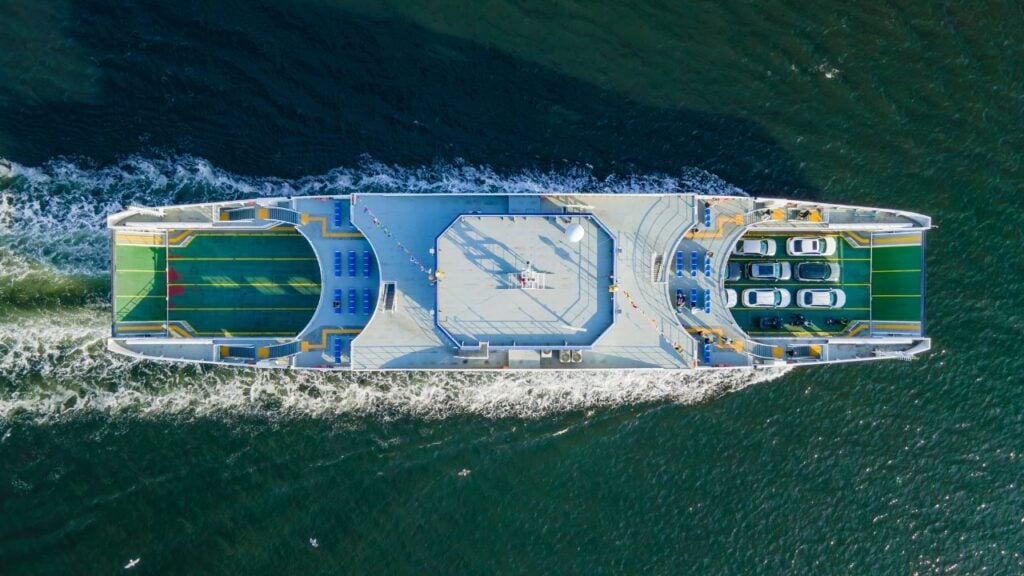
Getting a car onto a Washington ferry takes more than a ticket.
The deckhands, toll takers and loading crews who handle it each day have noticed a few habits.
9 Things Washington Ferry Workers Notice About Drivers Every Day
