
8 Beach Rules Florida Locals Follow That Tourists Break in Minutes

A rental car pulls into a beach parking lot in Destin, and the family unloads a cooler, two folding chairs, and innocent ignorance about what’s allowed on that stretch of sand.
Twenty minutes later, they’ve already broken a rule.
These are the beach rules Florida locals follow without a second thought, the same ones tourists break before lunch.
Note: This is general information, not legal advice. Beach ordinances, fines, and rules vary by county and city and are subject to change.
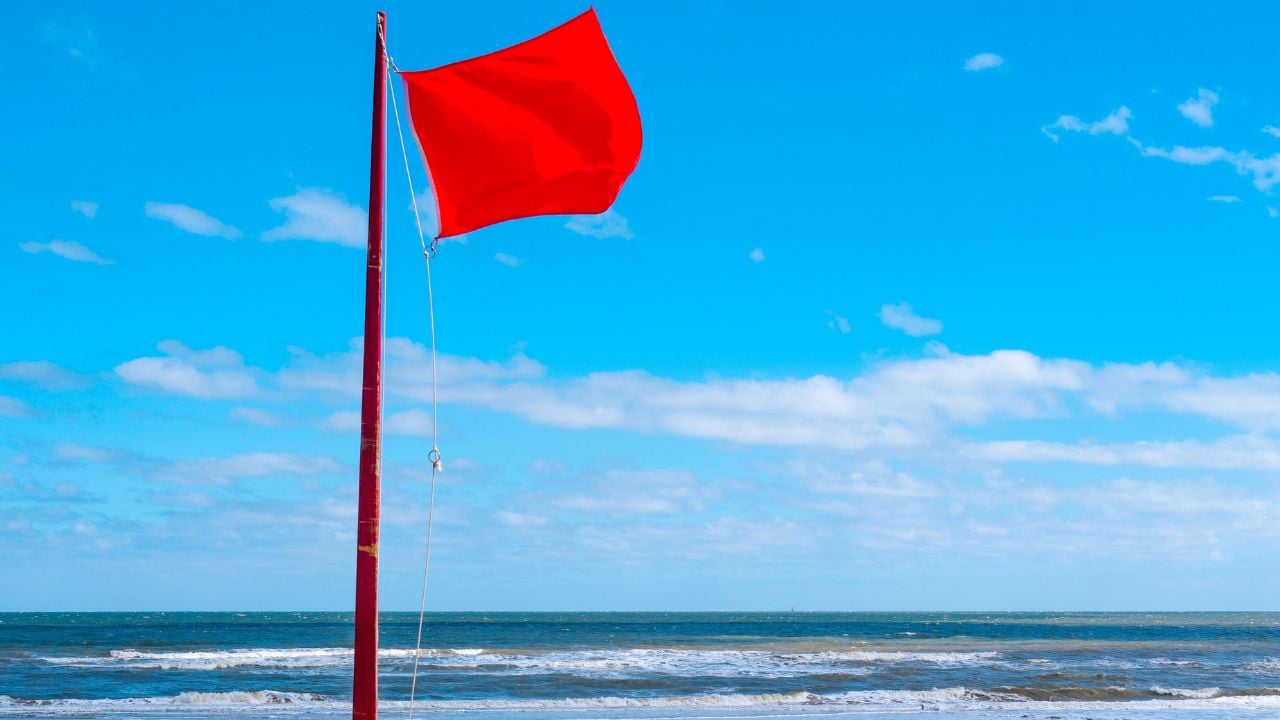
1. Reading the Flags First
Lifeguards raise a colored flag over Florida’s beaches every morning before a single umbrella goes up.
Green means calm water, yellow moderate surf, red high hazard, double red a closed beach, and purple warns of dangerous marine life, all under the state’s flag program that lifeguards from Volusia County to the Panhandle follow.
Locals check the pole before their towel hits the sand.
Not tourists.
Panama City Beach and Bay County now fine anyone who enters the water under a double red flag $500 for a first offense, no warning required, and Escambia County issues similar citations along Pensacola Beach.
There’s no warning first.
Florida logged 26 surf-zone deaths in a single recent year, more than any other state.
Wading in under a red flag can cost a tourist $500 before the towel’s even dry.
2. Staying off the Dunes
Florida’s dune grass holds loose sand in place with a root system many visitors never see.
Sea oats and sea grapes anchor that sand, and cutting, harvesting, or removing either plant is illegal under Florida law, one of the state’s oldest beach protection statutes.
Beach towns add their own layer on top, like Fort Myers Beach’s dune management ordinance, which keeps foot traffic on marked walkovers instead of the dune grass.
Locals take the walkover.
Every time.
A visitor cutting straight over the dune grass for a shorter walk to the water is standing on a protected plant within their first few steps on the sand.
3. Respecting the Nesting Signs
Florida’s beach-nesting shorebirds lay their eggs right on open sand, not in a nest a visitor would recognize as one.
Snowy plovers, least terns, black skimmers, and American oystercatchers nest from mid-February through August, and every one of them is a state-designated threatened species.
Volunteers and park rangers mark the nests with stakes and tape, roping off a patch of sand that looks empty.
It isn’t.
Locals walk wide around the taped section without a second thought.
A tourist who steps over the string for a better view can flush a parent bird off the nest, leaving camouflaged eggs exposed to the sun and to predators within seconds.
4. Clearing the Sand by Dark
Panama City Beach’s Leave No Trace ordinance requires the sand empty again by nightfall, not just tidy, clearing tents, chairs, umbrellas, and coolers off the beach between 7 p.m. and 7 a.m.
Cleanup crews haul away anything left behind.
It’s gone, not stored.
Gulf County gives beachgoers one hour after sunset instead, and Escambia and St. Johns counties run similar rules up and down their coastlines.
Locals pack the cooler back to the car before dinner out of habit.
Leave a canopy staked out overnight to save a spot for day two, and a tourist in Panama City Beach comes back to an empty patch of sand and a missing tent.
What Happens to Gear Left on Florida’s Sand Overnight
Florida’s Leave No Trace ordinances don’t just ask beachgoers to tidy up before they leave.
Crews throw the leftover items away instead of holding them in a lost and found.
Panama City Beach disposes of anything left past its 7 a.m. cutoff, and Gulf County crews work the same way on their one-hour-after-sunset schedule.
The rule exists because chairs and coolers left on the sand can trap hatchlings crawling toward the water at night.
5. Knowing the County’s Drink Rule
Florida leaves the call on beach drinking to each county and city, not the state.
Pinellas County bans alcohol on its beaches entirely, while Sarasota’s Siesta Key, Cocoa Beach, and Flagler Beach allow it.
Pensacola Beach allows drinking too, except inside a roughly 1.75-acre alcohol-free zone that runs about 320 feet along the sand from the Gulf Pier, and nearby Perdido Key allows it beach-wide.
Glass containers are banned on nearly every public beach in the state, drinking allowed or not.
No exceptions.
Locals know their own stretch of sand cold.
A tourist hauling a cooler of beer bottles across a county line can go from legal to cited without changing a single thing about the cooler.
6. Getting the Beach Driving Pass
Volusia County lets a car turn straight off the road and onto the sand at Daytona Beach and New Smyrna Beach, a tradition that dates back to the earliest days of the automobile.
Every vehicle needs a paid pass before crossing onto that stretch of Florida sand, $30 a day for an unregistered visitor or free for a Volusia County resident who registers first, per Park Volusia.
Driving on without paying or registering draws a parking violation left on the windshield or mailed straight to the vehicle’s owner.
No pass means a citation.
Locals register online once and never think about it again.
Wonder why a tourist’s rental car has a citation under the wiper before lunch on Volusia’s sand? That’s the beach driving pass, unpaid.
7. Keeping the Noise Down
Florida’s Walton County draws the noise line directly on the sand, not just around the houses behind it.
No speaker, radio, or musical instrument may play loud enough to be heard 100 feet away anywhere on the beach itself, under the county’s beach activities ordinance, and the fine starts at $100 for a first violation and rises to $500 for repeat offenses.
Locals turn the volume down before anyone has to ask.
It’s muscle memory by now.
On Walton County’s sand, it’s a tourist’s speaker blasting two blankets over that draws a citation, not the noise back at the rental house.
8. Skipping the Smoke on Sand
Florida handed cities the power to ban smoking on public beaches back in 2022, and dozens of them took it.
Lee County bans smoking and vaping at every county-run beach and park, and Fort Myers Beach passed its own ban on town-owned sand.
St. Johns County stretches its rule 600 feet back from the Atlantic shoreline.
Unfiltered cigars are the one thing local governments can’t touch, by state law.
Cigars are the loophole.
Locals who smoke know to step off the sand and onto the boardwalk.
A tourist lighting a cigarette on a banned beach within minutes of laying out a towel is usually the first person a beach ambassador walks up to.
Psst! How much do you know about Florida’s coastline, wildlife, and beach history? Take our quiz and see how many you can get right.
Quiz
Florida Coastline IQ
Answer nine questions on Florida’s beaches, wildlife, and coastal history. We bet you can’t get them all right. Prove us wrong?
Which Florida beach hosted early car land-speed record attempts on its hard-packed sand in the early 1900s?
Where Public Sand Ends
Florida's beaches split into two zones many visitors never notice.
The wet sand below the mean high water line, the average reach of the tide, stays public no matter who owns the house behind it.
That much never changes.
The dry sand above that line can belong to a private homeowner, and in June 2025, Gov. Ron DeSantis signed a law restoring cities' and counties' power to pass local ordinances protecting the public's traditional use of that dry sand.
Locals in beach towns already know which stretches count as open under those local rules.
A homeowner who waves a tourist off a patch of dry sand, or a town that waves a tourist onto it, draws that exact line for everyone to see.
9 Questions Every Floridian Dreads When Family Visits From Up North
A brother-in-law from Buffalo drops his bag in the driveway and asks which tree is the orange tree.
He's just getting started.
9 Questions Every Floridian Dreads When Family Visits From Up North
11 Things Floridians Do in August Without Realizing It's Not Normal Anywhere Else
A surfer paddles out at New Smyrna Beach every August morning past a stretch of water with more recorded shark bites than anywhere else on Earth.
The lineup still fills up by 7 a.m.
11 Things Floridians Do in August Without Realizing It's Not Normal Anywhere Else
